Somebody in your company is about to open a spreadsheet, sort by cost descending, and start deleting rows. They will call it discipline. They will call it right-sizing. They will put it in a deck with a green arrow on it.
What they are doing is self-harm with a budget line.
I have sat in those rooms. I have been on the receiving end of those decisions. And I have watched what happens to engineering organizations in the eighteen months after the cutting stops. It is never what the deck promised.
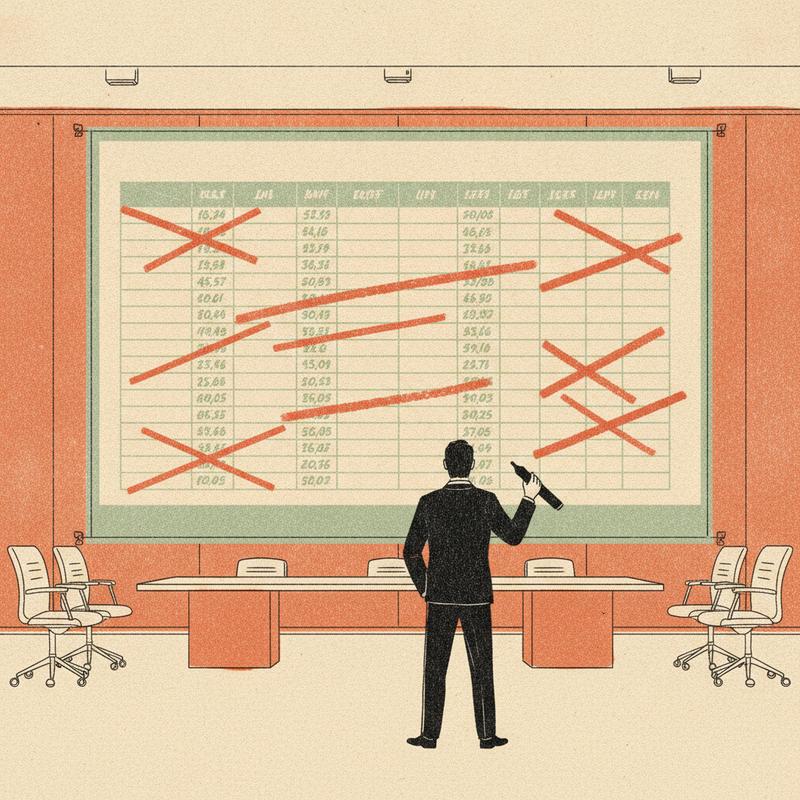
The cut looks brilliant for exactly one quarter
Here is the seduction. Cutting headcount produces an immediate, visible, unarguable number. Salaries stop. The run rate drops. The next earnings call has a story.
Everything the cut destroys is invisible, delayed, and impossible to pin on the person who made the decision.
The research on this is not ambiguous. A 2012 review by Deepak Datta pulled together twenty separate studies on corporate layoffs. Layoffs had neutral or negative effects on stock prices. Most companies saw profitability decline afterward. The setbacks lasted as long as three years.
Three years. To fix a quarter.
Wayne Cascio's longitudinal work found the same thing from a different angle. Companies with significant workforce reductions underperformed their peers on both profitability and stock price. Not for a month. Structurally.
So the thing everyone reaches for in a crisis mostly makes the crisis longer.
What you removed was not a cost line
This is where engineering leaders get it worst, and where I want you to pay attention.
An org chart is a lie. It shows you boxes and reporting lines. It does not show you who knows why the payment service retries three times instead of five. It does not show you who has the phone number of the one person at the vendor who answers. It does not show you which staff engineer quietly reviews every migration before it ships and has stopped four outages nobody ever heard about.
None of this is in the spreadsheet. All of it walks out the door.
Sandra Sucher at Harvard Business School has spent years cataloging what she calls the hidden costs of layoffs: lost institutional knowledge, weakened engagement, higher voluntary turnover, lower innovation. Her point is blunt. It takes years to recover from these, and most leaders never book them as costs at all.
You did not cut twelve salaries. You cut twelve maps of a system nobody documented.
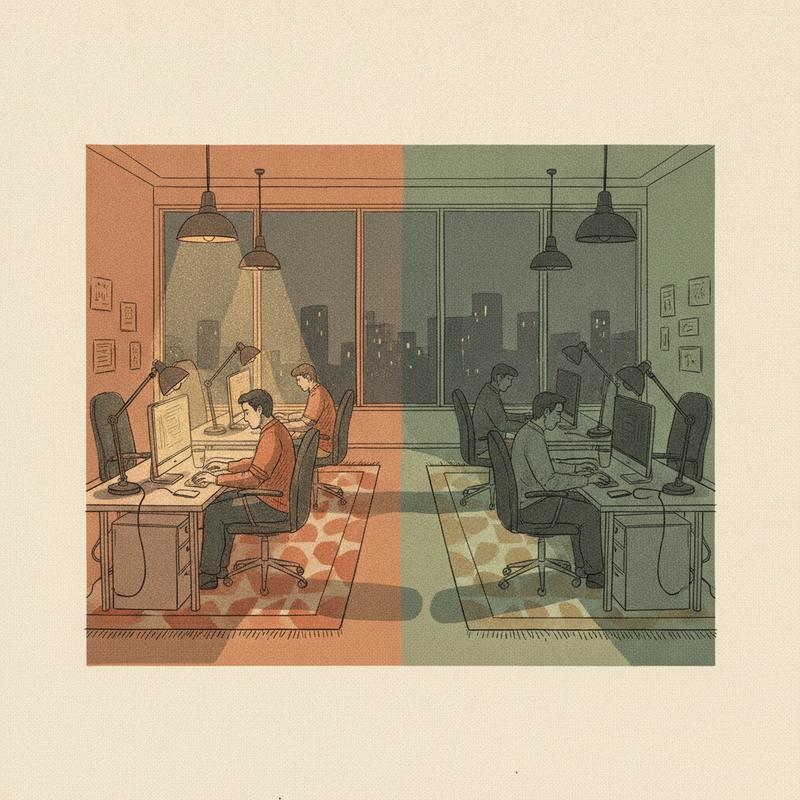
The people who stay get worse at their jobs
Everyone plans for the people who leave. Almost nobody plans for the people who remain.
A 2002 study by Sverke, Hellgren and Näswall measured the survivors. Job satisfaction dropped 41 percent. Organizational commitment fell 36 percent. Job performance went down 20 percent.
Read the last one again. You removed 15 percent of your people to reduce cost, and the ones you kept got 20 percent worse at the work.
Do the arithmetic on your own team. You paid for a headcount reduction and bought a productivity reduction on top of it.
Then there is innovation. Teresa Amabile studied a Fortune 500 technology company through a 15 percent workforce reduction. New inventions fell by nearly a quarter. Amabile and Regina Conti compared invention disclosures filed before and during the downsizing. The drop was real, and the creative environment stayed depressed four months after the layoffs finished.
Amabile put the two possible explanations side by side. Either creative thinking genuinely fell, or people were sitting on their ideas to use somewhere else after they left. Neither one is good news for your roadmap.
Your survivors are not grateful. They are updating their resumes on the train home, and they are keeping their best thinking for whoever hires them next.
The pruning versus the chainsaw
I am not arguing against ever reducing cost. Companies get bloated. Projects outlive their purpose. Teams get built around org politics instead of customer need. Cutting is sometimes right.
The distinction is between pruning and clear-felling.
Pruning means you know the system. You know which branch is dead, which one crosses and rubs, which one takes light from fruit. You cut with intent and the tree grows better.
Cut-and-slash means you set a percentage before you understand anything. Ten percent across the board. Every department. Fair, apparently, because it hurts everyone equally.
Across-the-board percentages are an admission of ignorance dressed up as fairness. If you knew your business, you would know the 30 percent worth cutting in one place and the zero percent worth cutting in another.

Honeywell did the other thing
In September 2008, Honeywell watched orders start falling. David Cote, the CEO, took a position most of his peers did not.
Honeywell used furloughs. Unpaid leave, taken in one-week blocks, averaging three to five weeks across the workforce. People stayed employed. Their jobs stayed theirs. Their skills stayed inside the company.
Cote's reasoning is worth stealing. Any restructuring should be what serves long-term efficiency, not a panic reaction to a recession, and it should not damage the ability to outperform when recovery arrives. He wrote about it himself in Honeywell's CEO on How He Avoided Layoffs.
When the recovery came, Honeywell had its people, its knowledge, and its relationships intact while competitors were busy rehiring strangers into roles they no longer understood.
It cost him short-term optics. He took criticism for it. He was right.
I'm not sure about this part: I have seen the Honeywell recovery outperformance quoted in several places, but I have not found the specific side-by-side revenue comparison against GE and other peers in a primary source. Treat the strategy as proven and the exact margin of victory as unconfirmed.
The people closest to the waste already know where it is
Here is the part almost nobody does, and it is the cheapest thing on this list.
Ask your team.
Not a survey. Not a suggestion box. Sit down with the engineers, the support staff, the ops people, and ask a direct question: where are we burning money on things nobody needs?
They will tell you. They have been watching it for years. The staging environment nobody has used since 2024 and nobody has permission to delete. The enterprise license for a tool three people opened once. The report generated every Monday for a director who left. The vendor contract quietly auto-renewing at a rate nobody has renegotiated.
Every engineering org I have worked in had six figures of obvious waste sitting in plain sight, visible to everyone except the person holding the budget spreadsheet.
The reason leaders reach for headcount instead is not because headcount is the biggest number. It is because headcount is the number they understand without having to ask anybody. Cutting people requires no curiosity. Cutting waste requires you to admit your team knows things you do not.

The cost you never write down
The tech industry laid off 245,953 people in 2025. An average of 674 people a day. By the same tracking, 131,504 more in 2026 so far, according to the figures compiled at Berkeley's Greater Good Science Center.
Those are not spreadsheet rows. The same research collects what happens to the people in them. Laid-off workers were 83 percent more likely to develop a new health condition. Layoffs raise the odds of suicide by two and a half times. They raise mortality by 15 to 20 percent over the following twenty years. Workers laid off in the 1982 recession were still earning 20 percent less than their peers two decades later.
I am a US Army veteran. I have a fairly high tolerance for hard decisions made under pressure with bad information. This is not about squeamishness.
It is about honesty in the accounting. If you are going to claim the savings, own the full cost. And if the full cost includes three years of depressed profitability, a quarter less innovation, survivors performing 20 percent worse, and measurable harm to people who trusted you, then it is fair to ask whether the decision was discipline or whether it was the easiest available way to look decisive.
What to do instead
Before anyone opens the headcount spreadsheet:
Ask the org where the waste is. Give it two weeks and a real budget for acting on what comes back. You will find more than you expect and it costs you nothing but humility.
Cut projects, not percentages. Kill three initiatives outright and redeploy the people. A dead project releases full cost. A 10 percent trim across ten teams releases nothing except capability.
Look at every option before the final one. Furloughs, reduced hours, hiring freezes, deferred bonuses starting at the top, renegotiated vendor terms. Cote proved these work at scale.
Name what you are trading. Write down the knowledge, the relationships, and the innovation capacity you are about to lose. If the number still works after you write it down, go ahead. Most of the time it does not.
If you must cut, cut once and cut clean. Rolling layoffs over four quarters destroy trust in a way a single hard decision does not. Nobody does their best work while waiting for the next round.
The leaders I respect most are the ones who did the hard, slow, unglamorous work of understanding their business well enough to cut precisely. They took longer. They looked less decisive in the moment. Their companies were still standing three years later with the people who knew how everything worked.
Your budget is a model of your business. Slashing it does not make the business smaller. It makes your model of it worse.
So before you sort the spreadsheet descending by cost, go ask the people at the bottom of it where the money is going. I promise they know.