Purpose Is Not a Poster
Someone in HR designs a poster. It says something like "We Exist To Empower Our Customers" in a nice serif font, gets printed, gets laminated, and gets hung in the break room next to the fire extinguisher instructions. Leadership calls this "communicating our purpose." Six months later nobody in the building can recite it, and the team supposed to live it is still arguing about sprint scope the same tired way they were before the poster went up.
That's not purpose. That's decoration.

Most leaders treat purpose like weather. Something you hope shows up. You write the mission statement, you give the all-hands speech, you cross your fingers it trickles down into how people behave when nobody's watching. Then you're surprised when it doesn't.
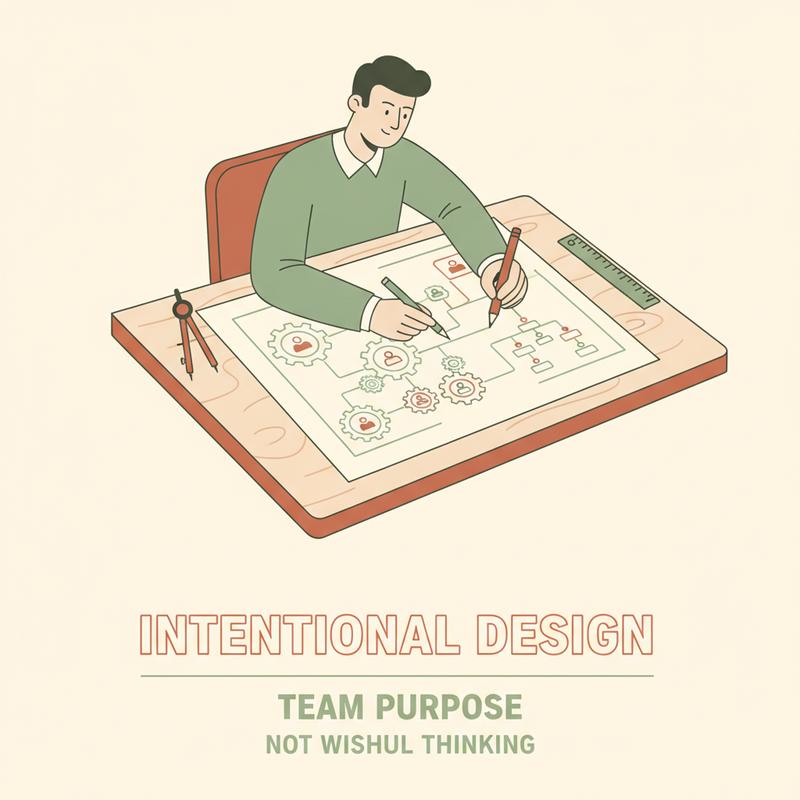
Purpose isn't weather. It's infrastructure. You don't hope for it. You engineer it.
Why "Inspire" Isn't a Strategy
Here's the uncomfortable part for a lot of leaders: hoping feels like leadership. Giving the passionate speech, sending the heartfelt email, believing if you communicate the "why" clearly enough, people will catch fire. It's emotionally satisfying and it's almost entirely passive. You said the words. The rest is up to them.
Gallup's own research backs up why this matters and why most companies get it wrong. Employees who feel a strong sense of purpose at work are 5.6 times as likely to be engaged as employees who don't. Not a marginal difference. The difference between a team solving problems and a team watching the clock until five o'clock.
Here's the gap: nearly half of employees, 45%, say they work primarily to collect a paycheck and benefits. Only 18% describe their current job as having a purpose they personally believe in. Meanwhile 30% say a purpose they believe in is what they want from their ideal job. A real, measurable shortfall between what people want and what they're getting, and no amount of poster design closes it.
If purpose worked the way most leaders treat it, this gap wouldn't exist. Every company has a mission statement. Almost none of them have closed the 12-point gap between wanting purpose and having it.
Engineering Beats Hoping
I've spent my career around software engineers, and I've noticed something: engineers don't hope a system works. They design it to work, then they test whether it does. You don't hope a service handles load, you load-test it. You don't hope a deploy goes smoothly, you build a rollback plan because you assume it won't.
Apply the same discipline to purpose and the whole conversation changes.
Stop writing purpose. Start building it into decisions. A purpose statement is marketing copy until it shows up in a resourcing decision. If your stated purpose is "we build reliable software" but your roadmap keeps deprioritizing the reliability work in favor of features that demo well, your engineers see the gap within a week. They trust the roadmap over the poster every time, because actions are the only version of purpose that counts.
Connect the daily task to the outcome, every time, not once. Purpose fades because it's usually communicated once, loudly, at a kickoff, and never again. Engineering it means threading it into ordinary moments: reviewing a pull request, triaging a bug, explaining why a particular ticket got prioritized over another. Purpose gets reinforced in small repetitions, not one big speech.
Give people the authority that matches the purpose you're asking them to own. You cannot ask someone to care about reliability and then require three levels of sign-off before they're allowed to fix a flaky test. Purpose without authority is guilt with better branding. If you want people to act like owners, give them enough control over their work to act like one.
Measure the behavior, not the belief. Surveys ask people whether they feel purpose. Wrong question. Track whether purpose shows up in decisions: how often does the team push back on a request that conflicts with the stated purpose, and how often does that pushback change the outcome? If pushback never changes anything, the purpose statement carries no weight, and everyone on the team already knows it.
The Bad Boss Problem
None of this works if the person delivering it can't be trusted, and this is where most purpose initiatives quietly die. My own research found 99.5% of people have had one or more bad bosses in their career. Purpose evaporates fast under a manager who says "we value your input" and then punishes the input the moment it's inconvenient. You can engineer the best purpose system in the world and one bad manager dismantles it in a quarter.
This is why purpose has to be built at the leadership behavior level, not the messaging level. I wrote about the practical version of this at Step It Up HR, specifically around what it takes to empower your people instead of saying you do. Empowerment is one of the load-bearing walls of engineered purpose. Without it, the structure doesn't hold weight.
What Engineered Purpose Looks Like
You'll know purpose is engineered, not hoped for, when you answer these without a pause.
Can any engineer on your team explain, in their own words, how their current ticket connects to something the company genuinely cares about? Not the mission statement version. The real version.
When priorities conflict, does the stated purpose win, or does the deadline always win?
If a team member acts on the purpose you gave them and it costs the company short-term convenience, do you back them up or quietly correct them afterward?
That last one is the real test. Anyone can print a poster. Few leaders will eat a short-term cost to prove the purpose was real.
Build It, Don't Wish For It
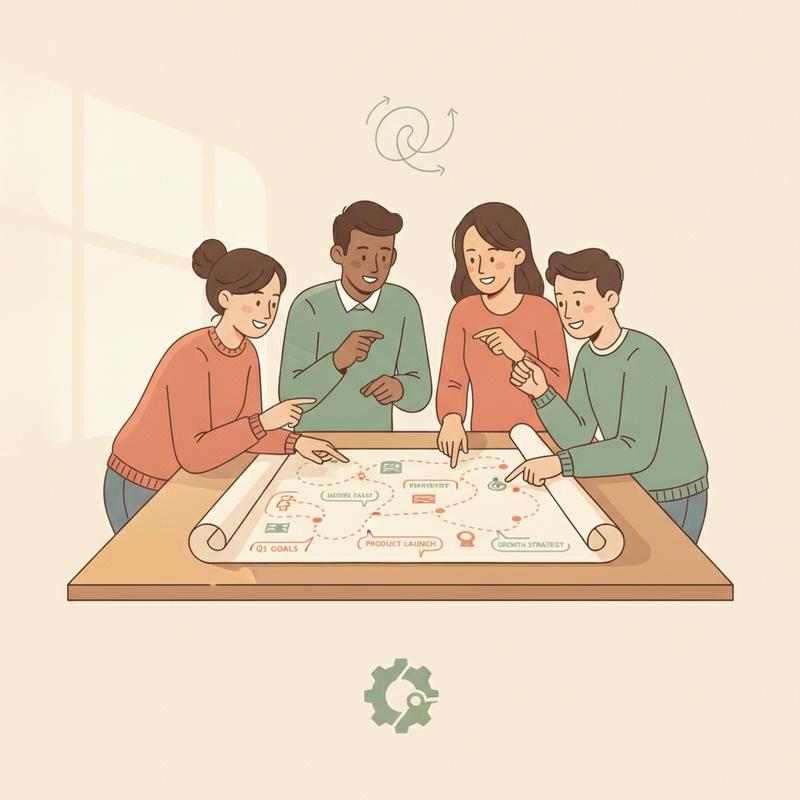
Purpose-driven teams aren't a personality trait some teams have and others don't. They're the output of specific, repeatable leadership decisions made consistently over time. Decide what matters, back it with resourcing, reinforce it in the small moments, give people real authority, and be the kind of leader who doesn't fold the first time purpose gets expensive.
Do this and you won't need the poster. Skip it, and no font size in the world will save you.
What would your team's purpose statement cost you to defend the next time it's inconvenient? If you don't know the answer, you haven't engineered it yet.