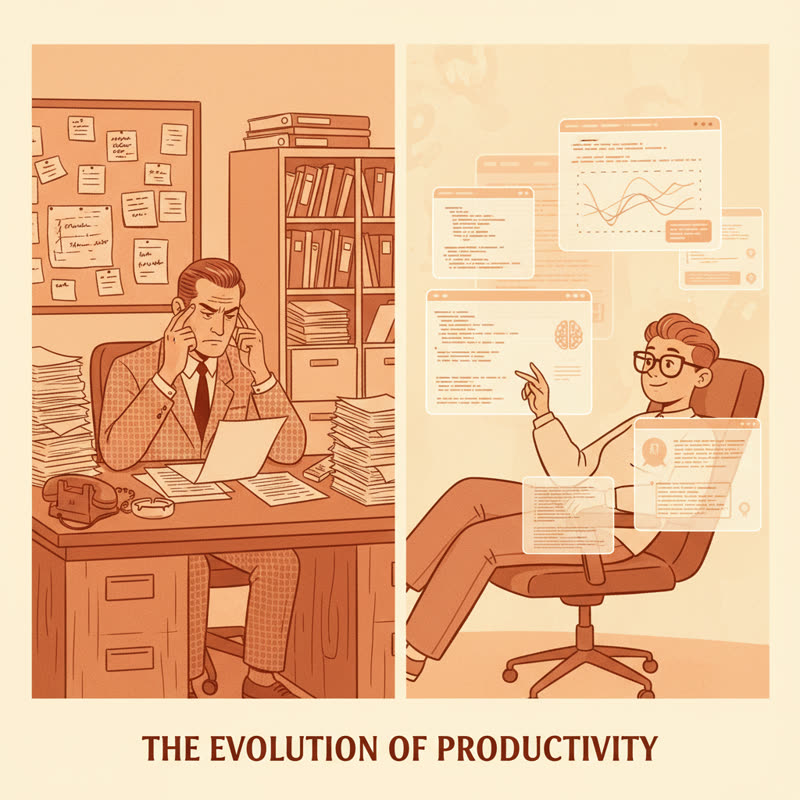
Here's a situation I've seen play out more times than I care to count. A senior leader calls a status update meeting for something worth a Slack message. The Gen Z employees on the team attend, say nothing, and immediately go back to doing what they were already doing. Nothing changes. The leader thinks the meeting went well. The team thinks the leader is out of touch.
They're both right.
The Generational Shift Nobody Prepared For
In 2024, Gen Z overtook Baby Boomers in the full-time US workforce. Not news anymore... but the implications still haven't landed for most organisations.
Gen Z didn't grow up adopting technology. They grew up inside it. Smartphones arrived before they did. Google was always a verb. The internet isn't a tool they picked up somewhere along the way. It's the water they swim in.
Millennials are different. Many are genuinely good at technology... but they remember the transition. They learned HTML because it was interesting. They adopted social media because everyone else did. They remember when email was modern.
Gen Z doesn't remember the transition. There was no transition for them.
The difference isn't a personality quirk. It changes how they expect to work, how they process information, how they give and receive feedback, and what a competent leader looks like to them.
The Workplace They Walk Into
The World Economic Forum reported in early 2025: Gen Z expects tech tools at work to match the ease of use of social media apps. Not "decent tools." The same ease. The same responsiveness. The same immediacy.
When a Gen Z employee encounters a clunky internal tool unchanged since 2015, they notice. When handed a printed form, they notice. When told to send an email rather than use the messaging system already in place, they notice. None of these things feel "traditional" to them. They feel broken.
I've seen leaders shrug this off as entitlement. It isn't. It's like complaining a new hire expects the company WiFi to work. Digital fluency isn't a preference for Gen Z. It's the starting point.
The wider challenge is the scale of the shift. Gen Z's entry into the workforce isn't a trickle. The generation born between 1996 and 2010 now outnumbers Baby Boomers in full-time employment. These aren't edge cases in your team any more. They're likely a significant portion of it.

The AI Dividing Line
Here's where the gap stops being cultural and starts being a competitive problem.
According to Deloitte's 2025 Gen Z and Millennial Survey, 74% of Gen Zs believe generative AI will impact the way they work within the next year. They're not worried about it. They're planning for it. A large portion are already using AI tools as part of their daily routine.
Meanwhile, Nash Squared's 2025 Digital Leadership Report... the largest and longest-running survey of technology leadership in the world... found AI jumped from the 6th most scarce technology skill to number one in 18 months. The steepest jump recorded in the report's 26-year history.
Read those two things together. Your Gen Z team members are actively integrating AI into their work, treating it as a natural extension of how they operate. And your senior leaders are scrambling to hire anyone who understands it at all.
I've sat in meetings where a team member quietly used an AI tool to summarise the previous hour of discussion, handed it to the leader, and watched the leader act as though they'd performed a minor miracle. The team member had been doing this routinely for months. The leader had no idea.
The analog brain, in action.
What Your Team Sees
There's a brutal clarity to how Gen Z evaluates leadership. They grew up with instant feedback loops. They know within seconds whether an app works well or badly. They apply the same lens to the people managing them.
When a leader calls a meeting for something belonging in a Slack thread, Gen Z employees don't see "thoroughness." They see inefficiency. When a leader forwards an email chain rather than summarising the key point, they don't see "transparency." They see noise. When a leader asks for a status report without checking the project management tool where everything is already tracked... they don't see oversight. They see disconnection.
None of this is malicious. It's the gap between two different minds organising information differently.
The consequence is measurable. Only 12% of companies report confidence in the strength of their leadership bench, according to research published in late 2024. And Gen Z is increasingly reluctant to step into management roles they see aren't working. They're watching their managers... and opting out.

What Real Catching Up Looks Like
Catching up isn't about downloading TikTok or dropping Gen Z slang into team meetings. Nobody's impressed. Nobody reads it as authentic.
Catching up means changing how you think about work, not which tools you've downloaded this week.
Default to async. Before calling a meeting, ask whether a message would do. If yes, send the message. Your Gen Z team already knows the answer is usually yes. Defaulting to synchronous communication when you don't need to signals you haven't thought it through.
Get genuinely comfortable with AI tools. Not "aware of." Not "open to." Comfortable. Use them yourself. See what they do and don't do well. Your team already has an opinion. You should have one too, formed through use, not through reading articles about use.
Trust the systems you've invested in. If you've got a project management tool, a shared doc, a team dashboard... use them as the source of truth. Don't ask people to separately report the thing already in the system. It's friction, not oversight. It signals you don't trust the tools, which signals you don't trust the team.
Shorten your feedback loops. Gen Z didn't grow up on annual reviews. They grew up on immediate, iterative feedback. If you've something to say about someone's work, say it close to the work. Waiting six months for a formal appraisal doesn't feel thorough to them. It feels cruel.
Be honest about what you don't know. Gen Z has finely-tuned detectors for inauthenticity. If you're still figuring out where AI fits in your workflow, say so. They'll respect genuine uncertainty far more than a confident performance of knowledge you haven't got.
Ask, don't assume. One of the most effective moves with a Gen Z team: ask "what's working well for you and what isn't?" Not as a formality. With the genuine intention of changing something when you hear the answer. They've got a dozen ideas and are waiting to see whether sharing them will lead anywhere.
The Question Worth Sitting With
If a 24-year-old joined your team next week, what would they see? A leader who thinks digitally, moves at digital speed, uses digital tools as naturally as breathing... someone they'd want to learn from?
Or someone they'd have to manage around?
Not a comfortable question. An honest one. And honest is exactly what your Gen Z team is expecting from you.
What's one thing you're changing this month to close the gap?