You got promoted because you were great at doing. Building things. Fixing things. Shipping things. You were the person everyone relied on to get stuff done.
And now you lead... in whatever time is left over.

The Doing Trap
Here is the pattern I see repeated across every engineering org I've worked in. Someone excels at their work. They build trust. They get promoted into management. And then nobody tells them the job description changed.
So they keep doing.
They write code when they should be coaching. They fix production issues when they should be developing their team's ability to fix production issues. They attend every meeting because stepping back feels irresponsible.
The numbers confirm the pattern. 60% of new managers fail within their first 24 months according to Gartner research. In the UK, 82% of managers enter the role with zero formal training. They're winging it. And "winging it" defaults to doing what you already know.
The Math Doesn't Work
Ben Morton puts it bluntly: leaders spend 90% of their energy doing and managing. They only lead "when the doing is done."
Think about your last week. How many hours did you spend on people development? On having a proper feedback conversation? On creating clarity around direction and purpose?
Now compare those numbers to the hours you spent in status updates, reviewing PRs, firefighting production issues, and answering Slack messages.
Gallup's research shows managers account for 70% of variance in employee engagement across teams. Seventy percent. Your team's motivation, productivity, and decision to stay or leave... 70% of it comes down to you.
And you're running your most important job on leftover time.
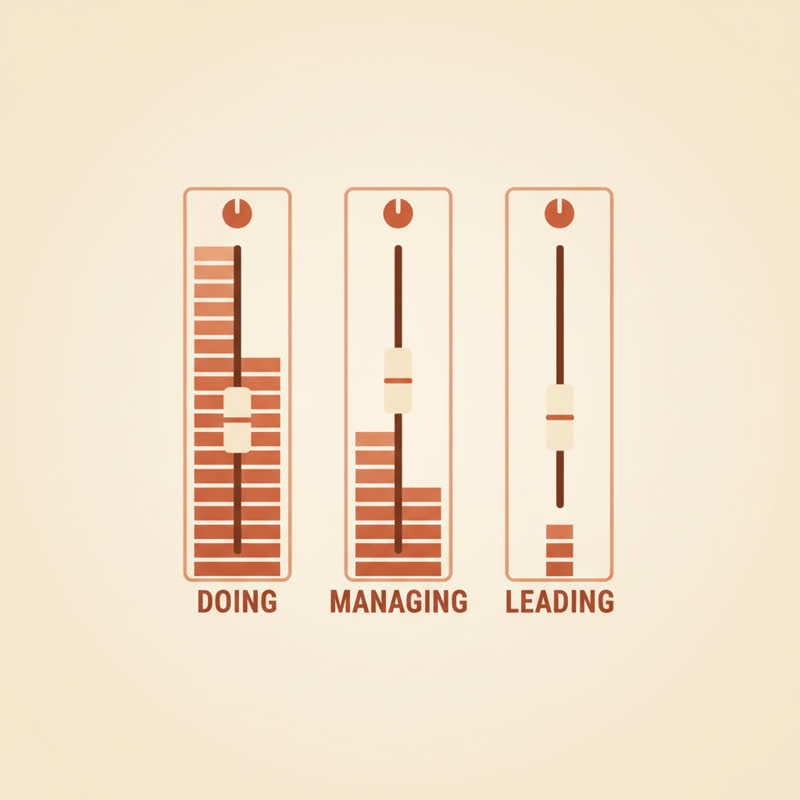
The Equalizer
Ben Morton describes a useful mental model. Picture your time as a three-channel equalizer:
- Doing - The technical work. Writing code, building decks, solving problems yourself.
- Managing - Coordination. Status meetings, budget calls, reporting upward.
- Leading - People development. Coaching, feedback, vision, creating psychological safety.
Most leaders run Doing at full volume. Managing sits in the middle. Leading barely registers.
The tragedy? Leading is the one channel with compound returns. Every hour you invest in developing someone's capability pays back for months. Every hour you spend writing code yourself produces exactly one output... and teaches nobody anything.
What Leading Looks Like
Leading is not another meeting. It is not strategy decks or all-hands presentations.
Here is what it looks like in practice:
One-on-ones with depth. Not status updates. Real conversations about growth, blockers, and ambition. The ones you keep cancelling.
Feedback in the moment. Not saving it for a quarterly review nobody wants. Saying "the way you handled the client conversation was sharp, specifically when you reframed the problem" within the hour.
Developing capability. Letting your senior engineer run the architecture review instead of running it yourself. Sitting with the discomfort of them doing it at 80% of your standard... because next time it'll be 90%.
Creating clarity. When your team knows exactly what success looks like, they stop waiting for permission. They stop guessing. They move.
Removing obstacles. Fighting the political battles upstream so your team never has to.
None of this happens in spare time. All of it requires intentional hours in your calendar.
Why You Keep Defaulting to Doing
I'll be honest about my own history here. I've led engineering teams of 150+ people. And even at the 150-person scale, the gravitational pull toward "doing" never fully goes away.
Three forces keep you stuck:
Identity. You built your career on technical excellence. Stepping back from the work feels like losing part of who you are. The team still needs a strong engineer... right?
Speed. You know you'd finish the task faster yourself. And you would. This week. But you're trading next month's capacity for today's deadline.
Visibility. Doing produces visible output. You shipped something. You closed the ticket. Leading is invisible until it compounds... and by then nobody remembers who did the investment.
The result? Only 27% of employees believe their managers are effective. The rest work for someone who is too busy doing to bother leading.
The Fix
Audit your calendar right now. Colour-code it:
- Red for Doing (tasks your team should own)
- Yellow for Managing (coordination, reporting, admin)
- Green for Leading (people development, coaching, clarity)
If green makes up less than 30% of your week, you're underinvesting in the one lever with compound returns.
Then ask yourself three questions:
- Which of my tasks should someone on my team own instead?
- What conversation am I avoiding?
- When did I last help someone grow... not by telling them the answer, but by helping them find it?
You don't need a leadership course. You need to stop doing the work your team should own. You need to protect time for the conversations only you're positioned to have.
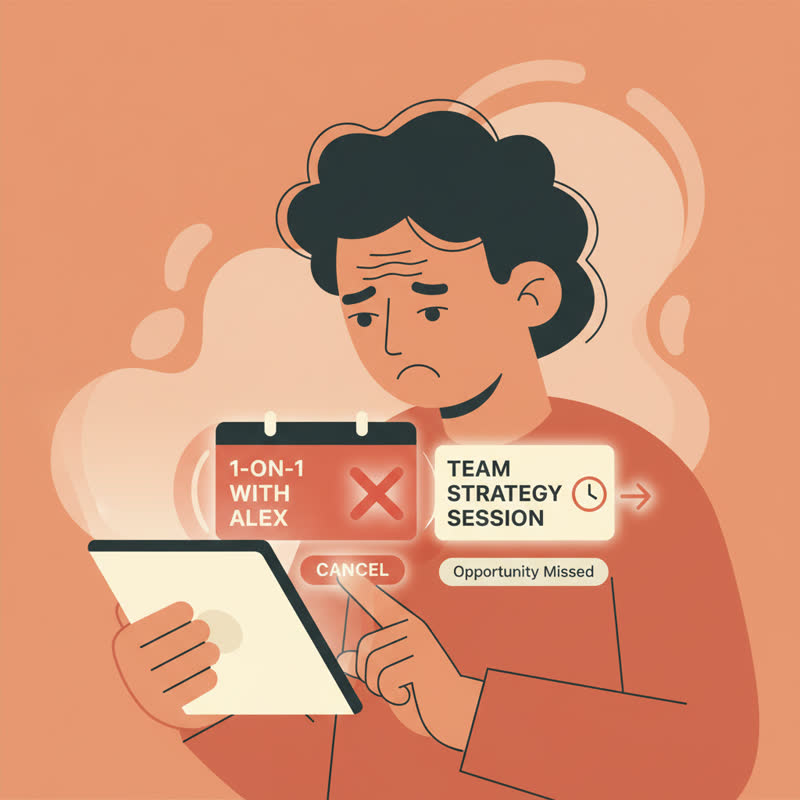
Your Team Already Knows
They feel it every time you cancel a one-on-one for something "more urgent." Every time you solve the problem yourself instead of coaching them through it. Every time you run through a standup at speed because you've got twelve other things waiting.
Strengthening management capability improves team productivity by up to 35% according to University of Southern California research. Replacing a poor manager with a strong one is equivalent to adding a fifth person to a team of four.
You don't need more headcount. You need more leadership hours.
In my research for Step It Up HR, 99.5% of survey respondents reported having at least one bad boss in their career. And the defining trait of those bad bosses? Not cruelty. Not incompetence. Neglect. Being too busy doing to notice, develop, or support the people who reported to them.
Your team doesn't need you to be the best engineer in the room. They need you to be the person who makes everyone else better.
So look at your week ahead. Find three hours labelled "doing." Reclaim them for leading. Have the conversation you've been putting off. Give the feedback you've been sitting on. Let someone struggle through a problem you'd solve in minutes.
It won't feel productive. It won't feel urgent. But a year from now, your team will be different. And they'll know exactly why.