In the 1950s, an engineer at Norway's state railway, NSB, came up with a better way to hold a rail to a concrete sleeper. A bent steel spring clip. Elastic, simple, quick to fit. He showed it to his employer.
His employer wasn't interested.
So Per Pande-Rolfsen took his idea elsewhere. He patented it in the US and found backers in England, where a company named after him, Pandrol, started making it. In 1966 British Railways adopted the Pandrol clip as its standard. South African Railways followed a year later. Today Pandrol says its products are chosen by half the world's rail networks. According to a Morgenbladet report cited on the Norwegian Wikipedia page, Pande-Rolfsen became a multimillionaire, earning one øre for every clip.
Norway's own railway said no to one of the most successful rail inventions of the 20th century. And the idea came from its own staff.
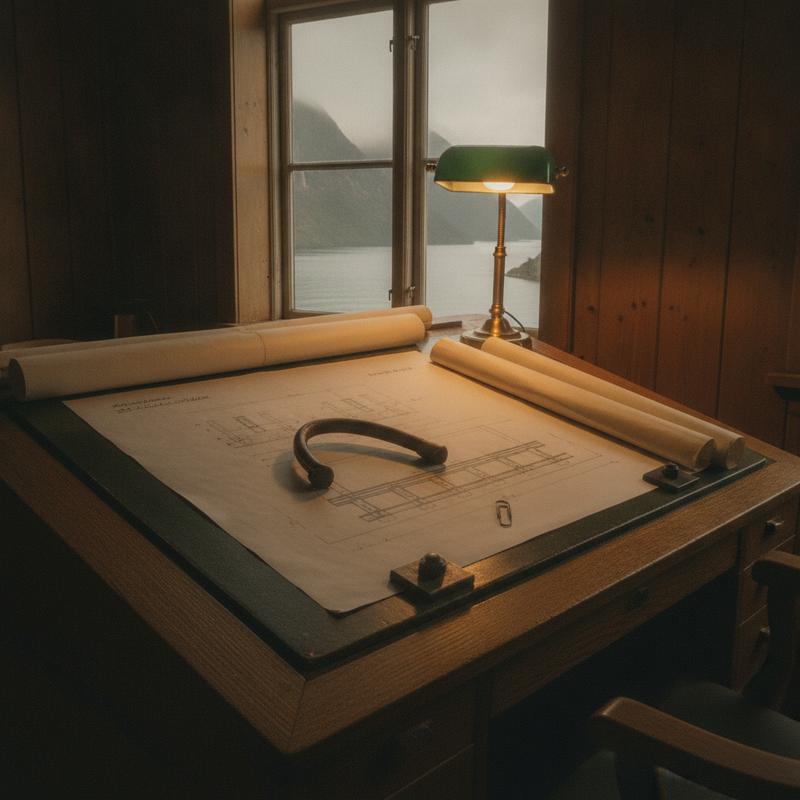
The part of the story I love most
Fredrik Haren, the creativity researcher, told this story when he came on my podcast, Corey-osity Unleashed. The rejection wasn't the part he wanted us to remember. The ending was.
In Fredrik's telling, the Norwegian rail company didn't bury the embarrassment. It turned its biggest miss into its most prestigious internal award. Every year, the company celebrates new ideas under the shadow of the one it threw away.
I'm not sure about this part: I found solid sources for NSB turning down the clip, but I couldn't find a public record of the award itself, its name, or which company runs it today. Treat the award as Fredrik's account from our conversation.
Even if the details shift, the idea stuck with me. Most organisations hide the ideas they ignored. This one put its ignored idea on a trophy.
Which raises an uncomfortable question for anyone running an engineering team. What does your organisation do to remember the ideas it turned down?
For most teams I've worked with, the answer is nothing.
Your team has a Won't Do column
Every software team has a graveyard. It goes by different names. The Won't Do column on the board. The ticket closed as "not a priority". The RFC nobody approved and nobody rejected, left to rot in a shared drive. The prototype a junior engineer built over a weekend, demoed once, and never mentioned again.
Some of those ideas deserved to die. Plenty were bad. Plenty were fine but wrong for the time.
The problem isn't saying no. Saying no is half the job. The problem is what happens after the no. The idea disappears, and so does the reasoning. Nobody writes down why. Nobody writes down what would have to change for the answer to become yes. Two years later, the context has shifted completely, and nobody remembers the idea existed.
Or worse... a competitor ships it.

Kodak had its own rail clip
In 1975 a 24-year-old Kodak engineer named Steven Sasson built the first digital camera. According to PetaPixel, it weighed 8 pounds, shot 0.01-megapixel black-and-white photos onto cassette tape, and took 23 seconds per picture. You viewed the results on a television.
Sasson showed it to Kodak executives. They couldn't see the point. As Sasson told the New York Times, they were convinced nobody would ever want to look at their pictures on a television set. Prints had worked for a hundred years.
To be fair to those executives, the prototype was clunky. On the day of the demo, the executives weren't wrong about the product in front of them. They were wrong about what it would become. And nobody built a mechanism to check again. Kodak filed for bankruptcy in 2012.
Why good ideas get binned
I used to think bad ideas got rejected and good ideas got through. The research says the filter is far messier.
A 2012 study in Psychological Science by Jennifer Mueller, Shimul Melwani and Jack Goncalo, The Bias Against Creativity, found people hold a hidden bias against creative ideas. The bias switches on when people feel uncertain. Under uncertainty, participants rated creative ideas less favourably than practical ones. Worse, the bias made them worse at recognising a creative idea when they saw one.
Think about when your team reviews new proposals. Mid-incident. End of quarter. The week before a big release. Those are the most uncertain moments in your calendar, and the worst possible time to judge anything new.
Then there's the question of who does the judging. Justin Berg at Wharton studied 339 professionals in the circus arts. Creators and managers each predicted how audiences would receive new circus acts. Berg checked their forecasts against data from 13,248 audience members. The creators beat the managers at predicting the success of other people's novel ideas. (Creators were no better at judging their own.)
In most engineering orgs, managers make the final call on new ideas. Berg's work suggests the people building things often have the sharper eye, as long as they're judging someone else's work.
Five ways to stop losing your rail clips
You don't need a trophy. You need a habit. Here's what I'd put in place.
1. Write down every significant no
Michael Nygard proposed Architecture Decision Records back in 2011. His argument: a new person facing a past decision without the reasoning has two options. Blindly accept it, or blindly change it. Both are dangerous.
ADRs usually record the decision you made. Record the ones you rejected too. One short page. The idea, who proposed it, why you said no, and what would need to change for you to say yes.
2. Put an expiry date on rejections
"No" should mean "not now, for these reasons". Give every rejected proposal a review date. Six months is fine. When the date arrives, check whether the reasons still hold. Most of the time they will. Once in a while, they won't, and you've found something your competitors are still ignoring.
3. Hold a graveyard review
Once a quarter, spend an hour walking through the Won't Do column and the closed RFCs. Not to resurrect everything. To ask one question of each: has the world changed since we said no?
4. Let builders judge builders
If Berg is right, your engineers are better at spotting a strong idea from a colleague than you are. Before you kill a proposal, ask two engineers who weren't involved to give it an honest read. You still own the decision. You stop owning it alone.
5. Celebrate the best miss
Take a leaf from Fredrik's story. In your next retro, add a slot for the best idea you turned down this quarter. Name it. Credit the person. Say out loud why you passed. My bet: once people see rejected ideas get remembered, they start bringing you more of them.

This is a leadership problem
In my research, 99.5% of survey respondents said they'd had one or more types of bad boss. One of the quieter types is the boss who says no and forgets why. They aren't cruel. They aren't loud. They make their team feel as though ideas go into a black hole, and after a while, people stop sending them.
Pande-Rolfsen didn't stop. He walked out the door with his clip and built something enormous somewhere else. Your best engineers will do the same. The ones who stay will learn to keep their ideas to themselves.
So here's my challenge for this week. Open your Won't Do column. Find the oldest idea in it. Ask whether the reasons you rejected it still hold.
If the answer is no, you've found your rail clip. What will you do with it?