Your finance team tracks every dollar of server spend. Your sales team measures customer acquisition cost to three decimal places. Your ops team knows the cost per transaction to the penny.
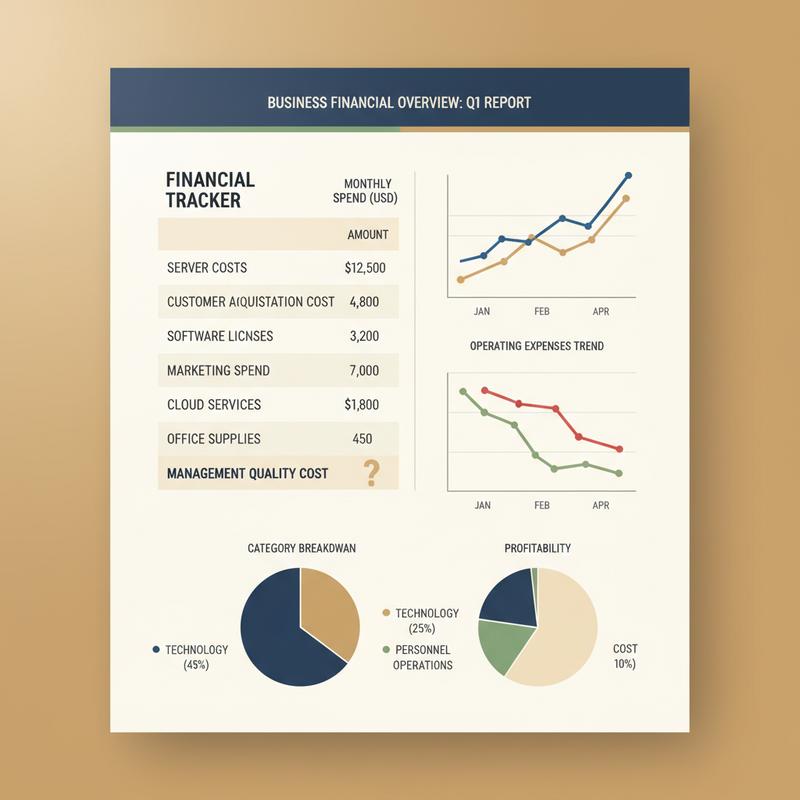
Somewhere in your organization right now, a bad manager is costing you more than all three combined... and nobody has a budget line for it.
The Numbers Nobody Tracks
Poor management costs U.S. companies over $500 billion every year. Of this, turnover accounts for $323.5 billion. A separate analysis puts the figure at $360 billion annually when you add productivity loss and disengagement.
The global picture is worse. Gallup's 2024 State of the Global Workplace report puts disengaged employees costing the global economy $8.9 trillion... nine percent of global GDP. Gone.
And the thread running through most of it? The manager.
Gallup's research consistently shows 70% of the variance in employee engagement comes down to the manager. Not the culture. Not the mission statement. Not the foosball table. The manager.
The Invisible Line Item
Here's what I find maddening. Companies will cut SaaS subscriptions to save $500 a month. They'll negotiate cloud contracts for weeks. They'll debate whether to hire a contractor or a full-timer for a $60k role.
But the cost of a manager making people want to leave? Silence.
The cost doesn't show up anywhere as "bad management." It shows up as:
- A resignation letter saying "pursuing other opportunities"
- A performance review where someone hits numbers but seems disengaged
- A Glassdoor review HR files away without acting
- A sick day taken for reasons nobody mentions aloud
The real cost is buried in numbers you do track, misattributed to something else.
You think the turnover was because the market was competitive. You think the productivity dip was because of the product pivot. You think the quiet-quitting phase was post-pandemic malaise.
Sometimes. But 75% of voluntary turnover is attributed to managerial issues. Three out of four people who walk out the door were pushed.
The 99.5% Problem
I ran a survey at Step It Up HR about bad bosses. I asked people whether they'd experienced one or more types of bad boss.
99.5% said yes.
Let it land.
Not a few bad apples. The whole orchard.
Nearly every person you've ever worked with has had a bad manager. Statistically, they've had several. And if 99.5% of people have experienced a bad boss... your organization has bad managers in it right now. The only question is whether you know who they are and what they're costing you.
DDI World's research found 57% of employees who quit did so because of their manager. Not the work. Not the pay. The person managing them.
Employees under poorly-rated managers are four times more likely to leave than employees with effective managers. Four times.
So when your best engineer hands in their notice and you're scratching your head...

What It Costs to Replace Someone
Here's where the numbers get personal.
Replacing an employee who leaves because of a bad manager costs between 30% and 200% of their annual salary.
A developer earning £60k? Replacing them means spending £18k to £120k. And this doesn't include the productivity loss while the role sits vacant, the interviewing time your team sinks, or the six months for a new hire to reach full output.
Now multiply by the number of people one manager has driven away over three years.
Then add:
- The people who stayed but stopped caring
- The projects taking longer because trust was low
- The innovations never proposed because nobody felt safe raising them
These are real costs. None appear on the P&L under "bad management."
Why Bad Managers Stay
82% of new managers in the UK are "accidental managers"... promoted because they were good at the job below them, with no training in managing people. It's the same story in the US. Good individual contributor becomes manager overnight. Nobody teaches them how.
Then there's the measurement problem. Organizations measure outputs. Revenue. Ticket close rates. Lines of code shipped. They rarely measure whether people want to work for someone, or how much of a team's capacity a manager is quietly destroying.
A manager who extracts short-term output while torching long-term morale looks great on a quarterly report. Until they don't.
75% of employees under authoritarian managers are actively job hunting. Your attrition problem isn't a market problem. It's a management problem.
Making the Invisible Visible
You don't fix this by firing everyone and starting over. You fix it by making the invisible cost visible.
Track the right things. Every time someone leaves, note which team they came from and who managed them. Most exit surveys ask "why did you leave?" but never connect the answer to specific managers. Start connecting those dots.
Measure management quality, not performance alone. Your performance review system measures whether people hit their targets. Does it measure whether the manager helped people grow? Whether people trust their manager? Whether they'd take another role under the same manager in future?
If you're not measuring it, you're not managing it.
Give managers feedback, not more training. Accidental managers don't fail because they haven't been on courses. They fail because nobody tells them, clearly and specifically, what's not working. A 360-degree feedback process... one people truly use... changes behavior.
At Step It Up HR, the whole premise of the Bad Attitude Tracker is giving employees a private, safe way to surface what their manager is really like. Not to get anyone fired. To create the feedback loop making things better.
Promote differently. Stop defaulting to the best individual contributor. Being great at a job is necessary, not sufficient. Ask yourself: does this person make the people around them better? Would others want to work for them? Build those questions into your promotion criteria.

The $500 Billion You're Not Counting
Your CFO will tell you what you spent on software last year to the dollar. Your CTO will tell you the cost per hour of compute. Your CMO knows the cost per click on every campaign.
Who in your organization will tell you what your management quality cost last year?
Nobody. Because you're not tracking it.
Not because it's unmeasurable. Because measuring it would require admitting it's a problem. And admitting it's a problem requires doing something about it.
The 99.5% of people who've worked for a bad boss already know the cost. They lived it in sleepless nights, résumé updates, and job searches conducted on lunch breaks.
The question isn't whether bad managers are costing you. The question is whether you're ready to put a number on it.