On June 1, 2026, GitHub quietly changed the rules.
Copilot moved from flat-rate subscription to usage-based billing. If your team runs Copilot heavily and you haven't configured spending budgets, you're going to get a nasty surprise at end of month.
One engineering team reported their monthly bill moving from $29 to $750 overnight. Another saw $50 become $3,000. This isn't an edge case. This is the new normal for AI coding tools.
I've seen this pattern before. In the early days of cloud infrastructure, teams treated AWS like a fixed-cost utility until the invoices showed up. Most of us learned the hard way. The AI tooling industry is following the same trajectory, and engineering leaders who don't adapt their budgeting approach are going to look foolish in the next finance review.

What Changed
GitHub Copilot replaced "premium request units" with AI Credits. One credit equals one US cent. Your plan's monthly subscription fee now comes with an equivalent credit allowance:
- Copilot Pro: $10/month, $10 in monthly credits
- Copilot Pro+: $39/month, $39 in monthly credits
- Copilot Business: $19/user/month, $19 in monthly credits
- Copilot Enterprise: $39/user/month, $39 in monthly credits
Basic code completions and next-edit suggestions remain free. They don't touch your credits. The moment your developers start running agentic workflows... asking Copilot to refactor entire files, write tests, or run code reviews... those credits drain fast.

GitHub's own justification: "Agentic usage is becoming the default, and it brings significantly higher compute and inference demands." Translation: developers are using Copilot more like an autonomous agent and less like smart autocomplete, so GitHub needs to charge for the compute being consumed.
Fair enough. The problem is most teams never had to configure spending budgets before. No budget configured means users run out of credits mid-month and stop. Or your organization gets billed for overages at end of month with no warning.
There's no automatic spending cap. You have to set one deliberately.
The Hidden Costs Nobody Mentioned
Here's something buried in the fine print: Copilot code review now double-bills. It consumes both GitHub Actions minutes AND AI Credits simultaneously. If your CI/CD pipeline runs Copilot code review on every pull request, you're paying twice for the same feature.
The advertised prices aren't the real prices either.
Copilot Enterprise is listed at $39/user/month. Sounds reasonable. Except it requires GitHub Enterprise Cloud, which costs an additional $21/user/month. Your actual per-seat cost is $60/user/month minimum, not $39.
And then there's the promotion masking the real number. Business and Enterprise customers received temporary elevated credits through August 2026. When those expire in September, the real baseline cost becomes visible. Right now, your bill looks manageable. In October, it won't.
According to research from DX covering over 400 engineering organizations, the real total monthly spend on AI coding tools lands between $200 and $600 per engineer once you factor in seat licenses and token consumption. For a 100-person engineering team, you're looking at $400,000 to $600,000 annually. This isn't a productivity tool line item. This is a headcount-level budget decision.
And the productivity gains? The same research found median PR throughput improvements of 7.76%. Vendors market 3x to 10x productivity gains. Real-world measurement shows 5% to 15%. Meaningful, yes. The 10x figure on the slide deck? No.
The gap matters when you're building a budget case.
The Shift From Utility to Infrastructure
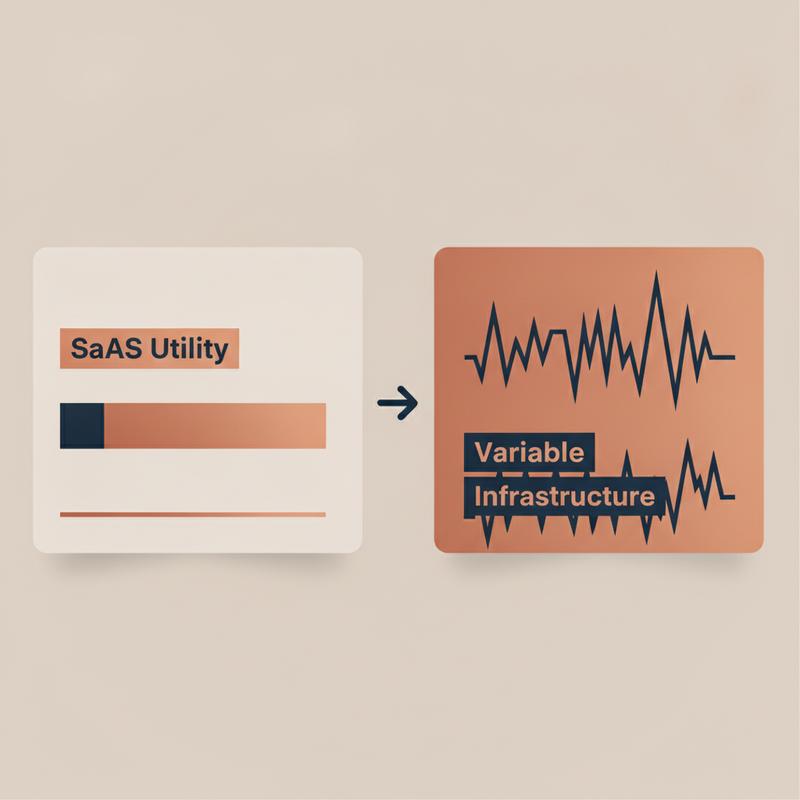
The mental model most engineering leaders have for AI coding tools is wrong.
We treated them like SaaS subscriptions. Predictable monthly cost per seat. Budget once, forget about it. This model is gone.
AI coding tools are now infrastructure costs. Variable. Consumption-based. Tied directly to usage intensity. The same way your AWS bill scales with traffic, your AI coding bill now scales with how aggressively your developers use agents.
This isn't a Copilot-specific problem. Cursor adjusted its team pricing on June 1 as well, adding Pro+ and Ultra tiers because developers kept hitting usage walls on the standard Pro plan. The entire industry is making this shift.
The pricing logic is sound. Agentic AI sessions consume 10x to 100x more compute than traditional autocomplete. Charging flat rates for this usage wasn't sustainable. GitHub is the first major vendor to formalize the shift, but the others will follow.
The engineering leaders who navigate this well will do what good cloud architects have always done: instrument usage, set budgets, and make conscious tradeoffs between capability and cost.
What Engineering Leaders Need to Do Now
Set spending budgets immediately. GitHub now provides budget controls at the enterprise, cost center, and user levels. If you haven't configured these, do it today. Unbudgeted agentic workflows are the fastest route to an unexpected invoice.
Audit which models your developers are using. Higher-capability models consume credits far faster. Some teams have developers defaulting to the most expensive model for every request, including trivial ones. Define which tasks warrant which model tier. A simple refactor doesn't need the same model as a complex architecture review.
Track usage by team, not by headcount. Some developers will consume 10x what others do. The blended average hides the distribution. You want to know who your heaviest users are, what they're doing, and whether the output justifies the cost. This isn't micromanagement. It's basic financial hygiene.
Measure actual productivity gains. Don't accept vendor metrics. Instrument PR cycle time, code review turnaround, and defect rates before and after AI tool adoption. If you're spending $600/developer/month, you need real numbers justifying it. The DX research found median gains of 7.76% in PR throughput... which translates to roughly one additional developer's output per 13 in your team. At $600/month per seat, you're paying a lot for each extra equivalent headcount.
Watch the promotional credits. Business and Enterprise customers received temporary elevated credits through August 2026. When these expire in September, your real baseline cost becomes visible. Don't let the promotional period mask what you're about to pay. Run a simulation now with the standard credit allowances to see what your October bill looks like.
Consider your tool portfolio deliberately. Claude Code currently offers a $20/month flat-rate plan, which is more predictable for budget planning. Cursor Business runs $40/user/month. Different tools suit different workflows. A considered mix of flat-rate and consumption-based tools, matched to actual use patterns, often works out cheaper than defaulting to one vendor for everything.
The Broader Pattern
I've watched organizations get burned by cloud cost surprises more times than I care to count. The pattern is always the same.
Fast adoption during a period of low or promotional pricing. Followed by sticker shock when real billing kicks in. Followed by a panicked attempt to understand what's being consumed. Followed by leadership asking why nobody saw this coming.
AI tooling is running the same play. The developers love the tools. The tools genuinely improve productivity. And the pricing is shifting from predictable to variable at exactly the moment organizations are scaling adoption.
We did this with cloud storage. We did it with compute. We did it with observability tooling. Every new category of infrastructure follows the same arc: startup pricing to hook adoption, then consumption-based pricing once the usage is embedded and switching costs are high.
The good news is you don't have to be surprised. The controls exist. The data exists. You need to treat AI coding spend with the same rigor you'd apply to any other infrastructure cost center.
Your developers won't thank you for restricting their tools. But your CFO won't thank you for a six-figure surprise on the Q3 AI tooling invoice either.
Set the budgets. Instrument the usage. Then let the developers work.
Have you seen your AI tooling costs shift since the June billing changes? I'd like to hear what your team is seeing.