This morning I asked my Linux box one question. When did you last reboot?
The answer: 8 August. Fourteen weeks and six days ago.
I didn't ask out of idle curiosity. I'd spent the morning reading about how OpenAI's agents found 948 ways to take over a Linux machine, and I wanted to know how exposed my own kit was. I expected a security story. I got a story about me.
948 Ways In, for $1,279 Each
On 4 November, OpenAI published A thousand fewer paths to root. Its agents scanned about 7% of the Linux kernel, reproduced 1,724 bugs, and built 948 working exploits. Each one lets an ordinary user on a stock desktop system take full control as root.
The whole run cost $1,213,430 in API credits. About $1,279 per exploit.
Decrypt's write-up adds the comparison OpenAI drew itself. Hacking competitions have historically paid $20,000 to $70,000 for a single Linux exploit of this kind. Back in July, an earlier model on the same test setup found 166. In October, a newer one found 948.
So the hunting got fast, and cheap. The pipeline even wrote a candidate patch for every bug.
One sentence in OpenAI's own post stopped me cold:
"Vulnerability discovery is becoming easier to scale, but prioritization and validation remain operational bottlenecks."
Read it twice. The company with the machine telling you the machine isn't the slow part.
What My Own Box Told Me
I ran a few commands on my main Linux machine. Here's what came back:
- Running kernel: 6.8.0-137, installed 7 August.
- Booted: 8 August. Never since.
- Newer kernels installed since then: 138, 139, 142, 146, 147 and 149. Six of them.
- Kernels booted since then: zero.
- Packages still waiting: 126, including kernel 151.
- The file on disk:
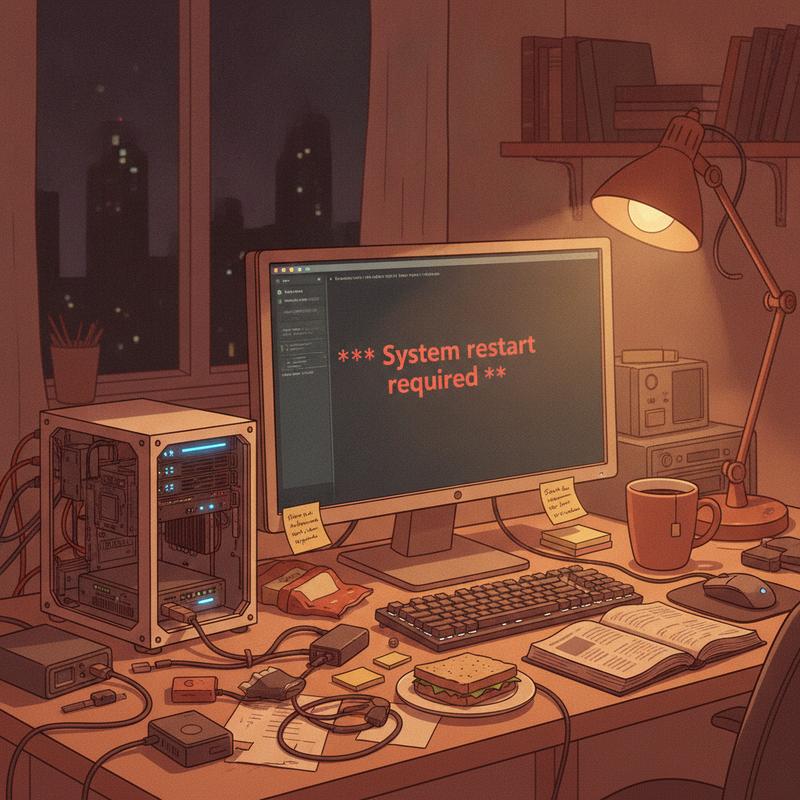
*** System restart required ***
My machine does everything right on its own. Unattended upgrades run every day. Ubuntu fetches the fixes, unpacks them, and parks them in /boot. Then it waits for a human to say "yes, reboot now."
The human never said it. The human had a podcast to edit and posts to write.
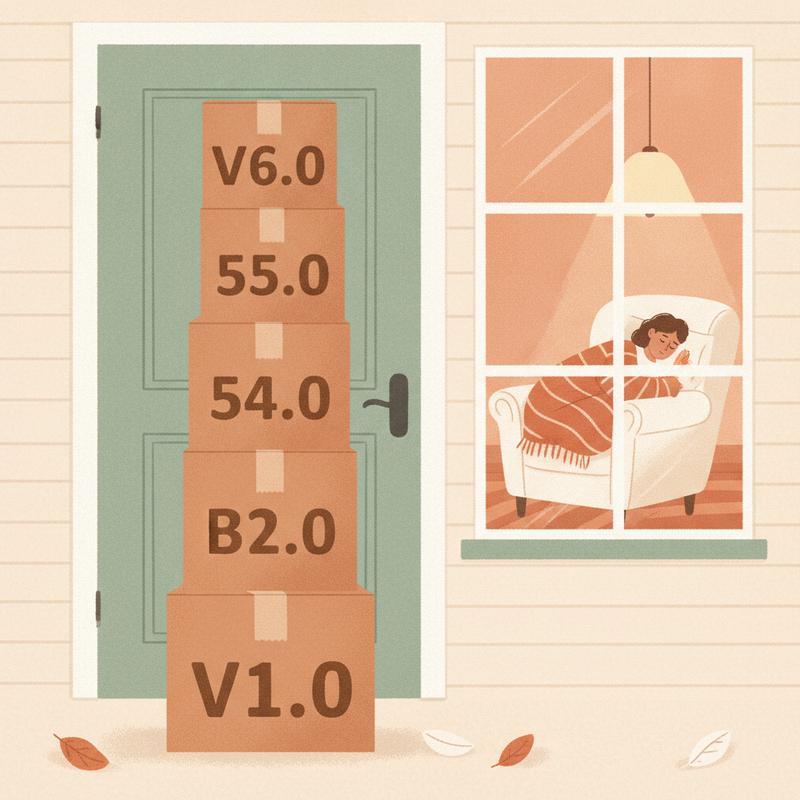
I've spent fourteen weeks protected by a kernel from July while six better ones sat on the same disk. The automation did its job. The decision sat with me, and I didn't make it.
I'm not sure about this part: I haven't checked which of OpenAI's 948 bugs, if any, affect Ubuntu's 6.8 kernel line or which got fixed in the kernels I skipped. OpenAI's post doesn't map findings to distro packages, and I won't guess.
The Maintainers Already Feel It
I'm one person with one box. The Linux kernel maintainers carry this at the scale of the whole internet.
Tom's Hardware reported in September the kernel now fixes close to 2,000 CVEs per release, up from roughly 500 through much of the 6.x era. AI tools drive most of the jump. A lot of what they turn up lives in obscure driver code. Some of it turns out to be hallucination.
Networking maintainer Jakub Kicinski estimated between a third and a half of the 648 patches he handled in one cycle looked like low-priority AI-driven fixes and clean-ups. His words: "We are completely overwhelmed."
Look at what they did about it. They deleted code. Maintainers proposed ripping out nearly 28,000 lines of old networking drivers for ISA and PCMCIA hardware. Almost nobody runs those devices, but every AI-found bug in them still demanded a human to investigate. Cutting the code cost less than judging the findings.
The tools work. The people on the receiving end of them drown.
Finding Got Cheap. Deciding Didn't.
The US Army taught me one lesson over and over. Intelligence doesn't win anything by itself. Somebody has to read the report, decide what matters, and act before the window closes. More reports don't help a commander who won't decide.
Same with patches. Same with your team.
Your people now have tools generating findings faster than ever. Code review bots. Security scanners. AI summaries of customer complaints. Survey dashboards. Every one of them produces a pile. None of them decides which three items matter this week and which 945 wait.
Here's where I see leaders go wrong:
They celebrate the pile
"Our new scanner found 400 issues!" Great. Who owns them? Which ones ship first? A finding nobody acts on gives you a false sense of safety and nothing else. My six unbooted kernels felt like protection. They protected nothing.
They keep the decision in one head
On my box, one person owns the reboot. Me. When I got busy, everything stopped. Your team works the same way when only you approve the release, the fix, the priority call. AI makes the queue in front of you longer, not shorter.
They never set a rule ahead of time
The kernel maintainers made a rule: unverified AI reports waste our time, so verify before you send. Greg Kroah-Hartman barred AI-generated patches from the staging tree except for real security fixes. Clear rules let people triage without asking permission every time.
I had no rule. So I deferred forever.

What I'm Changing
Step one is embarrassingly simple. I'm rebooting tonight, onto kernel 149, and I'll pick up 151 this weekend. Fourteen weeks of putting off a two-minute job ends today.
More important, I wrote down a rule: kernel updates reboot every Sunday night, no discussion. Ubuntu's unattended upgrades already supports an automatic reboot at a set time. I've had the switch all along. I never flipped it, because flipping it meant deciding when downtime was acceptable, and I kept not deciding. The decision gets made once, in advance, instead of never.
I'm taking the same idea into the work I do with teams:
- Name the owner of every queue. Not "the team." A person.
- Set the triage rule before the flood. What gets fixed today, what waits a week, what gets deleted.
- Measure closed, not found. A dashboard showing 400 findings tells you about the tool. A dashboard showing 40 closed tells you about the team.
- Delete what isn't worth judging. The kernel folks dropped 28,000 lines rather than babysit them. Kill the report nobody reads. Retire the process nobody owns.
Back in July I wrote about running a vulnerability scan on my own website every month, and about why your judgment matters more than your AI. This week I tested both ideas on myself. I failed. Scanning my website every month means nothing if I sit on the fix for the box underneath it. Judgment means nothing if I never use it.
Check Your Own Box
OpenAI's advice to defenders boils down to this: patch fast, because attackers will soon have the same tools for the same price. Their tools aren't your bottleneck. You are.
So go look. Run uptime on your servers. Count the findings sitting in your team's backlog with no owner. Find the decision you've parked for fourteen weeks because nothing forced it.
What's sitting on your disk, downloaded and waiting for you to say yes?