When I interviewed Ian Pettigrew on Corey-osity Unleashed, we spent most of the hour on hope at work. Leaders, teams, change programs. Serious stuff.
Then he told me about his dog.
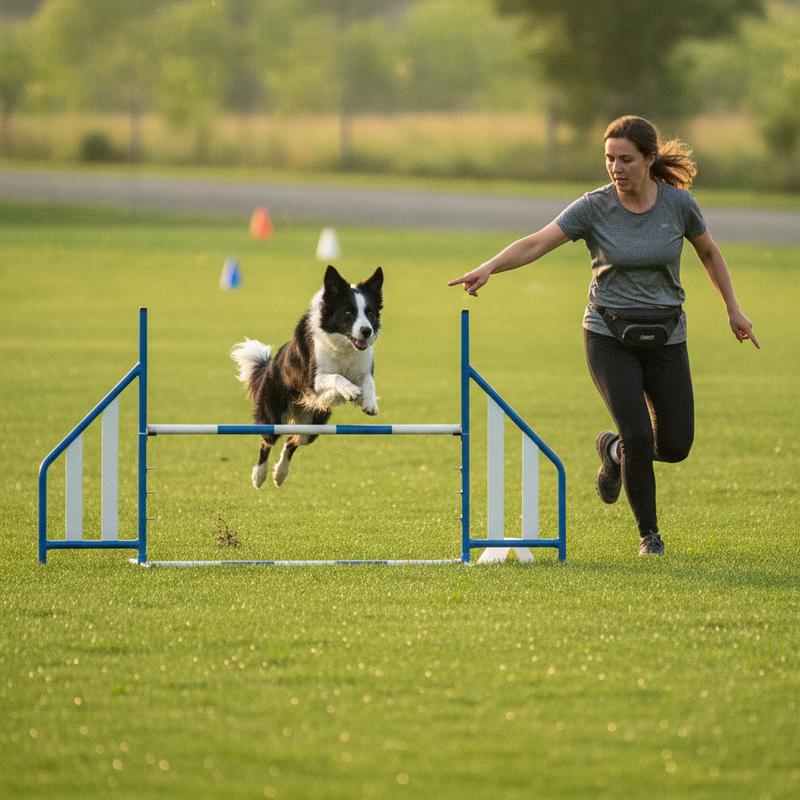
His Border Collie hurt a muscle deep in the hip, the kind of strain agility dogs pick up. Ian wanted him back on the course. So he pulled out the same one-page coaching tool he uses with executives and filled it in for the dog.
The dog came back. Ian told me he went on to reach Champion level in Agility Steeplechase.
I laughed when he told me. Then I stopped laughing, because I saw the point. A leadership tool you only use at work hasn't been tested. You've never used it on anything you cared about enough to notice if it failed.
The Tool Fits on One Page
Ian's tool is the Hope Playsheet. It's free to download. It has four boxes, and the first letters spell HOPE:
- Hope. What are you hoping for?
- Options and Obstacles. What are the other ways to get there? What might get in the way?
- Plan. Build a plan clear enough to "see how to get there from here."
- Engage. How will you show up, stick with the plan, and deal with the obstacles?
Every box also asks one more question... which of your strengths will you use here?
Ian's own site says the goals cover "work or personal, big or small." Most people read past the word personal. I did too, until he told me about the dog.
Why a Dog Makes a Good Test Case
A dog's injury is a hard, honest problem. Nobody spins it. The dog runs sound or it doesn't.
It's also not a rare problem. A 2022 survey of agility handlers in Frontiers in Veterinary Science covered 4,197 dogs. 327 of them, about 7.8%, had an iliopsoas injury. Border Collies carried higher risk than other breeds.
The recovery numbers tell you why a plan matters:
- 56% of injured dogs returned to competition within three months
- Another 24% took three to six months
- 14% took longer than six months
- 6% retired
And 36% of the dogs in the survey had more than one iliopsoas strain. Coming back is half the job. Staying back is the other half.
Look at those numbers and then look at the Playsheet. "What might get in the way?" has a real answer here. Re-injury. Rushing it. Losing patience in week six when the dog looks fine and you want to run.
This is the box most of us skip at work. We write the goal, we write the plan, and we hope nobody asks about obstacles.
The Obstacles Box Is Where the Work Happens
There's research behind the shape of Ian's sheet. Psychologists call one version of it mental contrasting with implementation intentions. You picture the outcome you want, you name the obstacle in your way, and you write an if-then plan for when the obstacle shows up. You'll also see it called WOOP: Wish, Outcome, Obstacle, Plan.
A 2021 meta-analysis in Frontiers in Psychology pooled 21 studies with 15,907 participants. The method helped people reach their goals, with a small to medium effect. The authors flagged some publication bias, so the real effect is likely smaller than the headline.
One finding stuck with me. When people worked through the method with another person, the effect came out stronger than when they worked through it from a document alone. 0.465 against 0.277.
So the sheet helps. The sheet plus a person helps more.
Ian had both. He had the sheet, and he had himself as the coach... a coach who cared about the outcome more than any client ever will.

I Wish I'd Had This in Spain
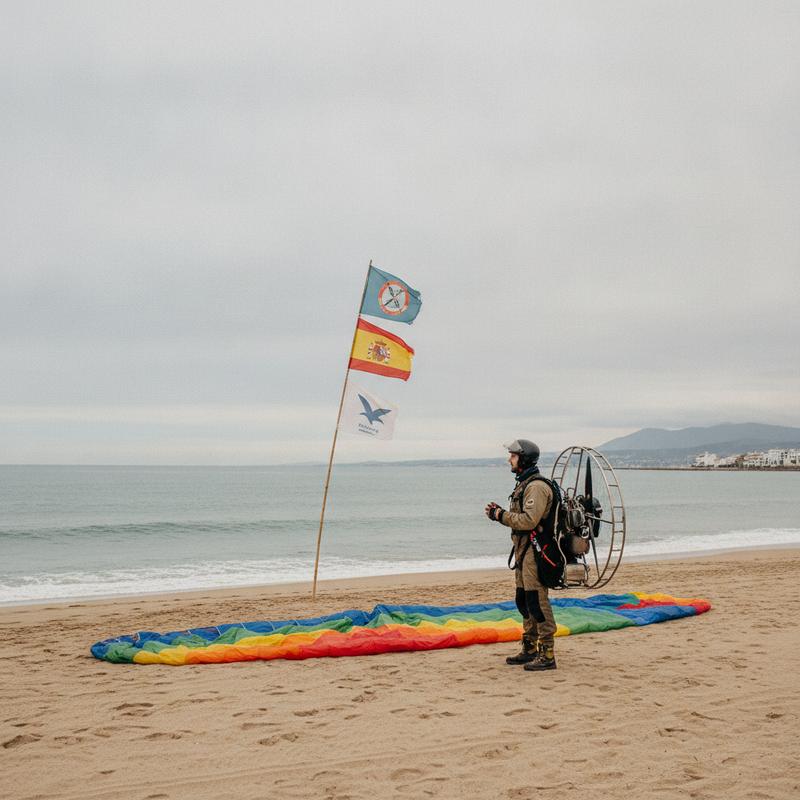
In October 2018 I went to Malaga to learn to fly a paramotor. I had two weeks, a motor, a wing, and a hope. Get in the air.
The weather had other ideas. Storms. Rain. Wind too light, then too gusty. I wrote at the time about one day where I strapped the motor on my back three separate times, ready to go, and never left the ground. At 5pm we moved to another site. The wind there swung all over the place and the field was crowded. I was going up for only the second time in my life. I decided it was above my skill and pulled my own plug.
I felt like I'd wasted a day. Looking back, I made the right call for the wrong reasons. I made it out of frustration, not from a plan.
Here's the same day on Ian's sheet:
- Hope: Fly solo, safely, before the course ends.
- Options and Obstacles: Weather is the obstacle outside my control. My skill level is the one inside it. Options: fly early, fly late, switch sites, use the downtime to practice ground handling.
- Plan: Set my own wind limits before I strap in, not while I'm standing there wanting it.
- Engage: Show up every day ready. Walk away without sulking when the numbers say no.
The first two lines I knew in my head. The last two I never wrote down. Writing them down would have turned "pulled my own plug" from a defeat into the plan working.
Why This Matters for Leaders
I've sat through plenty of leadership training. I've also run plenty of it. Here's the pattern I see.
People learn a tool on Tuesday. They use it once on Wednesday, in a meeting, with some awkwardness. By Friday it lives in a folder.
They never used the tool on anything they cared about. Work goals come pre-loaded with someone else's targets. You don't feel the gap between the plan and the result, because the result belongs to the company.
Your dog. Your knee after surgery. Your kid learning to read. Your first solo flight. Those you feel.
Run a tool through one of those, and three things happen:
You find out if it works
A tool either helped you or it didn't. You'll know in a few weeks. No survey needed.
You find out where it's hard
You'll hit the box you want to skip. For me it's Engage. Writing down how I'll behave when I'm frustrated feels silly. It's also the line I need most.
You coach better
When you hand the sheet to someone on your team, you're not reading instructions off a slide. You're telling them how it went for you, and what you'd do differently. This is the person-plus-sheet effect the meta-analysis found.
I wrote recently about how hope research started with a study of excuses. The Playsheet is where you take an excuse and turn it into a route. Practice it at home first, where you're honest with yourself.
Try It This Weekend
Download the Hope Playsheet. Pick one thing outside work you want. Something with a real obstacle. Something you'd be sad to lose.
Fill in all four boxes. Spend the most time on Options and Obstacles. Write your strengths into every box.
Then live with it for a month.
If it works on the thing you love, use it at work. If it doesn't, you've learned something no workshop would have taught you.
What's the one thing in your life outside work you'd test it on first?