My grandson reads my face before I say a word.
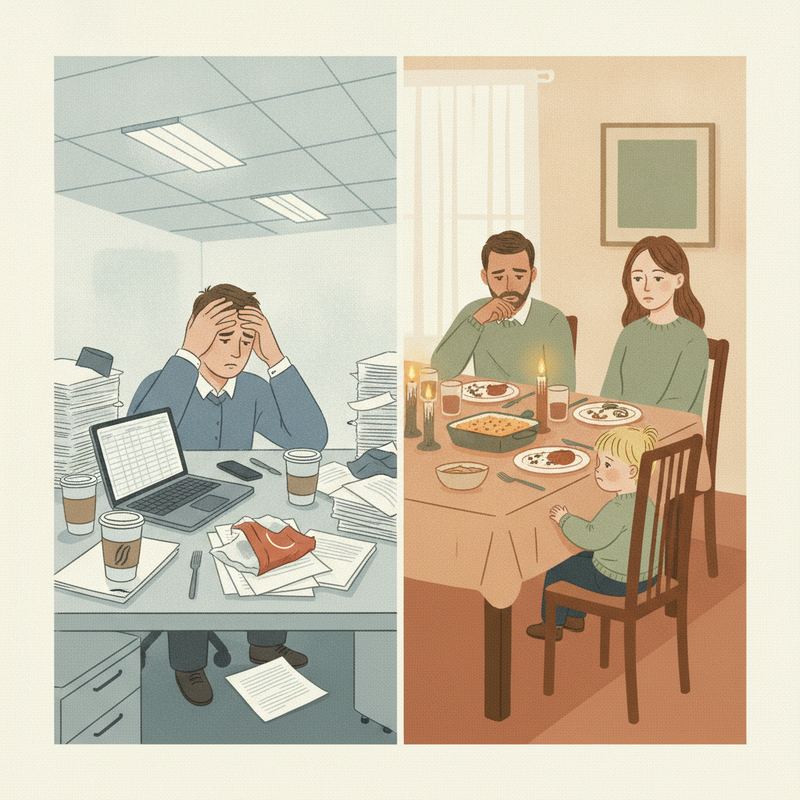
He's four. He doesn't know what "cortisol" means or what a bad quarter looks like on a P&L. But he knows the difference between the version of me who walks in still carrying the office, and the version who's home. Kids are smarter about this than we give them credit for. They don't listen to what you say about your job. They watch what your job does to you, and then they decide what work is.
This is the part nobody puts in the engagement survey.

The Number Everyone Quotes, and the One They Don't
Gallup's 2026 State of the Global Workplace report puts global employee engagement at 20%, down from a peak of 23% in 2022-2023. Gallup pins the cost of this disengagement at roughly $10 trillion in lost productivity worldwide, about 9% of global GDP. Ken Corey's own company, Step It Up HR, cites the same 21% figure. Numbers like these get repeated in keynotes and LinkedIn posts because they're big, they're scary, and they make a good slide.
Here's the number which should scare you more. In research I conducted, 99.5% of survey respondents said they've had one or more bad bosses. Not "a difficult manager." Not "someone with a different style." A bad boss. Almost everyone who has ever held a job has been on the receiving end of bad leadership.
Now put those two facts next to each other. Eight in ten people are checked out at work, and virtually everyone has been mistreated, mismanaged, or ignored by someone above them at some point. This combination doesn't stay in the building when the shift ends. You carry it home. And somebody's waiting for you there.
The Research Backs Up What Every Kid Already Knows
There's a body of academic work on what psychologists call work-family spillover and crossover. One study, published in Family Stress and Parental Responses to Children's Negative Emotions, found parents' own stress and dissatisfaction directly shaped how supportive they were when their kids came to them upset. Higher marital dissatisfaction meant less support for a child's negative emotions. And it wasn't limited to the stressed parent. When one partner reported job dissatisfaction, their spouse also became less supportive with the kids. One person's bad day at the office rippled through the entire house.
Read it again. It's not only your own patience running thin when your job grinds you down. It's your partner's too. The stress crosses over. Nobody else in the house had a bad day at the job, but everybody pays for it.
I didn't need a peer-reviewed study to know this. I needed to watch my grandson's face change when I walked in still holding a bad meeting in my shoulders. Kids don't need the research. They ARE the research. They're running a live experiment on your nervous system every single day, and they're smart enough to know what the data says.
What You're Teaching Them Without Saying a Word
Here's the uncomfortable part. Your kid is building an entire model of what a career should feel like by watching you. If work leaves you snapping at small things, distracted at dinner, or numb on the couch by 7pm, this is not neutral information. This is the lesson. You are teaching a small, watchful person this is what adulthood costs: you trade your best hours and your best self to an employer, and whatever's left over goes to the people you love most.
I don't think most bad bosses set out to hurt anyone's kids. I don't think most disengaged employees are trying to model burnout for the next generation. Nobody clocks in thinking "today I will teach my child ambition equals exhaustion." But intent has never been the point. Impact is. And the impact is a kid who grows up associating a paycheck with a parent who wasn't fully there.
I've watched this pattern in leadership development work for years. The managers who are hardest on themselves, who carry every piece of criticism home and turn it over all night, raise kids who worry about their own performance before they've even had a first job. The managers who model boundaries, who say plainly, "I had a rough day, give me twenty minutes before I'm good company," raise kids who understand work is one part of life, not the whole of it.
Naming It Is the First Move
You won't fix a spillover you refuse to admit is happening. The single most useful thing I've found, both in my own house and in the leaders I've coached, is to say the quiet part out loud. Not to your boss. To your kid.
"I had a hard day. I'm not mad at you. Give me a few minutes and I'll be better company." This sentence does more work than an hour of forced cheerfulness at the dinner table. It tells a child the truth: adults have bad days, bad days are not their fault, and there is a version of you on the other side of twenty minutes who is fully present. This is a completely different lesson than silence, snapping, or the thousand-yard stare at a phone.
The second move is harder. At some point you have to ask whether the job itself is the problem. If you're bringing home a bad boss's fingerprints every single night, this is not a "manage your stress better" problem. This is a "get out" problem. I've written before about how innovation dies when leaders punish mistakes instead of learning from them. The same logic applies at home. If an environment keeps producing the same bad outcome no matter how well you cope, the environment needs to change, not your coping.
There's a middle move too, one people skip because it feels small: build a hard line between the drive home and the front door. Some leaders I've coached use the last five minutes of a commute to name out loud, to nobody but themselves, what happened during the day and what they're setting down before they walk in. It sounds a little silly the first time. It works. A body which has processed the day, even briefly, walks through a door differently than a body still bracing for the next email.

The Question Worth Asking Tonight
Before you walk in the door tonight, ask yourself one question: who is about to open this door? The version your job made, or the version your family deserves?
You don't get to choose whether your kid is watching. This part is guaranteed. The only thing you control is what they see.