I have watched people change shape in a doorway.
You see it if you stand near reception long enough. Someone walks in from the car park with their real face on... tired, worried, chewing over a row at home or a diagnosis or a bill. Then they cross the threshold, and the face resets. Shoulders back. Smile on. "Morning! Good weekend?"
Then they sit down and do their actual job on top of it.
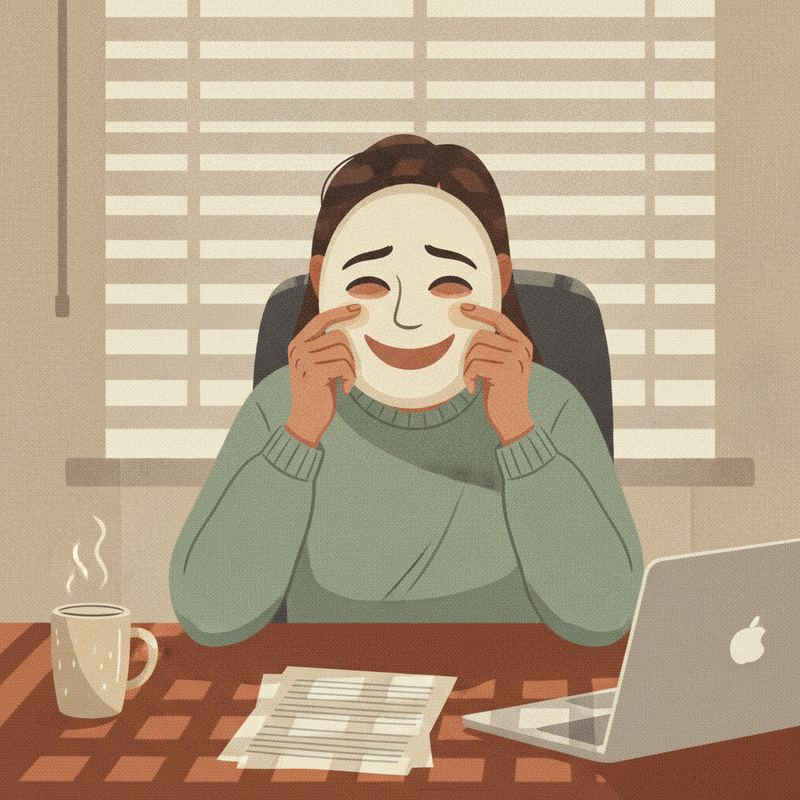
The second job
Ian Pettigrew talks about surface acting, and the phrase has stuck in my head for months. It comes from Arlie Russell Hochschild, a sociologist who published The Managed Heart in 1983 after studying flight attendants. She coined the term "emotional labour" for work where your feelings are part of the product.
She split it in two.
Surface acting is pretending to feel what you do not feel. Face, voice, posture. The mask goes on and the real thing stays underneath, still running.
Deep acting is going further and talking yourself into the feeling, so the gap closes.
Hochschild studied cabin crew because their smile was on the price list. Forty years on, the smile is on everyone's price list. Not written into the contract, never mentioned in the interview, but there all the same. Be upbeat in the stand-up. Be relaxed about the deadline. Be fine about the reorg nobody explained.
Nobody applied for the second job. Everybody does it.
It has a bill, and the bill lands on the person
Here is the part leaders skip. Surface acting is not free. It is effort, spent on top of the work, and the research keeps finding the same bruise.
A study of 118 registered nurses measured surface acting against the Maslach Burnout Inventory. Surface acting correlated with emotional exhaustion at r = 0.361 for patient-facing work and r = 0.363 for the acting nurses did around each other, both at p < .001. Read the second number again. Faking it for colleagues hurt as much as faking it for patients.
The same study found the nurses planning to walk out of their current job scored higher on surface acting than the ones staying. The mask predicted the exit.
Think about what a nursing shift already asks of a person. Now add a full extra layer of performance, unpaid, invisible, running all day. No wonder people leave. They are not quitting the work. They are quitting the acting.
Your culture decides how much acting happens
Some emotional labour comes with the territory. A nurse holding it together in front of a frightened patient is doing skilled, decent work. A support agent staying calm with an angry caller is earning their money. Nobody sensible wants a workplace where every passing mood gets aired.
The question is different. It is about the acting nobody needs.
The acting in the team meeting where the plan is broken and everyone says the plan looks great. The acting in the one-to-one where "how are you doing?" has exactly one safe answer. The acting in the all-hands where the numbers are grim and the room performs optimism at a leadership team performing optimism right back.
None of it serves a customer. It serves a culture where honesty costs you something.
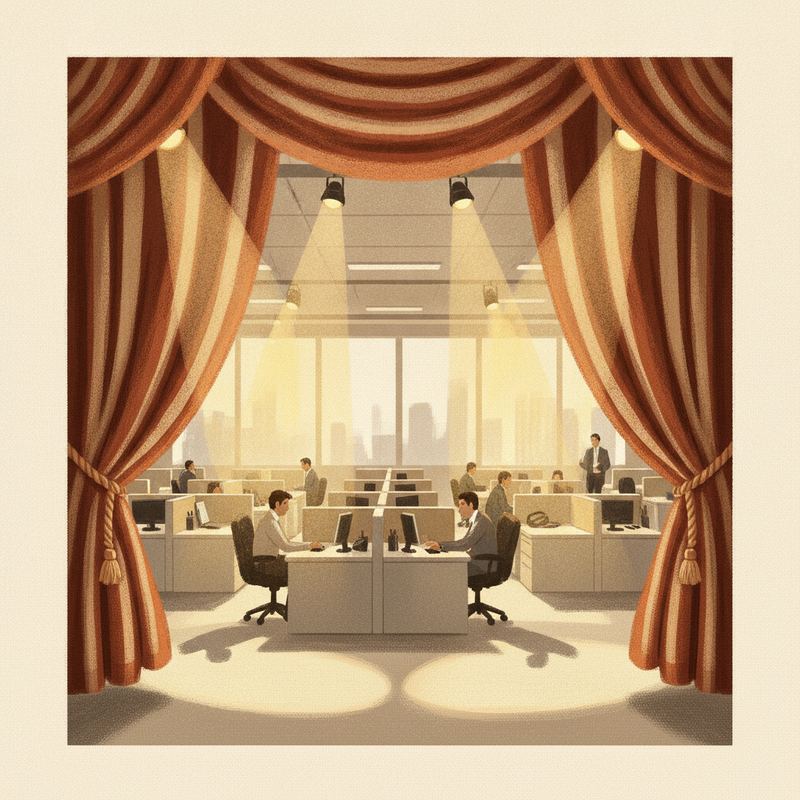
And the tell is easy to spot. Ask yourself what happened the last time somebody on your team said the unwelcome thing out loud. Did the room get quieter for a second and then move on? Did they get a reputation? Did they get managed?
Your people watched. They priced it. They adjusted.
What it costs the business
Gallup put global employee engagement at 20% in 2025, with 16% actively disengaged. Four in five people are showing up without being in it.
I do not believe four in five people are lazy. I have never met a workforce like it. What I have met is a lot of people doing a fine impression of engagement while the real thing drained away, because the culture rewarded the impression and punished the truth.
My own research found 99.5% of people surveyed have had one or more types of bad boss. Nearly everybody. Those bosses did not all shout. Most of them simply made honesty expensive, and their teams learned to perform instead. A bad boss does not need to be a monster to double your workload. They only need to make the truth risky.
The bit where I admit I did it
I have been the one performing.
I have sat in meetings with a knot in my stomach, nodding along to a decision I thought was wrong, and said nothing, because saying something looked costlier than the wrong decision. I have written about the day I was wrong in front of my boss's boss, and the reason the day stands out is how rare it felt to be exposed rather than polished.
I have also been the leader other people performed for. I know because of what surfaced in exit interviews. People carried stuff around for a year and handed it to me on the way out the door, when it was no use to either of us. I had not built a room where handing it over earlier was safe.
Nobody told me I was running a theatre. Nobody ever does.
Stop asking people to act
Four things, none of them expensive.
Go first. Say the hard thing about your own work before you ask for it. "I got the resourcing call wrong in March, and here is what I missed." Watch how fast the room changes temperature. You are not being vulnerable for a poster. You are showing the price of honesty in your team, and setting it low.
Make the safe answer boring. "How are you?" has one socially correct reply, so stop leading with it. Try "what is the most annoying part of your week?" or "what is the thing you have stopped bothering to raise?" Specific questions get specific answers. Vague ones get the mask.
Reward the messenger where people see it. Someone tells you your favourite project is a dud. Thank them in public, by name, and then change something. Gratitude without a change is one more piece of theatre, and your team reads it in a heartbeat.
Count the acting, not the smiles. A quiet, cheerful, agreeable team is not proof of health. Sometimes it is proof of a well-rehearsed cast. Go looking for disagreement in your last ten meetings. If you find none, you have your answer.

The real question
Every person on your team is doing hard work. Some days the work is more than enough on its own.
So ask the question honestly, and sit with the answer for a minute. How much of your team's energy goes into the job, and how much goes into looking fine while doing it?
You set the exchange rate. Nobody else.