I stole a question from a manager I worked for years ago, and it wrecked my one-on-ones in the best possible way.
Six words. "What aren't you getting from me?"
Ask it at the end of every one-on-one. Then shut your mouth and wait.
Most one-on-ones are status meetings in a costume
Here's the standard shape. You book thirty minutes. Your report walks you through their tickets. You nod. You ask about blockers. They say none. You say great, keep it up. Everyone leaves on time feeling productive.
Nothing happened.
A status update belongs in a document you read on your own time. Burning a face-to-face slot on it is waste. Worse, the shape of the meeting sets the direction of the information. Everything flows upward, toward you, for your benefit. You get visibility. Your report gets the privilege of having supplied it.
I ran meetings like this for years. I thought I was a good manager because my calendar stayed full of them.
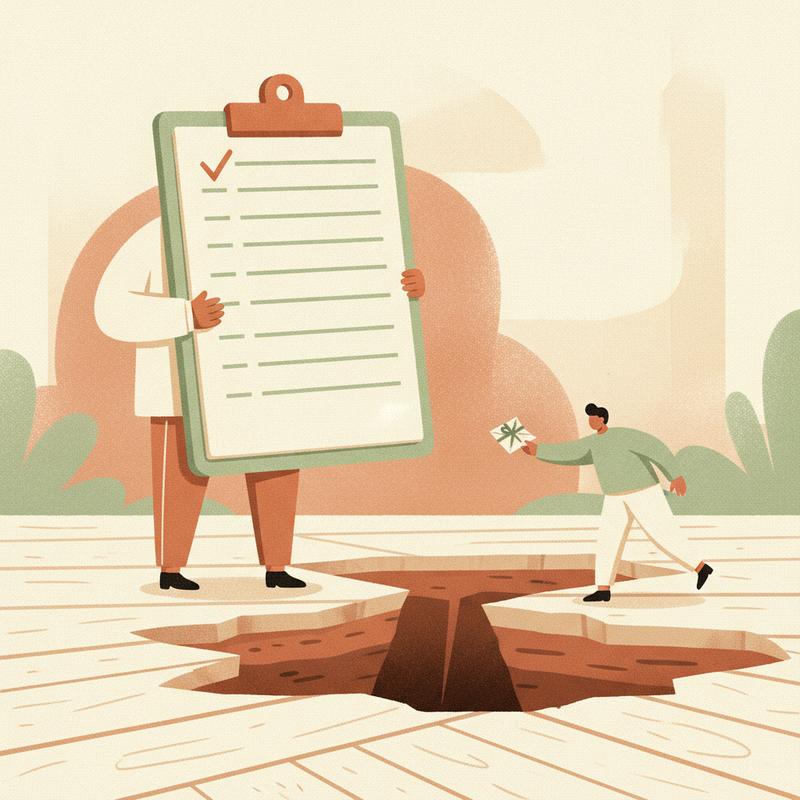
The question flips the direction of travel
"What aren't you getting from me?" turns the feedback around and points it at the person with the power.
Notice the framing. I'm not asking "do you need anything?" because the honest answer to a yes-or-no question from your boss is always no. I'm asking what is missing, and the grammar treats the gap as a given. Something is absent. Name it.
Tiny difference in wording. Enormous difference in what comes back.
"Do you need anything?" invites politeness. "What aren't you getting from me?" invites an answer.
The gap is real, and it's wider than you think
Gallup's research on manager habits puts numbers on this. In their write-up of a great manager's most important habit, 80% of employees who received meaningful feedback in the past week are fully engaged.
Now the other side of the coin. Only 16% said their last conversation with their manager was extremely meaningful.
Sit with those two numbers together. The single strongest lever a manager holds is a decent weekly conversation, and five out of six of us are failing to have one.
Gallup also found short and frequent beats long and rare. Fifteen to thirty minutes every week outperforms an hour every month. The habit matters more than the duration.
And here's the one which stung me most. Only 10% of employees get asked how they like to be recognized. We hand out praise in the format we enjoy receiving it, then wonder why it lands flat.
The first three times you ask, you get nothing
Prepare yourself for this, because most managers quit at the second attempt.
Ask one: "Nah, all good."
Ask two: "Nope, you're fine."
Ask three: a pause, then "Nothing springs to mind."
Ask four is where it turns. You get something small and safe. "A bit more notice when priorities shift, I guess." It sounds trivial. Treat it as though the building is on fire. Fix it inside the week and tell them you fixed it.
Do it once and you've bought yourself the real answers.
Your team has been reading your reaction to bad news since the day you took the job. They already know whether honesty is expensive around you. One question won't overwrite years of evidence. Repetition plus visible action will.

Five rules for asking it well
Ask it last, never first
Open with the question and you'll get a reflex. Ask it after twenty minutes of ordinary conversation, once the guard has dropped, and you'll get thought.
Count to ten in silence
The urge to rescue the moment is brutal. Resist it. Silence is the sound of somebody deciding whether to trust you. Fill the gap and you've answered your own question for them.
Write the answer down in front of them
Pen, paper, visible. The gesture says this counts. A nod says the opposite.
Fix one thing inside a week
Not all of it. One thing. Speed beats completeness, because speed is the proof.
Close the loop out loud
"You said you weren't getting enough context on the roadmap. Here's what I changed." Unclosed loops teach people the question was theater.
It costs you your ego, and the price is fair
The answers sting.
"You interrupt me in design reviews."
"You give the interesting work to whoever asks loudest."
"I find out about decisions affecting my team from other people."
Every instinct screams to explain the context, the constraints, the reasons. Swallow it. The moment you explain why they're wrong, you've taught them to stop talking, and no amount of asking wins the ground back.
Say thank you. Ask one clarifying question. Write it down. Leave the defending for later, or for never.
I've eaten this particular meal more than once. A senior engineer once told me my "open door" was worthless because I visibly flinched every time somebody walked through it. He was right. I had no idea. Nobody in eighteen months had said a word.

The question works upward too
Ask your own boss the same six words.
I've done it, and the first reaction is nearly always a startled laugh. Bosses hear complaints. Bosses rarely hear a direct request for the specific thing they are failing to supply. The laugh is the sound of somebody realizing nobody has ever put it to them plainly.
Two useful things follow. You get what you need, which beats resenting the absence of it in silence. And you show your manager the move by performing it on them, which spreads faster than any training slide about feedback culture.
Try it sideways as well. Ask the peer whose team keeps colliding with yours. "What aren't you getting from me?" turns a turf argument into a supply problem in about four seconds, because the question hands the other person the position of the one being served.
Nobody stays defensive while being asked what they need.
Why this beats anything on your org chart
My research for the book found 99.5% of survey respondents said they've had one or more types of bad bosses. Near enough everyone.
Almost none of those bad bosses woke up planning it. They drifted. They stopped hearing anything true, and the silence read as approval. A manager surrounded by nodding heads believes the nodding.
The question is a smoke alarm. It won't stop every fire, and it tells you early while the fire is still small enough to put out with a cup of water. Skip it, and the first news you get arrives through an exit interview you weren't invited to.
I've written a fair bit more about how ordinary managers turn into bad bosses over at Step It Up HR.
Try it this week
Pick your next one-on-one. Do the normal thirty minutes. At minute twenty-five, ask the six words and then say nothing at all.
You'll hate the silence. Sit in it anyway.
So, what would your team tell you they aren't getting from you... and how long has it been since anyone felt safe enough to say it out loud?