Years ago I sat in an all-hands where the boss read forty-seven slides out loud. I counted them. Half the room counted with me, which tells you exactly how much of the message landed.
At the end, someone asked the only question anyone cared about. Are our jobs safe?
He flipped back to slide twelve and read it again.
Slide twelve did not know the answer. Neither did he. The difference is he had a slide to stand behind, and every person in the room saw him do it.
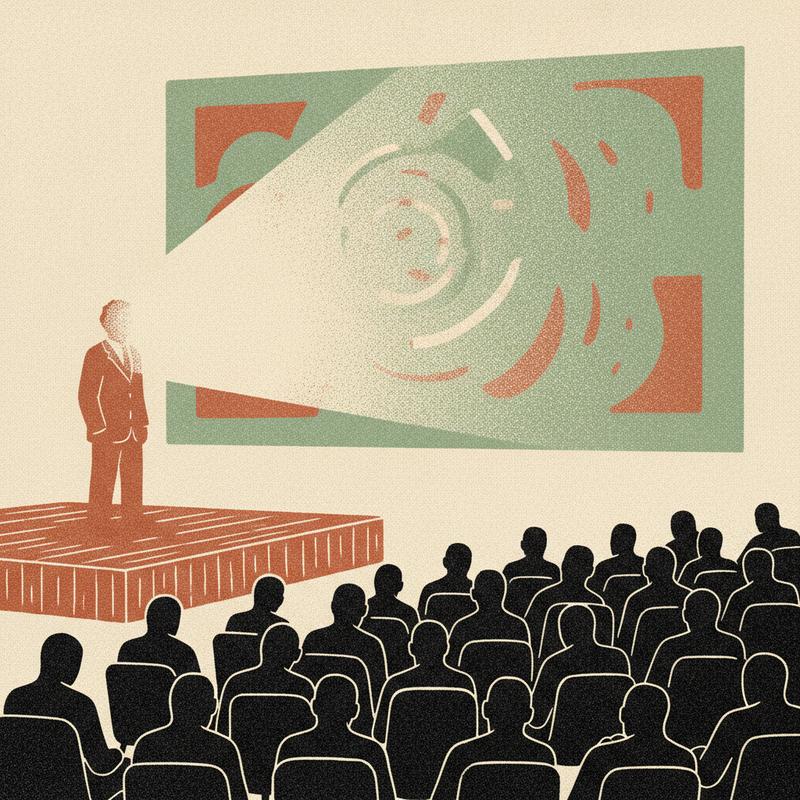
The deck is armor
I understand the appeal. I have worn the armor myself.
A slide gets reviewed. A slide gets approved. Legal reads it, comms softens it, and by the time it hits the wall it has been sanded down to something with no edges left. Nobody gets fired over slide twelve.
A person, standing in front of a room with no clicker, has none of protection. A person gets asked follow-up questions. A person has to say "I don't know" in front of ninety people who report to him.
So leaders build the deck, and then they hide inside it. The deck stops being a tool for explaining and starts being a place to stand.
I learned the tell in the Army, long before I ran engineering teams. Some officers briefed from the board and some briefed from the front of it. The ones who stepped away from the board, who put the pointer down and looked at us, were the ones we followed into miserable weather at four in the morning. The board carried the information. The officer carried the weight of it. Soldiers know the difference in about eight seconds, and so does your engineering team.
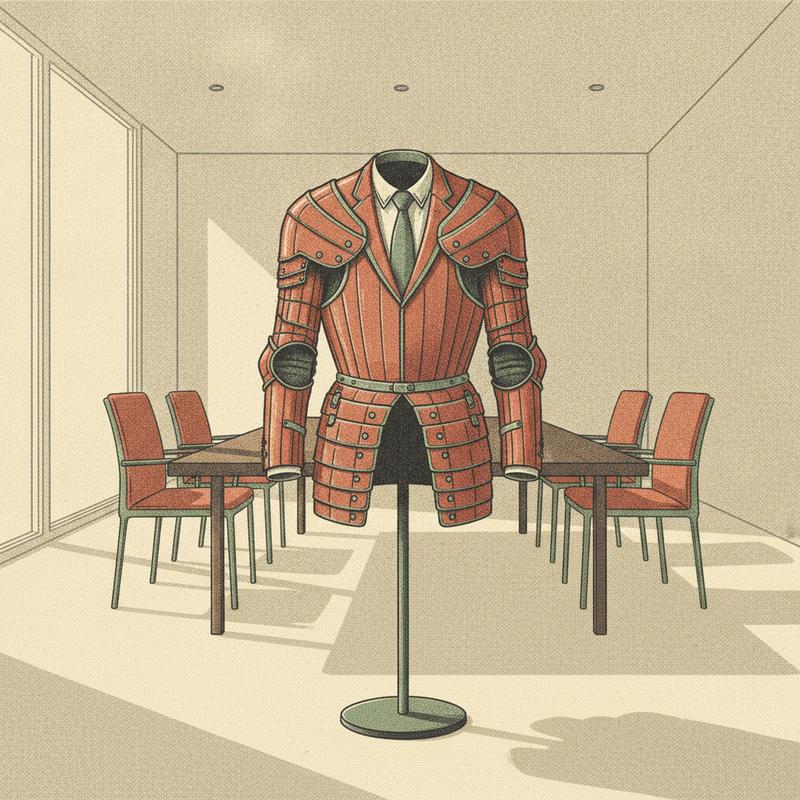
People are asking for something you are already withholding
Here is the part which should sting a little.
Your people trust the company more than they trust almost anything else in their lives. The 2026 Edelman Trust Barometer found 78% of respondents trust their employer to do the right thing, the highest score of any institution in the study. Eighty-one percent said their employer is responsible for bridging divides.
Then the same study found 75% of people believe CEOs are obligated to help bridge those divides, and only 44% think their CEO does it well. A twenty-nine point gap between what people want from the top and what they get.
Gallup adds the detail. In its 2025 workplace research, 29% of employees said they lack clear, honest or consistent communication from leaders, and only 32% feel strongly connected to their organization's mission or purpose.
Read those numbers together. Your people have already decided to trust you. They handed you the benefit of the doubt before you walked in the room. And then a third of them tell a survey company they have no idea what you mean.
The deck did the talking. The deck is bad at talking.
My own research points the same direction. When we surveyed people about their bosses, 99.5% said they had experienced one or more types of bad boss. Not a handful of horror stories... nearly everyone. Most of those bosses were not villains. They were people who never let anyone see them think.
I have watched what the wall costs in engineering organizations specifically. A team with no read on the leader's real thinking builds for the safest possible interpretation of the roadmap. They gold-plate. They pad estimates. They hedge the architecture against a strategy nobody ever explained out loud, and two quarters later you sit in a review wondering why the simple thing took so long.
The slides were clear. The intent never was. Ambiguity at the top turns into rework at the bottom, and rework shows up in the budget with your name on it.
The overcorrection is worse
Now the warning, because leaders love a pendulum.
The answer here is not a staged moment of vulnerability. It is not the leadership offsite where you announce you are going to be more open from now on, then cry on cue at the next all-hands.
Research from Danbee Chon at the University of South Florida, published in the Academy of Management Journal in September 2025, found leaders who changed their behavior quickly were seen as less authentic, even when employees had asked for the change. Chon's teams ran three studies, including one drawing on responses from 2,000 employees reacting to leadership action plans written by real executives. The effect was strongest when the change was hard. As Chon put it, people believe true change takes time.
Think about what this means. Your team will punish the sudden performance of openness harder than they punished the slides. The slides were boring. The performance is insulting, because it asks them to pretend along with you.
Performed authenticity is a new deck with worse graphics.
What showing up as a person looks like on a Tuesday
None of this requires a personality transplant. It requires five habits, and none of them are comfortable.
Answer the question asked. Not the adjacent question you prepared for. If someone asks about layoffs and you talk about strategy, everyone hears the swerve, and the swerve costs you more than the bad news would have.
Say the number you do not want to say. Revenue missed. The launch slipped six weeks. Two people quit last month and here is why. Your team already knows. Saying it out loud costs you nothing you still had.
Say "I don't know," then give a date. "I don't know, and I will tell you on the 15th whether I know by then." Uncertainty is survivable. Being managed is not.
Cut the deck to three slides. If you need forty slides, you do not have a message, you have a document. Send the document the night before. Use the room for the part which needs a human being in it.
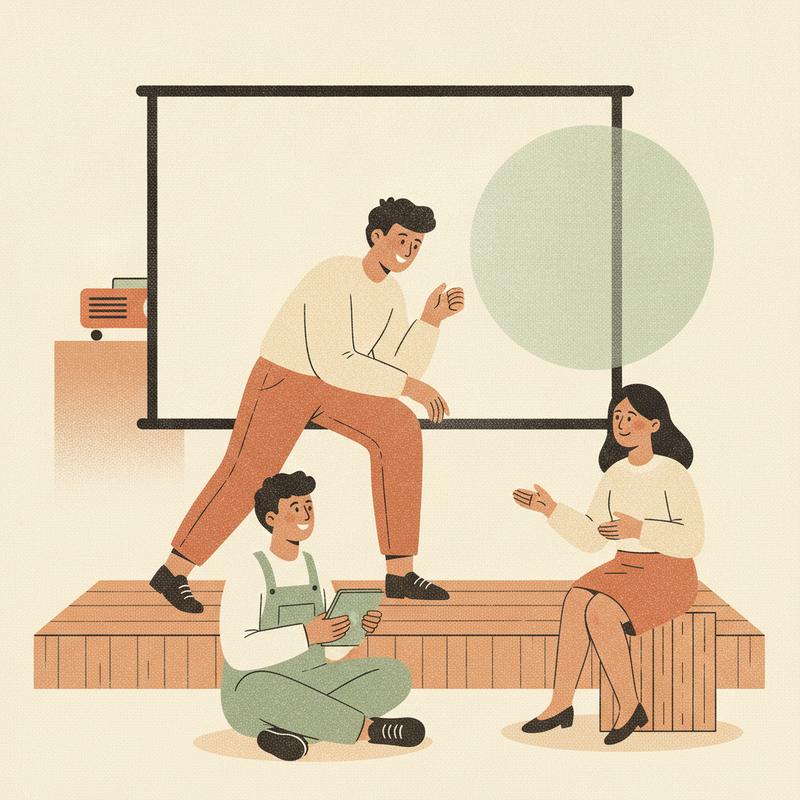
Stay in the room afterward. The real all-hands starts when the projector goes off. The questions people would never ask into a microphone get asked at the edge of the stage, one at a time, quietly.
The test I use
Before any talk I give now, I ask myself one thing. If the projector died right now, would I still have something worth saying?
If the answer is no, the talk was never mine. It belonged to whoever built the template.
The deck was supposed to help you explain. Somewhere along the way it turned into a wall, and you built it yourself, one approved bullet at a time. Your people do not want the wall taken down slowly and dramatically over a quarter. They want you to walk around it and finish the sentence you started.
I write more about this kind of leadership over at Step It Up HR, including a self-assessment tool for leaders willing to find out how they land.
So here is the question worth sitting with. The last time your team heard something true from you, was it on a slide... or was it after the slides were done?