
In June 2026, the White House ordered Anthropic to cut off a customer's access to one of its most advanced models. Days later, Anthropic pulled Claude Mythos and Fable 5 offline entirely for foreign users, worldwide, not only for the one company caught in the dispute.
If you build software on top of a single AI vendor, read the rest of this post twice.
What Happened
The short version, pieced together from reporting at Tom's Hardware and The AI Chronicle:
South Korea's SK Telecom invested $100 million in Anthropic back in 2023 to co-develop multilingual AI. This relationship earned SK Telecom early access to Claude Mythos, a vulnerability-detection model, through a program called Project Glasswing, alongside roughly 150 other organizations.
Separately, Amazon (Anthropic's largest investor, with a stake reported around $13 billion) flagged a guardrail bypass in Fable 5 to the White House. Researchers had prompted the model to read a codebase and fix its own flaws, effectively turning a coding assistant into a vulnerability-discovery tool. This flag, combined with concerns over SK Telecom's ties to China, led the administration to order Anthropic to revoke SK Telecom's access and, days later, to pull Mythos and Fable 5 offline for foreign nationals entirely.
Reporting also includes a line worth sitting with, attributed to sources close to the administration: AI is no longer treated as a commercial product, but as the ultimate strategic asset of the 21st century.
Sit with this for a second. Your vendor relationship with an AI provider is not only subject to pricing changes, rate limits, or a model deprecation notice anymore. It is now subject to export control law.
This Is Not an Anthropic Problem
I get why the instinct is to file this under "wild AI politics story" and move on. Don't.
Every company building a product on top of a foundation model, from any lab, now has a new failure mode on its list: a government decides your vendor's model is a strategic asset and restricts who gets to use it. This is not a hypothetical anymore. It happened in June, to real companies, with real customers depending on this access, and it happened in days, not months.
I build BAT, my own product, on model-agnostic infrastructure at StepUp2Bat, and for a long while the reasons I gave people were about pricing leverage and outage resilience. Add "your government might revoke access overnight" to the list now too.

Single-Vendor Dependency Was Already a Bad Bet
I've been saying this since long before June: if your product's core function breaks the moment one API returns a 500 error, you don't have architecture. You have a dependency you haven't priced yet.
Engineering leaders have gotten good at reasoning about uptime risk. We build retries, fallbacks, circuit breakers. What most teams have not built is a plan for the day a model gets pulled for reasons with nothing to do with your code, your usage, or your contract. Export control doesn't care about your SLA.
This is a leadership failure as much as a technical one. If your CTO has never asked "what happens to our product if this specific vendor goes dark tomorrow, for any reason," this conversation is overdue. Not because the answer needs to be perfect. Because the team needs to have thought about it before the day it happens.
I've sat in rooms where this exact question got waved off with "we'll deal with it if it happens." Teams who say this out loud are the ones who end up rewriting their entire integration layer at 2am while customers watch a status page turn red. Nobody plans to be this team. Most of them get there anyway, one skipped conversation at a time.
Building the Abstraction Layer
This is not a call to panic or to rip out your current provider. It's a call to build the boring, unglamorous layer which makes the provider swappable.
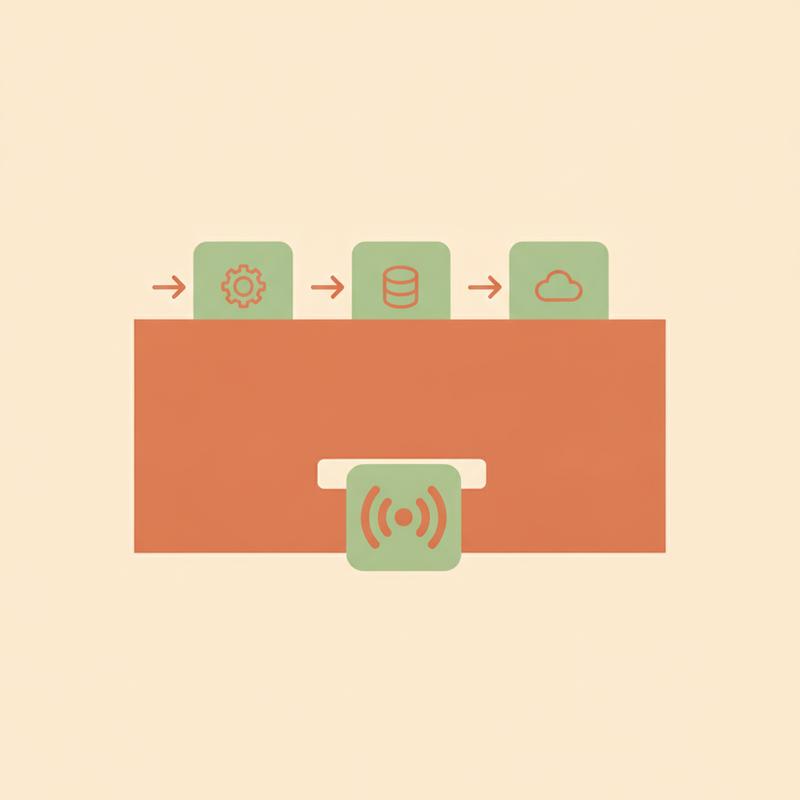
A few concrete steps, in order of effort:
- Isolate every model call behind an internal interface. No business logic should import a vendor SDK directly. If "switch providers" means touching forty files, you don't have an abstraction, you have a habit.
- Keep prompts and model-specific logic out of your core code. Prompts tuned tightly to one model's quirks are the hardest thing to port. Treat them as configuration, not architecture.
- Test against at least one fallback model on a schedule, not only when there's an incident. A fallback path nobody has exercised in six months is a fallback path which fails the first time you need it.
- Track vendor concentration as a metric leadership reviews, the same way you'd review a single-supplier risk in any other part of the business. If 100% of your product depends on one model from one company, this is a number someone should be watching.
- Write down who makes the call to switch, and under what conditions. An abstraction layer nobody is authorized to use under pressure is a diagram, not a plan.
None of this is exotic. It's the same discipline good engineering leaders already apply to database vendors, cloud providers, and payment processors. AI models arrived late to the "treat this as a dependency, not a foundation" conversation, and June proved why they belong in it.
The Cost of Skipping This
I know what the pushback sounds like, because I've made this argument to founders before. Building an abstraction layer costs engineering time you'd rather spend on the product itself. Every hour spent on a fallback path is an hour not spent shipping a feature customers asked for.
Fair. Here's the counter. The teams affected by the June order didn't get a roadmap planning cycle to prepare. They got days. Some of them had customer commitments running on Mythos or Fable 5 with no fallback in place, and those commitments broke in public, on a timeline set by someone else's export control decision, not their own sprint plan.
The cost of the abstraction layer is measured in engineering hours. The cost of not having one is measured in customer trust, and this bill arrives with no warning.
This Won't Be the Last Time
Model capability keeps climbing, and so does the attention governments pay to who gets to access it. Whatever you think of the SK Telecom decision, or the Amazon guardrail flag, the mechanism now exists, and it has already been used once. Export control on a model your product relies on belongs in your risk register now, not in a slide labeled "future considerations."
The teams which handle the next version of this story calmly are the ones who already built the abstraction layer, tested the fallback, and had the leadership conversation before they needed to.
So here's the question worth asking your team this week: what happens to your product tomorrow if your model access disappears overnight, no notice, no negotiation? If nobody in the room has an answer, this is your most important engineering leadership question this quarter, not next quarter's.