I've been using AI tools daily for over a year now. And I've noticed something about the people who complain AI "doesn't work" for them.
Their prompts are awful.
Not in a technical sense. In a leadership sense. They give AI the same vague, context-free instructions they give their teams. And they get the same mediocre results in both cases.
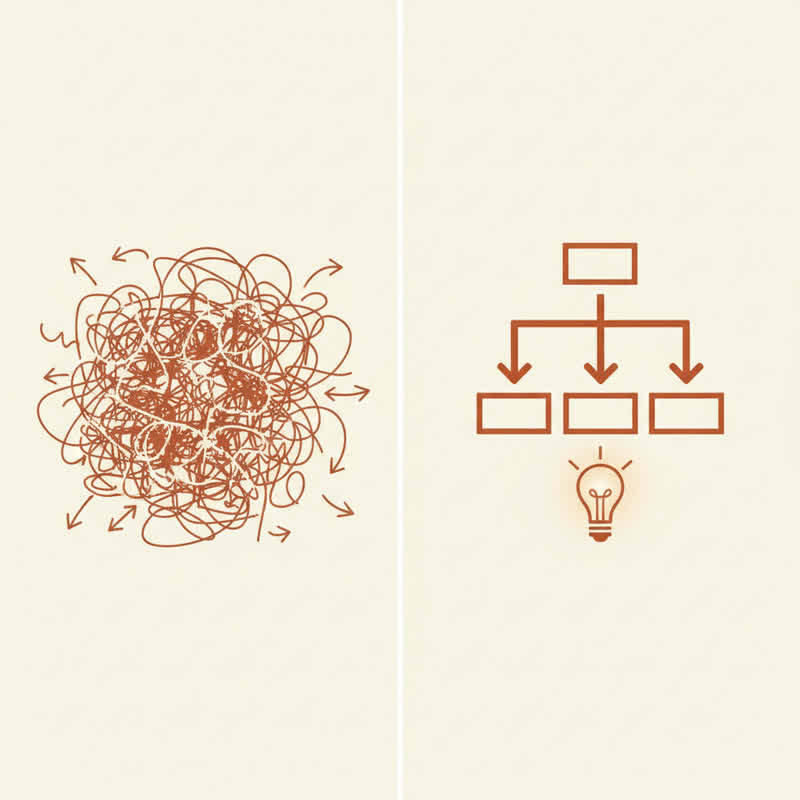
Garbage In, Garbage Out Is a Leadership Problem
Computer scientists coined "garbage in, garbage out" decades ago. Feed a system bad data, get bad results. Simple enough.
But here's what nobody talks about: this principle applies to every single interaction you have as a leader. Every email. Every brief. Every one-to-one. Every strategy deck.
Gallup's 2024 data shows U.S. employee engagement dropped to 31% in 2024... a ten-year low. The element with the biggest decline? Clarity of expectations. Only 46% of employees say they know what's expected of them at work. Down from 56% in 2020.
Read those numbers again. More than half your team doesn't know what "good" looks like. And if you're a leader reading this, I'd bet money you think your team is the exception. They're not.
The Prompt Is the Mirror
When I write a prompt for Claude or ChatGPT, the output quality depends entirely on my input quality. If I type "write me something about leadership," I get bland corporate filler. If I provide context, constraints, examples, and a clear outcome... I get something useful.
The AI doesn't have a motivation problem. It doesn't need a pep talk. It responds to the quality of the instruction it receives.
Your team works the same way.

Ben Morton, a leadership coach and former military officer, puts it bluntly: garbage in, garbage out applies to both AI and leadership communication. If your prompt stinks, your leadership stinks too. The tool isn't the problem. The input is.
I've had this conversation with dozens of tech leaders over the years. They'll spend hours tweaking an AI prompt to get the perfect output, then fire off a two-sentence Slack message to their team and expect brilliance. The asymmetry is staggering.
The Perception Gap Is Enormous
Here's where it gets uncomfortable. Axios HQ's 2025 research found 80% of leaders believe their internal communications are "clear and engaging." Only 50% of employees agree.
Let me put this differently. Half your workforce thinks your communication is unclear or disengaging. And you have no idea.
It gets worse. 27% of leaders think their teams are "entirely aligned with business goals." Only 9% of employees say the same. Leaders are operating with a dangerously distorted view of their own effectiveness.

This is the same problem bad prompt writers have. They hit "send" and assume the AI understood what they meant. When the output is wrong, they blame the tool. Never the instruction.
69% of managers report feeling uncomfortable communicating with their staff, according to Harvard Business Review. Let it sink in. More than two-thirds of the people responsible for giving direction are uncomfortable doing so. No wonder the outputs are bad.
Five Bad Prompts and Their Leadership Equivalents
I see the same patterns in AI prompting and bad management. Here are five:
1. The Context-Free Command
Bad prompt: "Write a report."
Bad leadership: "Get me the numbers by Friday."
Which numbers? For whom? In what format? To support what decision? The leader who sends this email and gets frustrated by the result is the same person who types "write me a blog post" and wonders why AI produces garbage.
2. The Moving Target
Bad prompt: Sending five follow-up messages, each contradicting the last.
Bad leadership: Changing priorities every week with no explanation.
Research from High5 shows 28% of employees attribute missed deadlines directly to poor communication. When your instructions shift constantly, people stop trying to hit the target. They wait to be told again. And again.
3. The Assumption of Telepathy
Bad prompt: "Make it better."
Bad leadership: "This isn't what I wanted."
If you didn't specify what you wanted, you don't get to be disappointed. The best AI prompt engineers know you need to state your expected output format, tone, audience, and constraints. The best leaders know the same thing about delegation.
4. The Information Hoarder
Bad prompt: Withholding context and expecting AI to guess the situation.
Bad leadership: Keeping strategic context to yourself, then wondering why your team makes poor decisions.
74% of workers report feeling excluded from company information due to communication gaps. You're asking people to make good decisions with bad data.
5. The Feedback Void
Bad prompt: Never iterating. Never refining. One shot and done.
Bad leadership: Annual performance reviews as the only feedback mechanism.
The best AI users iterate. They review output, refine the prompt, try again. The best leaders do the same with their teams... continuous feedback, course correction, improvement loops. Not once a year. Every day.
How to Debug Your Leadership Communication

Here's the practical bit. If you want to test your own communication quality, try this exercise:
Step 1: Write your next team request as an AI prompt. Include the context, the desired outcome, the constraints, the format, and the audience. If you struggle to be this specific for AI, you're definitely not being this specific for humans.
Step 2: Read back your last five emails to your team. Would an AI produce useful output from these instructions? Or would it hallucinate because you gave it nothing to work with?
Step 3: Ask your team the Gallup question. "Do you know what's expected of you at work?" Don't assume you know the answer. Ask. Then sit with whatever they tell you.
Step 4: Close the feedback loop. After giving an instruction, check understanding. Not "do you understand?" (everyone says yes). Instead: "Walk me through how you'd approach this." Then listen.
Step 5: Iterate like a prompt engineer. When results disappoint, don't blame the person. Examine the instruction. Was it clear? Did it have enough context? Did you specify what success looked like? Refine and try again.
The $1.2 Trillion Prompt Problem
This isn't soft skills theory. SHRM estimates the U.S. economy loses $1.2 trillion annually to poor workplace communication. 63% of employees who leave cite poor leadership communication as a primary reason.
My research into bad bosses found 99.5% of survey respondents said they've had one or more types of bad boss. Communication is always in the top three complaints. Always.
We've spent decades building communication training programmes, leadership development courses, and feedback frameworks. None of it matters if the person sending the message doesn't recognise their message is the problem.
AI has given us a mirror. When you type a bad prompt and get a bad response, there's nobody else to blame. No team dynamics. No personality clashes. No "they should have known what I meant."
The machine did exactly what you asked. Nothing more, nothing less.
If your prompt stinks, your leadership does too. The fix starts with the same question in both cases: What do I need to say more clearly?
Next time you're about to fire off a vague instruction to your team, pause. Write it as if you were prompting AI. Add the context. Specify the output. Define success. Your team deserves at least as much clarity as a machine.