Every few years, somebody stands up at an all-hands and launches a new culture.
There's a deck. There's a name, usually one word with a capital letter. There's a 90-day plan, a set of values in a nice font, and a Slack channel with a rocket emoji. Six months later the channel is quiet, the posters are curling at the corners, and the team works the same way it did before.
Garry Ridge, who ran WD-40 Company for 25 years, sums up the problem in one line I keep coming back to: microwaves don't build culture. Crockpots do.
I think most leaders in tech nod at this and then go straight back to the microwave. Here's why, and what to do instead.
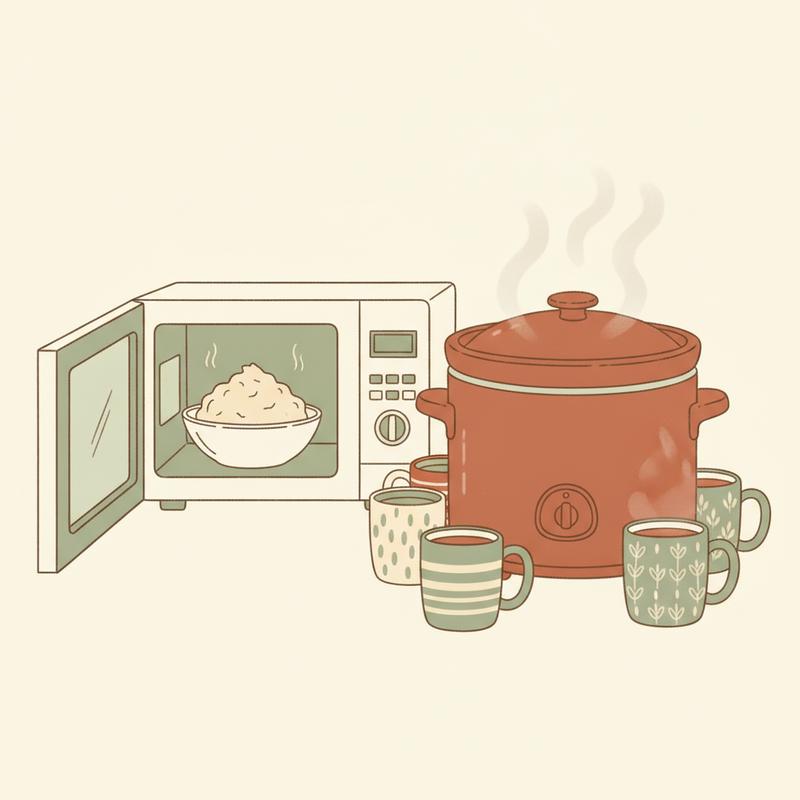
The Microwave Is Tempting for a Reason
I get the appeal. A microwave gives you something hot in two minutes. You press a button, you get a result, you move on.
Culture programs work the same way on paper. You announce. You train. You measure attendance. You tick the box on the board report. The quarter closes and you report progress.
The trouble is what comes out of the microwave. Hot on the outside. Cold in the middle. Rubbery by the time anyone eats it.
You see this in engineering orgs all the time. A new VP arrives and declares "we're an agile company now." A transformation partner shows up with a framework. Leaders rename the teams. Stand-ups appear on every calendar. And the old habits carry on underneath, because nobody changed the incentives, the approvals, or the way leaders react when a release goes wrong.
Kotter Saw This Thirty Years Ago
None of this is new. In 1995, John Kotter published Leading Change: Why Transformation Efforts Fail in Harvard Business Review. He'd watched more than 100 companies try to remake themselves, from Ford to British Airways.
His summary is blunt. Too many managers don't realize "transformation is a process, not an event." It moves through stages, and "it takes years." Leaders under pressure skip stages, and "shortcuts never work."
The error he flags as the killer is declaring victory too soon. Here's the warning every CTO should pin above their desk. Until changes "sink deeply into a company's culture," Kotter wrote, new approaches stay "fragile and subject to regression." He put the timeline for sinking in at five to ten years.
Five to ten years. Not a quarter. Not a fiscal year.
Kotter describes a dozen change efforts he watched under the reengineering banner. In all but two, leaders declared victory and paid off the consultants when the first major project finished, two or three years in. Within two more years, the useful changes "slowly disappeared."
There's the microwave in action. Hot for a moment. Gone by the next reorg.
Don't Microwave the Statistic Either
While we're here, let's kill a microwaved fact.
You've seen the claim "70% of change initiatives fail." It shows up in every transformation pitch deck I've ever sat through. Consultants present it as research.
In 2011 Mark Hughes went looking for where it came from. His paper in the Journal of Change Management, reviewed five separate published sources for the number. His conclusion: a popular narrative exists, but "there is no valid and reliable empirical evidence to support such a narrative."
I find this funny, and a little sad. The industry selling quick culture fixes runs on a quick, unexamined number. If you want a slow-cooked culture, start by refusing to repeat things you haven't checked.
The Spotify Model Was a Recipe Nobody Cooked
Tech has a special version of the microwave. We copy someone else's finished dish and assume we'll get their kitchen.
In 2012, Spotify published its way of working... squads, tribes, chapters, guilds. Companies everywhere renamed their teams overnight. Some still have the org charts.
Jeremiah Lee joined Spotify as a product manager in 2017. In Spotify's Failed #SquadGoals, he describes a recruiter warning him before his first interview not to expect "an Agile utopia." Once inside, he learned "the famed squad model was only ever aspirational and never fully implemented."
He quotes Joakim Sundén, an agile coach at Spotify from 2011 to 2017:
"Even at the time we wrote it, we weren't doing it. It was part ambition, part approximation."
Think about what happened there. Thousands of companies took a snapshot of an idea still in the oven, served it to their teams, and called it done. They copied the labels. They skipped the years of trial, failure and adjustment needed to make it theirs.
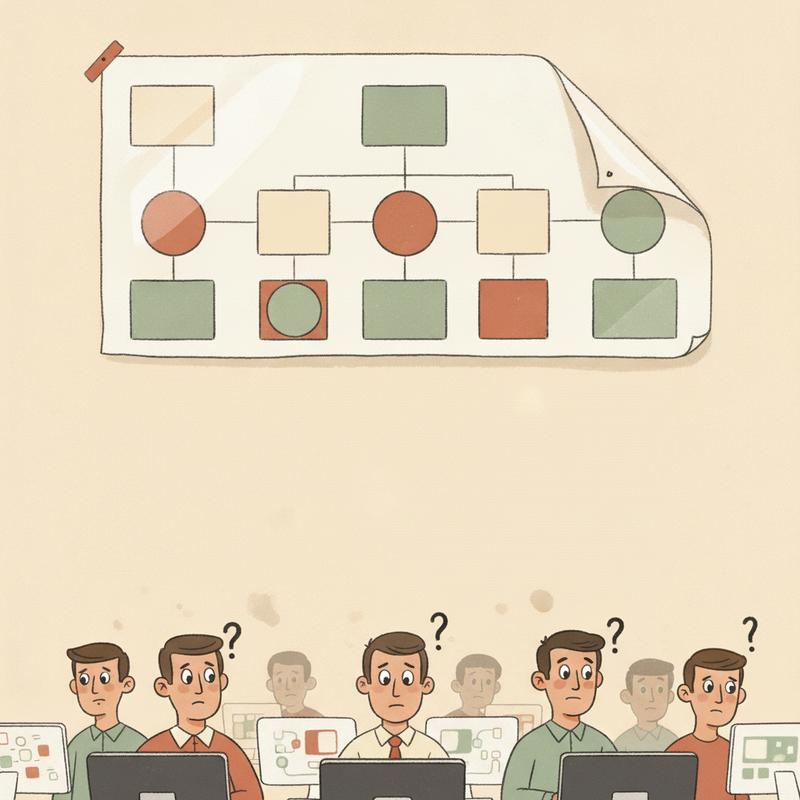
Your team doesn't need Spotify's squads or Google's OKRs or Netflix's culture deck. It needs its own habits, built by its own people, over enough time for them to stick.
What the Crockpot Asks of You
A slow cooker asks for three things. The right ingredients. Low, steady heat. Time you don't get to skip.
Culture asks for the same.
Ingredients: what you reward, not what you say
Your values document is the label on the jar. The ingredients are what you promote, what you fund, and what you tolerate.
If you say "quality matters" and then praise the engineer who shipped a hotfix at 2am without tests, the team learns the real recipe. I wrote about this in Your Values Are Whatever Your Sprint Board Rewards. People watch what you do on a bad Tuesday, not what you say at the offsite.
Heat: small, consistent, boring
A slow cooker runs low and steady. So does culture.
Research on habits backs this up. In a 2009 UCL study by Phillippa Lally and colleagues, 96 volunteers picked a daily behavior and tracked it for 12 weeks. The time it took to reach near-automatic behavior ranged from 18 to 254 days. The slowest took more than eight months.
The same study found something leaders should hear. Missing one opportunity to do the behavior "did not materially affect the habit formation process." Consistency over months matters more than perfection on any given day.
For a team, the habit might be a blameless review after every incident. Or a one-to-one every week, protected, even in crunch. Or a leader who asks "what did we learn?" before "who did this?" Each time it happens, it adds heat. Skip it once and you're fine. Skip it for a month and the pot goes cold.
This is why small fixes matter more than big launches. I made this case in The $40 Oven... one small action, done fast, did more than any program.
Time: stop lifting the lid
Anyone who owns a slow cooker knows the rule. Every time you lift the lid to check, you let the heat out and add time to the cook.
Leaders lift the lid all the time. A new engagement survey every quarter. A fresh initiative when the last one feels slow. A reorg because the numbers dipped. Each one resets the clock and tells the team "this one won't last either."
Kotter's advice was the opposite of declaring victory. Use early wins to "tackle even bigger problems," and pay close attention to who gets promoted and hired. In other words, keep the lid on and keep the heat going.
What the Crockpot Gives You Back
Garry Ridge stayed with the slow cook for a long time. He led WD-40 for 25 years. According to his speaker profile, market cap grew from $250 million to $3.5 billion over those years, with employee engagement above 93% and 98% of employees saying they loved working there.
I'm not going to pretend culture alone produced those numbers. A strong brand and decent market conditions helped. But you don't hold engagement above 93% for years with a 90-day plan. You hold it by doing the same small, human things again and again, long after they stop feeling new.
No framework built the best engineering teams I've worked with. A leader built them, by showing up the same way, week after week, until the team stopped needing them to.
Start Your Crockpot on Monday
Here's what I'd do this week if I ran an engineering org:
- Pick one behavior, not ten. One habit you want to see in every team a year from now. Write it down.
- Do it yourself first, every week. Your team copies what you repeat, not what you announce.
- Change one reward. Find one place where what you praise contradicts what you say you value. Fix it.
- Ban the word "launch" from culture work. You don't launch a culture. You tend it.
- Set a review date a year out, not a quarter out. Then leave the lid on until you get there.
Culture isn't a dish you serve. It's a pot you keep warm.
So look at your current culture initiative. Is it in the microwave, or the crockpot?