Ian Pettigrew sat across from his physio after surgery. The physio had handed him an exercise a few weeks earlier, and now asked the question they ask everyone. Had he done any of it?
Ian had. Fifty times a day.
The answer surprised the physio. Ian told us why on Corey-osity Unleashed: "most people take the exercises and don't do them."
I've been chewing on the line for months. It's the most honest description of hope I've heard, and it has nothing to do with feelings.
Two accidents, twenty years apart
Ian jokes he ends up in trauma and orthopedics about once every twenty years.
The first trip came in 1999. He was racing a motorbike at Donington Park when a rider ahead slowed on the racing line. Ian had nowhere to go. The bike slid out, found grip, and threw him. He bounced several times and landed in the gravel trap. He had broken a lot of bones badly. He told us he had around six operations, spent four or five months off work, and was still walking with a pronounced limp a year later.
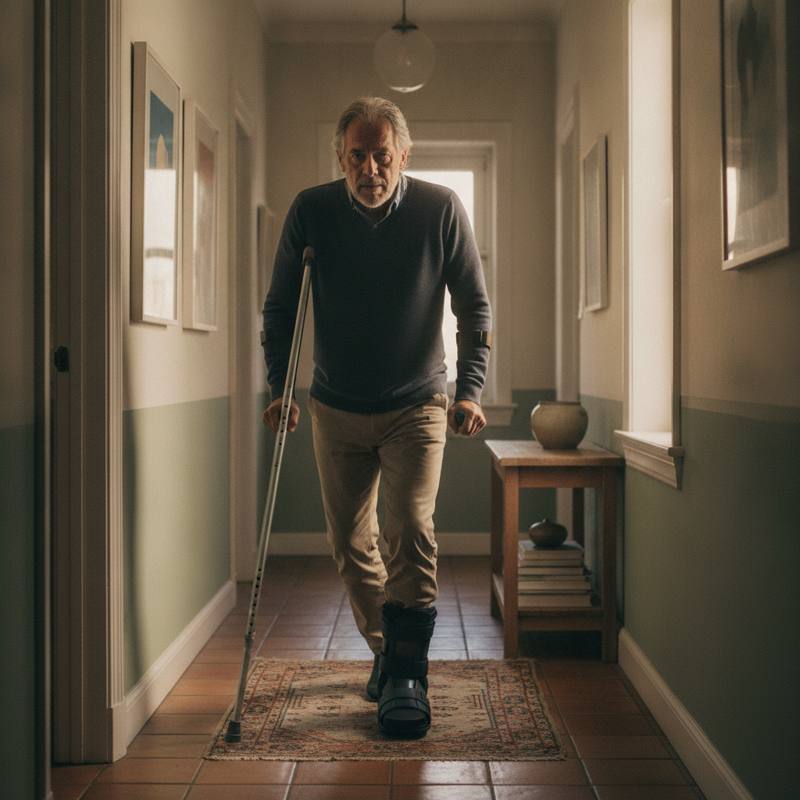
The second came during lockdown. He slipped on snow sitting on top of ice and heard several loud cracks. He learned a new phrase... trimalleolar fracture. All three major bones in the ankle, broken. He now has an ankle "absolutely packed full of metalwork."
Two serious injuries. Two long recoveries. And in both cases, the same pattern. He knew what he wanted. He wanted to walk again. Then he wanted to run again. And he did everything in his power to make it real.
Hope is a verb with a tally sheet
I've written before about how I confused hope with optimism for years. Optimism says things will get better. Hope says things will get better and I know what I'll do about it.
The psychologist C.R. Snyder built his whole theory of hope on two parts. Pathways... the routes you see toward a goal. Agency... the belief you'll use those routes. I covered where his research came from in The Science of Hope Started With a Study of Excuses.
Ian's physio story shows the agency half better than any diagram. The physio handed every patient the same pathway. A sheet. An exercise. A number of reps. Same route for everyone.
The difference sat entirely in who walked it.
Most people don't do the exercises
Ian's "most people" isn't an exaggeration.
A 2016 systematic review in Disability and Rehabilitation looked at 30 studies of home-based physical therapy. The authors put non-adherence as high as 70%. Seven in ten people take the sheet home, and the sheet goes in a drawer.
The same review found five things predicting who sticks with it:
- Intention to do the program
- Self-motivation
- Self-efficacy, the belief you're able to do it
- A history of sticking with exercise before
- Social support
An earlier review of 20 studies in physiotherapy clinics found poor adherence linked with low self-efficacy, depression, anxiety, helplessness, and poor social support.
Read those lists again. Self-efficacy. Helplessness. Intention. Those words describe hope, or the lack of it. Nobody skips their rehab because the exercise is too hard to understand. They skip it because some part of them doesn't believe it'll make a difference.
Even high-hope people feel hopeless
Here's the part of Ian's story I find most useful.
During his master's degree, Ian did a self-reflection research project. He scored high on hope as a trait. And yet, sitting at home with his leg after surgery, facing more surgery, he didn't feel hopeful.
So he got curious about the gap. Why would a high-hope person feel hopeless? The answer drove his research and his book. Hope isn't a fixed trait you either have or don't. It's a skill. You learn it. You practice it.
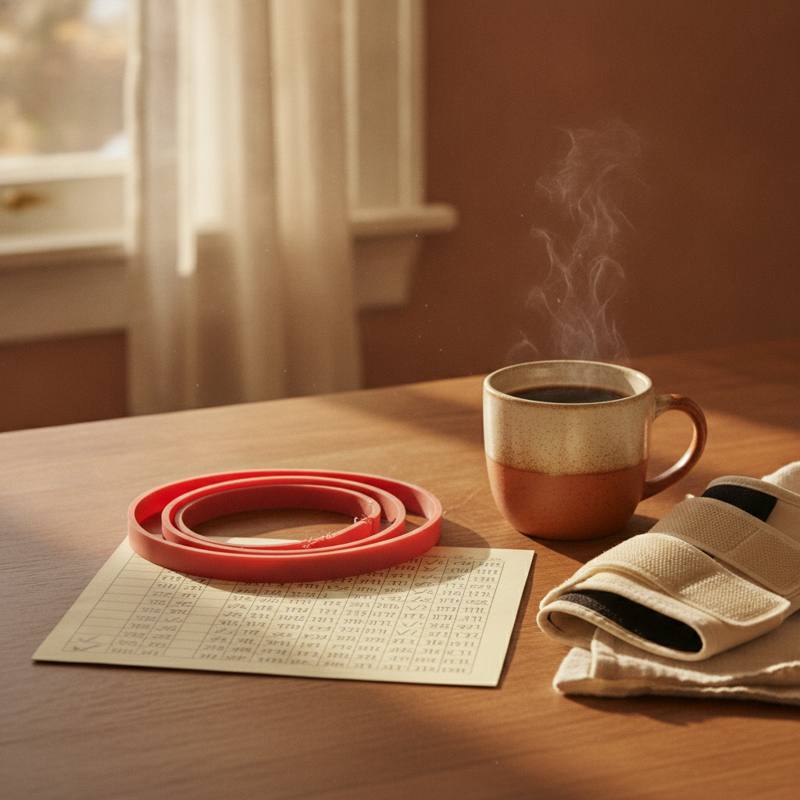
And the practice looks a lot like a tally sheet on a kitchen table. You don't wait to feel hopeful before doing the exercise. You do the exercise, and the hope follows the reps.
My bike, his Everest
I'll confess my first reaction to Ian's next challenge wasn't my finest moment.
Debra mentioned on the show he was training to cycle the height of Everest. My brain did quick sums. Everest is roughly six miles up. I ride about six miles a day on my exercise bike. What's the big deal?
Then Ian explained. He'll ride a simulation of Alpe d'Huez, the famous Tour de France climb, eight and a half times in one day. Around 16 hours in the saddle. Enough vertical climbing to reach 29,029 feet. He described it as four marathons back to back.
My six flat miles don't go up. His do.
He came up with the idea while still recovering from the ankle, planning for the day he'd walk again. He tied it to Hope for Justice, the anti-trafficking charity he supports. He's been training for it for four years. Four years! From a man whose physio once wondered whether he'd walk without a limp.

What this means for you
You've got a sheet in a drawer somewhere. We all do.
It's the career plan you wrote in January. The difficult conversation you rehearsed and never had. The habit your coach suggested. The feedback your manager gave you in your last review, with three clear actions attached.
You know the pathway. Someone handed it to you. The question Ian's physio asked is the only one worth asking. Have you done any of it?
Here's what I take from Ian's story:
Shrink the rep, raise the count
Fifty times a day sounds heroic. It isn't. One small exercise, done whenever you pass the kitchen, adds up fast. Pick the smallest version of the thing you've been avoiding and do it today. Then again.
Count it where you'll see it
Self-efficacy grows from evidence. A tally on paper, a streak in an app, a note on the fridge. Every mark tells your brain "I'm someone who does this." This is agency, built one stroke at a time.
Tie it to someone else
Ian's Everest ride isn't for Ian. It's for Hope for Justice. Social support showed up in both reviews for a reason. Tell one person what you're working on. Ask them to check in.
Don't wait to feel it
Ian scored high on hope and still felt hopeless after surgery. Feelings lag. Do the rep anyway.
If you lead people, watch the drawer
One more thing for the managers reading this.
Every development plan you hand out is a physio sheet. Most of them go in a drawer. Seven in ten, if the rehab numbers hold anywhere near true at work. I'm not sure about this part: I haven't found a study measuring follow-through on workplace development plans the way the rehab reviews measure home exercise. The 70% figure comes from physical therapy, not offices.
Ian built a free tool for exactly this gap, the Hope Play Sheet. I wrote about using it beyond work in If Your Leadership Tool Only Works at Work, It Doesn't Work. Use it in your next one-to-one. Ask what the goal is. Ask what the routes are. Then ask the physio's question two weeks later.
Don't tell people it'll get better on its own. I made the case in Stop Telling Your Team It'll Be Over by Christmas. Hope without reps is a wish.
So here's my question for you. What's the one exercise sitting in your drawer right now... and how many times will you do it before Friday?