The biggest post on Reddit yesterday wasn't about politics, AI, or a celebrity feud.
It was a photo. Someone lost their right arm, and their cousin spent 48 hours crocheting them a new one. It scored over 188,000 upvotes, four times higher than anything else on the site. Nothing else this week came close.
On a day full of grim headlines, a huge crowd of people stopped scrolling for a small, handmade act of care. I don't think this is an accident. When things feel heavy, we go looking for proof the world still works. We go looking for glimmers.
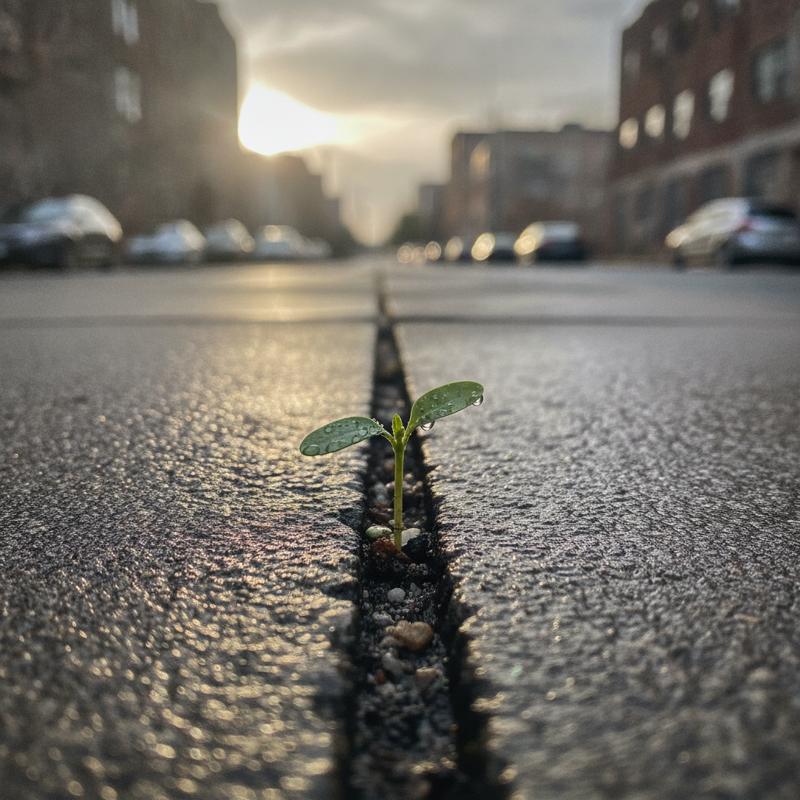
What a Glimmer Is
The word comes from Deb Dana, a clinical social worker in Maine whose work centers on complex trauma. Most of us know about triggers, the cues which send our nervous system into alarm. Dana named the opposite. She calls glimmers "micro-moments of safety, connection, regulation," according to this HuffPost piece on her work.
The idea of hers I keep coming back to is simple. The world isn't all glimmers, and it isn't all struggle. In her words, "It is both."
Both. I like the honesty in it. A glimmer doesn't pretend the hard thing has gone away. It sits right next to the hard thing and says "and also, this."
Ian Pettigrew, an executive coach who researches hope in leadership, takes the idea into work. His advice for the messy middle of any change is simple. Look for the small signs something is working. Spot them. Name them. Amplify them. He's clear it's a practical move, not a concept. You do it today, not after the next reorg.
Why Small Things Carry So Much Weight
I used to believe people needed big wins to stay motivated. Ship the product. Close the deal. Hit the number. Everything in between was waiting.
The research says I had it backwards.
Teresa Amabile and Steven Kramer at Harvard collected nearly 12,000 daily diary entries from 238 people across seven companies. They wanted to know what made a good day at work. The answer wasn't recognition or bonuses. The most common trigger for people's best days was making progress on meaningful work... and the progress was often small. Amabile and Kramer wrote about it in The Power of Small Wins in HBR.
Here's the part I find uncomfortable. They also surveyed 669 managers and asked them to rank five motivators. Progress came in dead last. So the thing which lifts people most is the thing most managers overlook. I've been one of those managers.
The Messy Middle Is Where Hope Dies
Every hard stretch has a middle. The start has energy. The end has relief. The middle has neither.
I've led software teams through long projects where the finish line kept moving. You know the feeling. The backlog grows faster than it shrinks. The demo slips again. People stop joking in stand-ups. Nobody says the project is failing, but everyone wonders.
In those weeks, my instinct was to talk about the destination. "Once we launch, it'll be worth it." I thought I was giving people hope. I was giving them a distant promise and asking them to hold their breath until they got there.
What they needed was evidence. Proof, today, of movement.

How to Find Glimmers When Things Are Hard
Glimmers don't announce themselves. Hard times shrink your attention down to threats. You have to look on purpose. Here's what I do now.
Ask a different question
At the end of a rough week, I used to ask "what went wrong?" It's a useful question. It's also the only one most of us ask.
Now I add a second one. "What moved, even a little?" A bug nobody managed to reproduce finally showed up in the logs. A customer replied with one kind sentence. A new hire asked a sharp question in a meeting. None of these fix the project. All of them are glimmers.
Write them down
I keep three lines in a notebook at the end of each day. Three small things which went right. It takes two minutes. On bad weeks, it's harder to fill, which tells me something too.
This isn't a gratitude ritual for its own sake. It's a record. When the middle drags on, I flip back and see the movement my memory erased.

Name them out loud
A glimmer you keep to yourself helps you. A glimmer you name in front of the team helps everyone.
When someone fixes a small thing, say so. Be specific. Something like "the build went from 20 minutes to 12 because you chased down the cache issue" lands far harder than "great work, team." Specific praise tells people their effort changed something real. My wife Debra has spent her career on recognition, and she'd tell you the same thing: vague thanks evaporates, specific thanks sticks.
Amplify the ones which matter
Not every glimmer deserves a spotlight. Pick the ones tied to the goal. If the project is stuck on quality, celebrate the first week with zero escaped defects. If it's stuck on morale, celebrate the person who helped a struggling colleague without being asked.
Amplify means you give it more airtime than it would get on its own. Put it at the top of the update. Mention it to your boss. Let the person hear you told someone else.
A Warning About Fake Glimmers
This only works if the glimmers are real.
If the project is on fire and you stand up and celebrate the new font on the slide deck, people will see straight through you. They'll trust you less, not more. Pettigrew's research makes the point: hope needs trust underneath it. You don't get to skip the honest conversation about what's broken.
So say both. "We're three weeks behind, and here's the plan to close the gap. Also, the test suite passed clean for the first time in a month, and I want to thank the person who fixed it."
The hard truth and the glimmer, side by side. Dana's line again. It is both.
Why This Matters Beyond Work
I've come to think glimmers are how most of us get through hard seasons in life, not only in projects.
A good phone call with a friend. The first cool morning after a long heat wave. A grandchild who runs to the door when you arrive. None of these solve anything. They remind you the world still has good in it, and they give you enough fuel for one more day.
A cousin spent 48 hours crocheting an arm. Strangers by the hundred thousand stopped to look at it. Nobody's problems got solved. But for a few seconds, a lot of people felt a bit better about being human.
Your Turn
Here's my challenge for you this week.
Every evening, write down three glimmers. Small ones. At work or at home. Then, once this week, pick one and tell the person responsible, in specific words, what it meant.
What's one glimmer you've already walked past today?