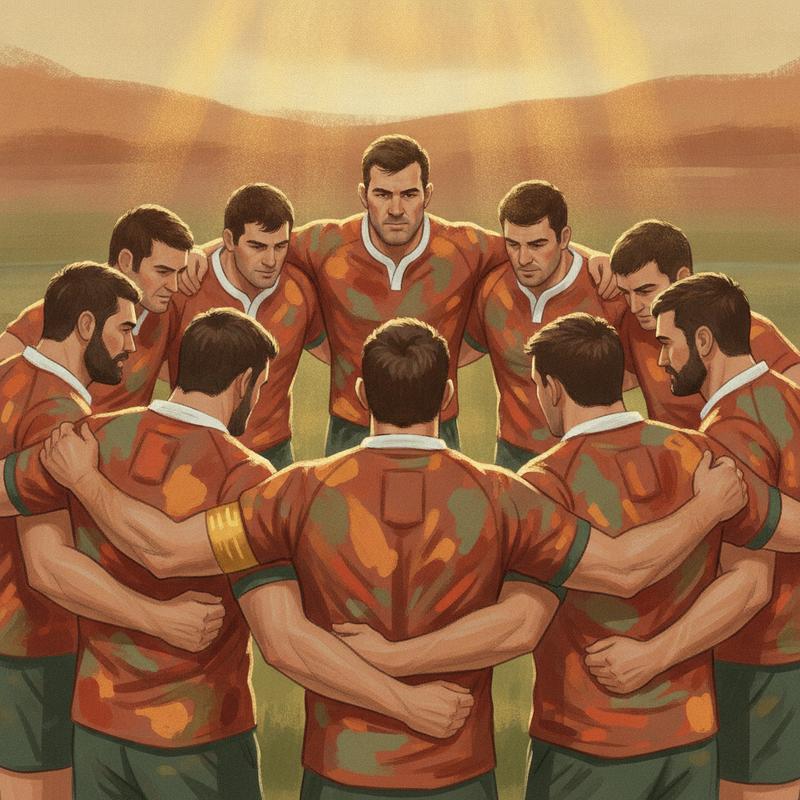
Richie McCaw captained the All Blacks in 110 test matches. He won 97 of them. A win rate of 89 percent, over eleven years, for the hardest job in world rugby. Read the numbers here.
Eleven years. One captain. Ninety-seven wins.
Now think about the last company you watched struggle. I'd bet money it didn't have one captain for eleven years. It had four VPs in three years, a reorg every time a new exec wanted to leave a mark, and a team never given the chance to figure out who they even were.
Stability Isn't Boring. It's the Whole Point.
Nobody puts "leadership stability" on a slide at the all-hands. It doesn't sound bold. It doesn't sound like a growth story you'd tell an investor. Stability sounds like the opposite of ambition.
But watch what McCaw did with those eleven years. He didn't coast. He didn't sit on a winning formula and protect his job. He kept the team accountable to a standard growing harder every season. Stability wasn't the absence of pressure. It was the platform letting the team absorb pressure without falling apart.
Here's the part leaders miss when they treat reorgs like a reset button. A new leader doesn't inherit trust. They have to build it from zero, on a team who watched the last person say "trust me" and then walk out the door. And here's the part missing from every reorg announcement: each "clean slate" moment costs months. New leaders spend their first quarter learning names, learning history, learning which fires are real and which are theater. The team spends the same quarter deciding whether this one is worth being honest with. Nobody is shipping much of anything during those months, no matter what the org chart says on paper.
The Army Taught Me This the Hard Way
I served in the US Army, where leadership rotates by design. Officers move commands every couple of years. It is built into the system on purpose, so nobody gets too comfortable and units stay adaptable. It works, mostly, because the Army also builds enormous structure around every rotation: standard operating procedures, a chain of command outliving any one officer, and NCOs who carry institutional memory the incoming leader does not have yet.
Most companies borrow the rotation without borrowing any of the structure holding it up. They swap the leader and expect the team to absorb the disruption on will alone, with no handoff process, no institutional memory keeper, and no shared standard the new leader is required to honor. This is not agility. This is asking a team to rebuild the plane while flying it, every eighteen months, indefinitely.
The Real Cost of Revolving-Door Leadership
Gallup tracked 2.7 million employees across more than 100,000 teams and found managers account for at least 70 percent of the variance in team engagement scores. The research is here. Not the product. Not the mission statement on the wall. Not the free snacks. The manager.
If you swap out the manager every eighteen months, you're not resetting anything. You're resetting the 70 percent moving the needle, over and over, and asking the team to somehow keep performing while the ground shifts under them every single time.

I have written before: 99.5 percent of people surveyed have had at least one bad boss in their career. Read the stat again slowly. It's not "some people had a rough manager once." It's nearly everyone, at least once. And a huge chunk of it isn't about one cruel person. It's about the churn itself. A team never gets far enough into a relationship with a leader to know if the leader is even good, because the org chart changes before anyone finds out.
I've Sat On Both Sides of This
I have worked for leaders who lasted eighteen months and leaders who lasted years. The difference wasn't subtle.
Under the leaders who stuck around, I stopped performing for them and started working. I told them when a plan was wrong. I brought problems in early instead of hiding them until they were unfixable. It only happens once you've watched someone respond to bad news enough times to know they won't torch you for bringing it. Trust like this isn't built in a single good meeting. It's built across dozens of small moments where someone had the chance to punish honesty and chose not to. You cannot compress this timeline. You give it time, or you don't get it at all.
Under the churn, none of the trust ever had time to build. Every new leader arrived with their own theory of what was broken, usually built from a thirty-day tour of the org rather than actual history with the team. Half of every transition got burned re-explaining context the last three leaders already had. The team wasn't underperforming. The team was constantly re-onboarding its own leadership.
I remember sitting in a room listening to a brand-new VP explain, with total confidence, why our roadmap was wrong. He wasn't a fool. He was smart, and he cared, and everything he said would have been useful feedback in month four. In week two, it was noise dressed up as insight, because he hadn't earned the context to know what he was looking at yet. The team nodded along and kept doing what it already knew worked, quietly, until he moved on to the next thing catching his eye. This is not leadership. This is a team learning to manage its own management, and doing this instead of the actual job.
What Stability Requires
This isn't a case for never changing leaders. Bad leaders should go. Teams who have genuinely outgrown their leader need a change, and staying put out of loyalty to a title is its own kind of failure. I have written before about knowing when it's time to leave a role, and the same logic applies to leadership seats.
The case is against churn for its own sake. Against the belief a new leader every rotation cycle signals momentum. Against treating leadership tenure like a box to check on someone's growth plan instead of a commitment to the people who report to the leader.
If you are the one making these calls, ask yourself a harder question before your next reorg: is this change serving the team, or is it serving the leader's résumé? McCaw didn't get moved around to broaden his experience. He stayed because staying was what the team needed, and the results prove it.
The Question Worth Sitting With
If your organization changes captains as often as it changes quarters, stop calling it agility. Call it what Gallup's data says it is: a direct hit to the 70 percent of engagement deciding whether your team performs.
Who on your team has never had the chance to trust a leader long enough to find out if the leader was worth trusting? What would change if they got the chance?