"Living for the weekend."
People say it like a joke. It is not a joke. It is a description of a trade, and the trade is terrible.
Five days handed over so you buy two back. Every week. For forty years.
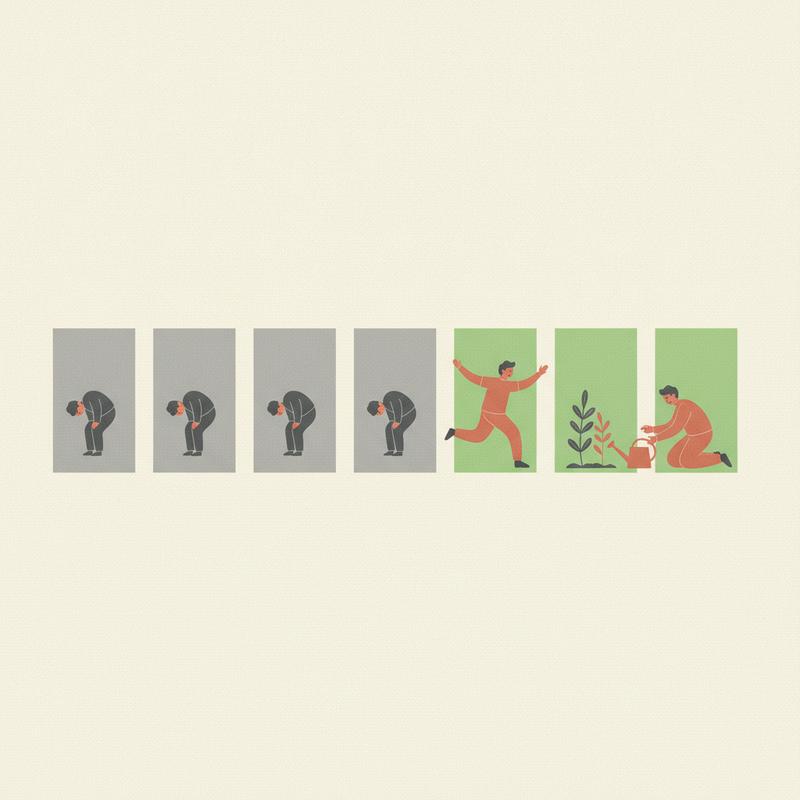
Kelly Swingler calls it Monday-to-Friday dying, and the phrase stuck in my head like a splinter. Because I have done it. I have had jobs where I woke up on Tuesday and the first thought in my head was a countdown.
The arithmetic nobody wants to do
Jessica Pryce-Jones worked out in her book Happiness at Work an average of around 90,000 hours spent at work in a lifetime. Roughly a third of your waking life. Ten years, give or take, of being awake and at work.
Now hold the "living for the weekend" idea next to it. You are saying ten years of your life are a toll you pay for the rest of it.
Nobody would sign such a contract if it arrived on paper. We sign it by default, one Monday at a time.
And the arithmetic gets worse, because Gallup measured what those hours feel like. Global employee engagement fell to 21% in 2024, with managers taking the steepest fall of any group. Gallup prices low engagement at about $10 trillion in lost productivity, or 9% of global GDP.
Four out of five people are switched off at work. We built an entire global economy on people counting down to Friday.
The weekend is not magic. The weekend has autonomy.
Here is the part I find genuinely useful.
Richard Ryan, Jessey Bernstein and Kirk Warren Brown studied 74 working adults and found the "weekend effect" is real. Better mood, more vitality, fewer aches and pains, from Friday evening to Sunday afternoon. It held across every job type they looked at, from laborers to lawyers. Published in the Journal of Social and Clinical Psychology in 2010.
Then they asked why. The answer was not "Saturday is a special day". The answer was autonomy, competence and connection. On the weekend people choose their own activities, feel good at what they are doing, and spend time with people they love. On workdays those three go missing, replaced by external control, time pressure and demands.
Read the finding again, because it changes the whole argument. The weekend is not the cure. Autonomy is the cure. The weekend is where most people are allowed to have some.
So the goal is not more weekend. The goal is dragging autonomy, mastery and human connection back across the border into Tuesday.
Where the deadness comes from
My own survey research found 99.5% of respondents have had one or more types of bad boss. Almost every working person alive.
I am not going to pretend the whole Monday-to-Friday problem is your manager's fault. Some of it is the work itself, some of it is the mortgage, some of it is a season of life you have to grind through.
But sit with the mechanics of a bad boss. Micromanagement removes autonomy. Blame removes competence. Politics remove connection. It is the exact three-item list from the weekend effect study, taken away one at a time, by one person, for eight hours a day.
If somebody engineered a machine to make Monday feel like dying, it would look a lot like an average middle manager under pressure.

This is not "quit and follow your bliss"
Someone always hears this and reads it as advice to hand in your notice and go find work you love. No. Most people have bills, dependents and a market with opinions of its own. Telling a 45 year old with two kids to chase a calling is not advice, it is a luxury item.
What I am arguing for is smaller and available now. You do not need a new employer to get an hour of self-directed time on a Wednesday. You do not need a new title to finish one thing a week you are proud of. You do not need permission to walk outside at two in the afternoon.
Start with the week you already have. If a year of small rebellions still leaves you counting down every Tuesday, then the job is the problem, and you will know it with evidence rather than a feeling.
Small rebellions I run on myself
I stopped waiting for a job to hand me a better week. Here is what has worked for me and for teams I have run. None of it needs permission from HR.
Make something every week
Not manage. Make. Write the thing, build the prototype, fix the ugly script, draw the diagram nobody asked for.
Competence was one of the three missing pieces. You get it back by finishing something small with your own hands. I put one making block in my calendar every week and defend it like a doctor's appointment.
Kill one recurring meeting
Every month, look at your recurring meetings and cancel one. Ask yourself what breaks. Usually nothing breaks.
Each dead meeting hands you back an hour of self-directed time. Autonomy, bought at the price of one awkward Slack message.
Break the shape of one day
Wednesday afternoon walk. Coffee with the person two desks over who does the work you half understand. Lunch outside the building with your phone in your pocket.
Monotony is a rhythm, and rhythms break with one deliberate change. The point is not the walk. The point is proving the week bends when you push on it.
Say no once a week, out loud
If you never say no, every hour you own belongs to whoever asks loudest. One no per week is a small habit with a big payoff. It reminds you and everybody around you where your edges sit.
Put something you want in the middle of the week
Gig on a Wednesday. Class on a Thursday. Anything good deliberately placed where the week sags.
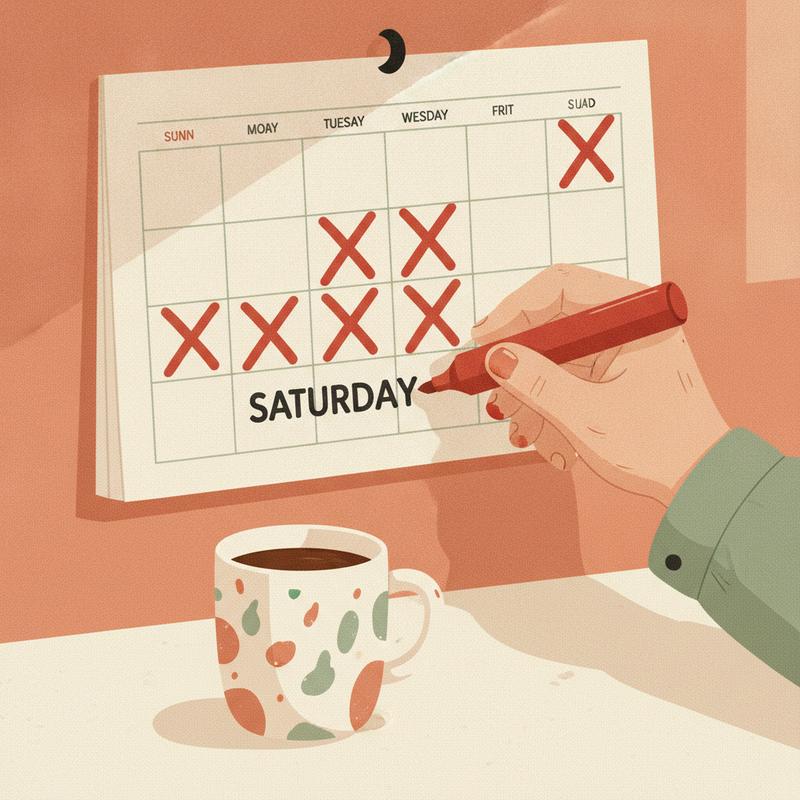
Front-loading all your joy into Saturday is how you end up with five grey days and two frantic ones.
If you run a team, you own more of this than you think
Your people are having a week designed by you. Meeting load, decision rights, whether they are trusted to work unsupervised, whether anybody notices what they finished. You set all of it.
Three questions worth asking yourself before next Monday:
- How many hours this week does each person control outright?
- Does everyone on the team finish at least one visible thing a week, or do they only attend?
- When did you last say out loud what someone is getting better at?
Autonomy, competence, connection. The research names them. Your calendar either delivers them or it does not.
I have written more about this side of the work over at Step It Up HR, where most of what I do involves helping leaders stop accidentally building the machine described above.
The bit worth remembering
Nobody gets those 90,000 hours back. There is no bonus round at the end where they refund the Tuesdays.
Living for the weekend is a strategy for surviving a life you did not choose. It works, in the way holding your breath works. Then one day you notice a decade went by in five-day increments and the only part you remember is Saturday.
Break something in the pattern this week. Cancel the meeting. Take the walk. Finish one thing you are proud of by Thursday.
So what is one small rebellion you would run on your own week, starting Monday?