When I had Gillian Jones-Williams on the Corey-osity podcast, she told me a story about a gymnast who kept failing the same move.
Over and over. Same move, same fall. More attempts made no difference. Effort was never the problem.
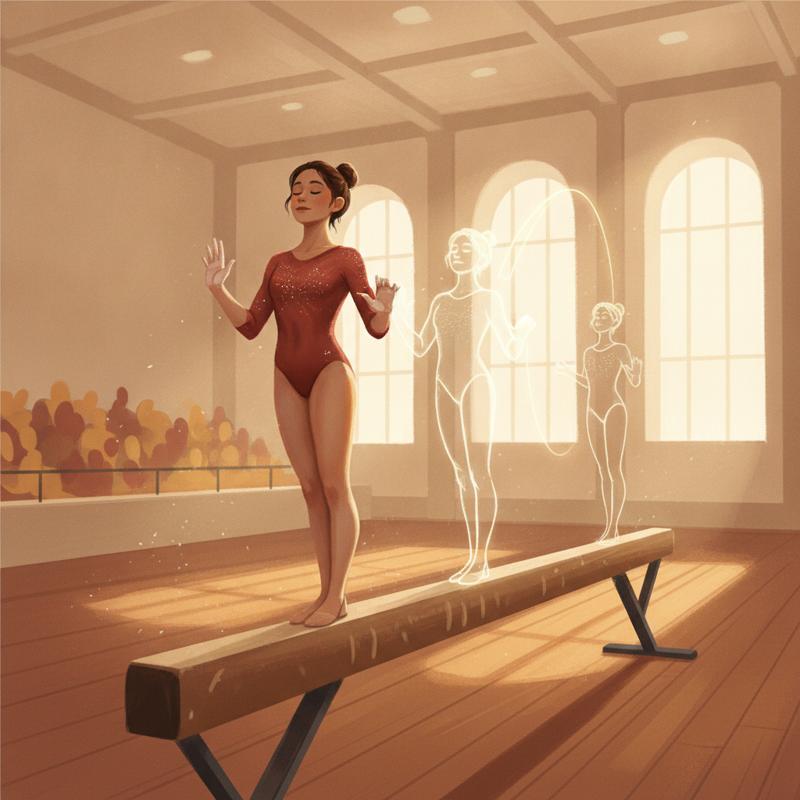
So the coach stopped her. No more attempts for a moment. Instead, the gymnast had to close her eyes and walk through the move in her head. Where her hands go. The line of her body. The landing. The audience watching.
She ran it three times in her head. Then she stood up and landed it. Perfectly.
I nodded along when Gillian told it, because it's a lovely story. Then I went home and thought about a hill in October 2018, and stopped nodding.
The day I psyched myself out of the sky
In 2018 I learned to fly a paramotor. I blogged the training as it happened, warts and all.
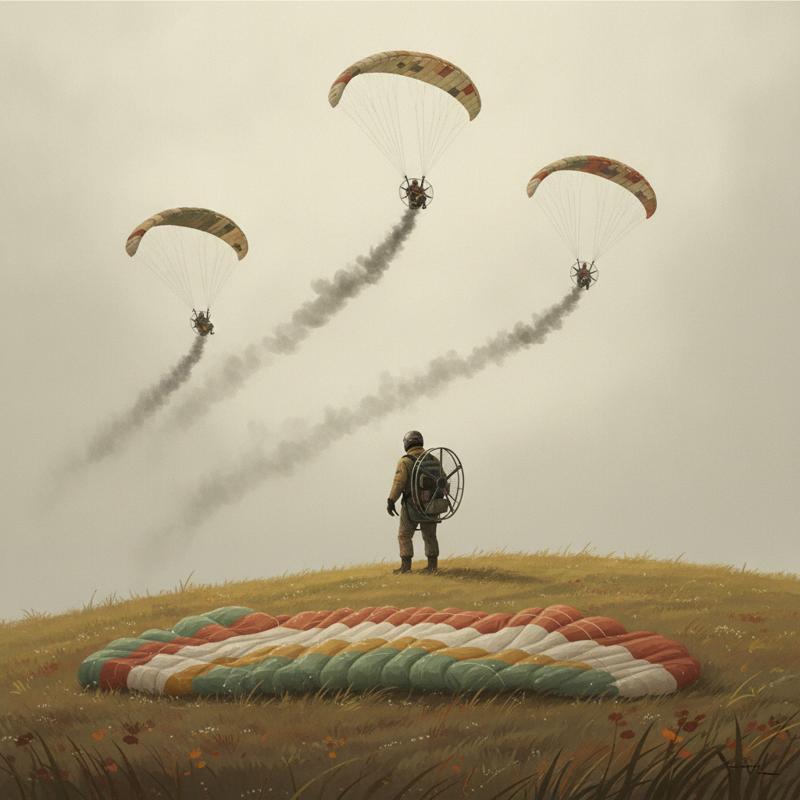
On one rained-out day, after a classroom session on launch steps and safety procedures, I found an open patch of land, drew a beach on the ground, and practiced various scenarios. I wrote at the time we should do more of it. On the ground, if you goof up, you look silly. In the air, less so.
A week later, on a hill site, I tried three times to get my wing to inflate. Three failures. Never left the ground. Then a group of local pilots turned up with loud, smoky engines and started buzzing the top of the hill. I wrote one line about it afterwards: "I was psyched out even more."
Read those two posts side by side and the gap jumps out. I rehearsed the procedure. I never rehearsed the noise, the audience, the feeling of failing in front of people who knew what they were doing.
The gymnast's coach included the audience. I left it out. Guess which one of us landed.
Mental rehearsal is not woo
I'm suspicious of anything sold as "visualise your success." Too much of it sits next to crystals in the bookshop. So I went looking for the research.
The best-known review is a meta-analysis by Driskell, Copper and Moran, published in the Journal of Applied Psychology in 1994. They only counted studies where people rehearsed a task in their head without moving, compared against people who didn't. Mental practice produced a real, significant improvement in performance, small to moderate in size. Physical practice still beat it.
Three details from the paper matter more than the headline:
- It works best on thinking tasks. The more a task involves decisions, judgement and problem-solving, the bigger the effect. Leadership is almost entirely this kind of task.
- It fades. The effect was strongest when people performed right after rehearsing. After two weeks it had dropped by about half. By three weeks it had nearly gone.
- More is not better. Longer rehearsal produced smaller effects. The average benefit showed up at around 20 minutes of mental practice.
Then there's a study I keep coming back to. At the Cleveland Clinic, Ranganathan and colleagues had volunteers spend 12 weeks, 15 minutes a day, performing "mental contractions" of the little finger. No movement. Their finger strength went up 35%. A group doing real physical training gained 53%. The control group gained nothing.
Thirty-five percent, from thinking. Not as good as doing it. Far better than sitting there.
So the gymnast story holds up. Rehearsal in your head is a real training tool. It also comes with conditions, and the biggest condition is about what you rehearse.
Rehearse the steps, not the applause
Here's the trap, and I've fallen into it plenty.
At UCLA, Shelley Taylor and Lien Pham ran a study with students a week before their first psychology midterm. One group pictured the process: sitting at the desk, going through the chapters, reviewing the lecture notes. A second group pictured the outcome: walking up to the posted grades, finding their score, beaming with pride. A third group only tracked their studying.
The process group started studying earlier, studied for more hours and added several points to their exam score. The outcome group barely changed their studying at all, and scored significantly worse than the process group.
Gabriele Oettingen's work goes further. In one of her studies, college students who produced more positive fantasies about the future felt better at the time and reported more depressive symptoms a month later. The same pattern showed up in children followed for seven months. Her conclusion: "Positive fantasies must be complemented with a good sense of reality."
Picturing the applause feels great. It gives your brain a little of the reward up front, and then you do less of the work.
Look again at what the gymnast's coach asked for. Hands. Body line. Landing. Audience. Every item on the list is a step or a condition. Not one of them is the medal.

Coaching is not always about the here-and-now
Gillian made a point in our conversation I keep chewing on. Most coaching sits in the present. What's the problem? What have you tried? What happens next? Good questions, all of them.
Rehearsal moves coaching into the future. It lets someone run the hard moment before it arrives, while mistakes still cost nothing.
As a leader you have chances for this every week, and most of us skip them. Someone on your team has a difficult conversation coming. A first presentation to the board. A salary negotiation. A tough piece of feedback to deliver to a peer.
The usual move is a pep talk. "You'll be fine." "Be yourself." Both are outcome rehearsal with a smile on top.
Try this instead. Ten minutes, before the event:
- Walk the first minute out loud. What's the opening sentence? Where are they sitting? Who speaks first?
- Find the moment it goes sideways. The pushback, the silence, the question they dread. Rehearse their response to it, word for word.
- Put the audience in. Who's in the room, and what are they doing? The boss checking a phone. The peer with crossed arms. The pilots buzzing the hill.
- Rehearse the landing. How does the conversation end? What's the last thing they say before they leave the room?
- Do it close to the event. The research says the benefit fades within a couple of weeks. Rehearse the day before, not the month before.
Then stop. Twenty minutes is plenty. Endless mental replays turn into rumination, which is a different and far less useful habit.
You get something from this as a coach too. When someone struggles to picture step two, you've found the real gap before it costs them anything. Better to find it at your desk than on the hill.
What are you rehearsing right now?
Most of us already rehearse in our heads all the time. We replay the argument in the shower. We picture the promotion announcement. We run the worst case at 3am.
The question is whether we rehearse anything useful.
Pick one hard moment coming up in the next week, yours or someone you lead. Close your eyes and walk through it. Hands, body line, landing, audience. Three times.
Then go and land it.