
I spent the better part of a decade with my neck craned upward.
Senior engineer. Team lead. Engineering manager. Manager of managers. Head of Engineering. Each title hung above me like the next rung on a ladder, and I was unable to stop counting them.
At Santander, I led the Android team building a banking app with 2.2 million monthly active users. It was good work. Meaningful work. But somewhere in the back of my mind, I was already eyeing the next level. At Curve, I managed seven cross-functional teams, forty-three people, including other managers. And still... I was looking up.
It took me a long time to notice what I was missing.
The Ladder Is a Trap
The promotion ladder is so deeply baked into how we think about careers, questioning it feels strange. You show up. You work hard. You get promoted. Repeat until retirement. The corporate ladder is not a structure you choose. It is one you inherit.
And it costs you.
When you are always focused on what is above you, you stop paying attention to what is right next to you. The colleague doing something fascinating. The problem no one has bothered to solve. The direction nobody else has thought to go. All of it slips by while you stare at the rung overhead.
According to a Randstad survey, 42% of US employees would decline a promotion if offered one. The number surprised me the first time I read it. It does not surprise me anymore.
People are not lazy. They are not disengaged. They have simply realised something: going up is not the same thing as going forward.
There is a particular kind of career anxiety baked into ladder-thinking. Every review cycle becomes a performance. Every one-on-one becomes an audition. You are no longer doing the work for the sake of the work. You are doing the work to be seen doing the work. And somewhere along the way, the work itself becomes a vehicle rather than a destination.
I know this because I lived it. I have sat in annual reviews with a list of accomplishments I had carefully curated for the express purpose of making the case for the next title. Not because it reflected what mattered to me. Because it was what I thought the system wanted.
The Work Worth Being Proud Of

At Curve, I mentored seven engineers into leadership roles. Not because it was in my job description. Not because anyone asked me to. I did it because the work in front of me mattered and I saw what those people were capable of.
It was not a career move. It was not a stepping stone to anything. It was the work itself.
Looking back, those seven people are the part of my Curve chapter I am most proud of. Not the 25% delivery improvement. Not the £300k website migration saving. Those are fine numbers. But the people? The people are the thing.
I was not looking up when I did it. I was looking around. At who needed support. At what gaps existed. At what was happening in the room.
The strange thing is, none of it required a new title. None of it required permission. I did not need to be promoted to do the most meaningful work of my time there. I needed to stop obsessing over the ceiling long enough to see the floor.
The Sideways Step Everyone Underestimates
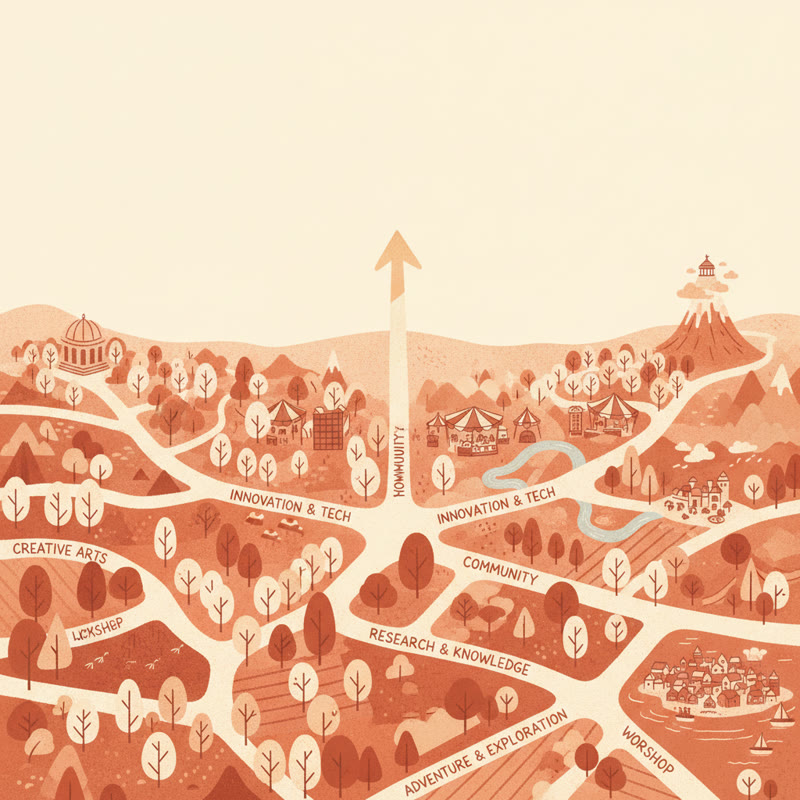
When I left Curve, I did not take the next rung. I took a hard left turn.
Chief Innovation Officer at Step It Up HR. Podcast host. Conference speaker across Europe, in Croatia, Iceland, the UK. Co-author of research used by thousands of employees. None of it was "up" by any traditional definition. It was sideways. Outward. Into territory I had never explored.
And it has been the most stretching, most interesting, most purposeful work of my career.
The conventional ladder would have had me hunting for a VP of Engineering role at a larger company. There is nothing wrong with this path. It is a fine path. But it was not the path with the interesting problems.
When I look at the work I do now... speaking at conferences about bad bosses and broken leadership culture, building tools and research used inside real organisations, hosting conversations on a podcast with people who have genuinely fascinating perspectives on the world of work... none of it sits neatly on a career ladder. You cannot easily compare "Chief Innovation Officer at a small HR consultancy" to "Senior Engineering Manager at a fintech." They live on different axes entirely.
The interesting problems were around me. Not above me.
What It Means to Look Around
Looking around is not settling. It is not giving up on ambition. It is a different kind of ambition... one measured by depth and breadth rather than height.
Looking around means:
Noticing the unmapped problems. The things in your organisation nobody has bothered to fix, because everyone is too busy climbing to pay attention to them. These are often the most interesting problems of all. They are invisible to people staring upward.
Learning from the people next to you. Not mentors above you. Not your manager's manager. The person two desks over who builds things differently, sees problems differently, comes from a different background. Lateral learning is underrated to a degree bordering on criminal.
Going deep instead of wide. Mastery is not glamorous. It does not photograph well on LinkedIn. But the engineer who understands a system five levels down is worth ten who skim the surface. Depth is a career asset most people trade away too quickly in pursuit of the next title.
Asking different questions. When you are constantly looking up, your questions are about advancement: How do I get to the next level? Who do I need to impress? What does the committee need to see? When you look around, the questions change: What is broken here? What have we stopped questioning? Who needs support and has not asked for it? Where is the work nobody else wants to do?
Following your own curiosity. I started writing about leadership and bad bosses not because it was strategically sound, but because I was obsessed by the topic. I had worked for terrible managers. I had watched talented people leave good companies because of mediocre bosses. I wanted to understand it and say something about it. The book, the podcast, the conference stages... all of it followed from paying attention to what genuinely interested me. Not from a career plan.
The Part Nobody Warns You About
When you stop optimising for the ladder, some things get harder.
LinkedIn performance metrics care about titles. Recruiters use seniority signals to filter CVs. Your parents will ask when you are going to get a "proper" promotion. These are real pressures. I am not dismissing them.
But the people I have met who do the most interesting, most impactful work... the ones who seem genuinely satisfied rather than perpetually stressed... almost universally tell the same story. At some point, they stopped looking up. They started looking at what was around them and went after it instead.
I spent years in rooms where the most interesting work was happening right beside me, and I was too busy staring at the ceiling to notice.
The career advice I wish someone had given me ten years ago is not complicated: the next rung is not the only direction.
What is happening around you right now, at your current level, in your current role? What problems are going unsolved? Who needs support? What is the most interesting work in the room?
Go after it.