You've Upskilled Everything Except Yourself

Everyone I know is upskilling. AWS certifications. Product management courses. Leadership workshops. Another book about habits. LinkedIn Learning notifications every other day.
And I get it. The job market moves fast. Skills go stale. Staying current matters.
But here's the thing nobody says: you'll upskill your way straight into burnout if you're not thoughtful. I've seen it happen. I've lived parts of it myself.
The missing piece isn't another certification. It's you.
The Upskilling Treadmill
We treat career development like a hardware problem. Add more RAM. Install the latest software. Upgrade the processor.
What we don't do is ask whether the whole system is pointed in the right direction.
I spent years adding skills. SQL. Python. Agile. Product frameworks. Each one felt productive. Each one looked good on a CV. Each one took me further from a question I wasn't asking:
What do I need from work?
Not a soft question. The hardest one in a career. Most people spend 20 years avoiding it.
What Happens Without Self-Knowledge
When your sense of self is weak or undefined, work fills the gap.
You say yes to things because you don't know what to say no to. You take on roles because they sound impressive, not because they fit you. You grind through exhaustion because you haven't developed the self-awareness to recognize your own warning signals.
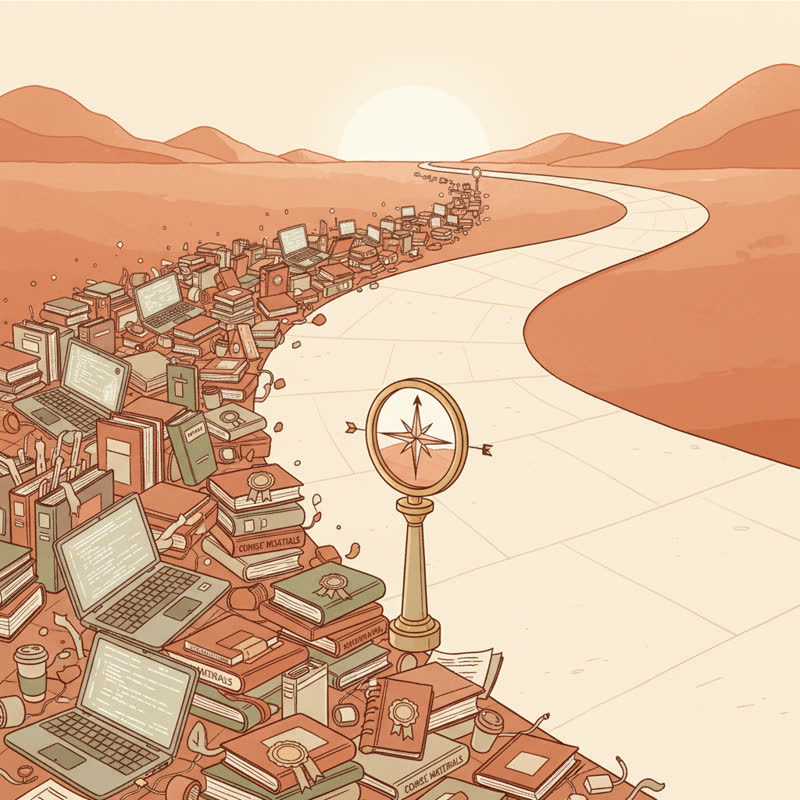
Research on burnout and professional identity shows a weak or underdeveloped professional identity increases vulnerability to burnout by reducing coping resources and diminishing the meaning derived from work. In plain terms: when you don't know who you are at work, you have less to fall back on when things get hard.
And then there's the brain piece. Chronic burnout causes structural changes in the prefrontal cortex... the part responsible for decision-making and emotional regulation. By the time you're deeply burned out, the organ you'd use to assess whether you're burned out is already impaired.
I'm not sure about this part: The psychologicalscience.org page might have changed since the research was published... Ken's notes flagged it as potentially unavailable. The underlying science on burnout and prefrontal cortex impairment is well-documented, but verify the specific URL before citing it elsewhere.
You lose the ability to evaluate your own situation clearly. No amount of willpower fixes a damaged prefrontal cortex.
The Hiding Game
Forbes recently identified a pattern called "performative professionalism"... hiding who you are at work to stay employable. The research links it directly to burnout and inauthenticity.
When you spend eight or nine hours a day performing a version of yourself, exhaustion isn't a side effect. It's the guaranteed outcome.
People don't hide because they're weak. They hide because they don't have a clear enough sense of self to know what they stand for, or what's safe to show. So they show nothing real at all.
I've talked to enough people through my work at Step It Up HR to know how widespread this is. The performative professional is everywhere... head down, checking boxes, completing courses, adding LinkedIn badges, and drifting further from the question of who they are.
What Self-Knowledge Looks Like
Not a mindfulness lecture. I'm not going to tell you to meditate or journal your feelings.
Knowing yourself, in a career context, means being able to answer a few concrete questions:
What type of work energizes you vs. drains you? Not in theory. In practice. Think about specific projects from the last two years. When did you feel genuinely engaged? When did you feel hollow?
What are your real values... the ones you'd defend, not the ones on your LinkedIn bio? Most people list "integrity" or "collaboration." Most people haven't identified what they'd sacrifice for those values when something real is on the line.
What does your stress look like, early? Not the final-stage collapse. The early warning signals. Yours will differ from everyone else's. Most people learn them only after burnout has already hit.
What do you need from a leader? Autonomy? Clear direction? Frequent feedback? The absence of micromanagement? Where you'll thrive and where you'll deteriorate depends heavily on this... and most people never articulate it to themselves, let alone to hiring managers.

One tool worth exploring is the personal user manual... a written document where you articulate how you work, what you need, and what burns you out. The act of writing it forces clarity. Most people have never written down what they need from work. They've written CVs, objectives, and performance reviews... but never a document about who they are as a working human.
The Vaccine Metaphor
Kelly Swingler frames it well: a strong sense of self is a burnout vaccine.
A vaccine doesn't stop the virus from existing. It builds your defenses so the virus doesn't take hold.
When you know yourself well... when you know your values, your limits, your early warning signals, and what you need to sustain... you spot burnout conditions before they become a crisis. You notice when a role is asking you to perform for too long. You feel the misalignment earlier. You have internal language to name what's happening and act on it.
Without self-knowledge, you're unvaccinated. Every toxic environment, every poorly-fitted role, every excessive demand lands on someone with no immune response.
The saddest version of this is the high performer... driven, skilled, highly upskilled... who burns out because they never developed enough self-awareness to know they were running on fumes six months earlier.
An Honest Career Question
Here's something worth sitting with: how much of your career path has been driven by intentional self-knowledge? How much has been adding skills, chasing titles, and hoping the right fit shows up by accident?
I've made enough of the latter kind of move to know the cost.
Start here. Write down your last three roles. For each one, list what gave you energy and what drained it. Not what you were good at... what you wanted to do more of, and what you were relieved was someone else's problem.
Look for patterns. They're there. They've always been there.
Then take stock of how much time you've spent on courses, certifications, and frameworks in the last two years. Compare it with how much time you've spent understanding your own warning signals, values, and work needs.
The gap is usually embarrassing.
The Investment You're Skipping
Upskilling is a tool. A good one. Staying current matters.
But tools are useless without direction. And direction requires knowing yourself.
Invest an afternoon in the most important document you'll never publish: a clear, honest account of who you are at work, what you need, and what drains you dry.
This knowledge won't show up in a LinkedIn badge. It'll show up in the career decisions you stop making by accident.
What would you write in your own personal user manual? Start there.