I was watching a couple at the cafe last week. They sat down, ordered coffee, and... did the thing.
Both phones flipped face-down on the table. Eye contact. A small triumphant smile, like they'd done something brave. Then they sat there. In silence. For maybe ninety seconds. And then she picked her phone back up and he stared at the napkin holder, looking grateful.
They'd done the right thing. They lost the war anyway.
The lie we tell ourselves about phones
We have a story we like in 2026. The story goes: phones are why we feel lonely. Put down the phone, look up, and connection comes back. Simple.
Except it doesn't. I've watched it. You've watched it. We put the phones away and then we sit there, two strangers wearing the faces of people who are supposed to know each other, and we wait for something to happen.
Nothing happens. Because the phone wasn't the problem. We were.
Researcher Zach Mercurio tells a story like this one in his work on what he calls "mattering" at work. A couple on a date puts down their phones... then sit in silence because they don't know how to talk to each other. The phone was the symptom. The skill was gone.

That sentence stops me cold every time. The skill was already gone.
What we forgot
I'm 64. I served in the Army. I've been a software engineer for decades, led teams in three countries, raised a family across two continents. I have spent a lot of my life talking to people.
And even I notice the slippage.
Twenty years ago, if you were standing in a queue at the post office, you talked to whoever was next to you. Weather. Football. The price of bread. It was nothing. But it was practice. You were running reps on a muscle nobody told you was a muscle.
Now you stand in that queue with your phone out. The reps don't happen. The muscle starts to die. Psychologist Gloria Mark... whose work Mercurio cites... found something brutal: our average uninterrupted attention on a single task has dropped from about two and a half minutes to 47 seconds. That's not a phone problem. That's a brain change.
47 seconds. That's barely enough time to ask someone how their day is going and hear the answer.
The skill decays fast
Here's the part that should scare us. Skills decay in about four days of not using them. That's not metaphor. That's research.
Think about that for a second. Four days without showing real-time compassion to another human being and you start losing the ability. Four days of staring at a screen instead of a face and the wiring softens.
How many of us have gone four days?
Time spent socialising in person has dropped by roughly two-thirds across all age groups since 2003 according to the U.S. Surgeon General's 2023 advisory on loneliness. Two-thirds. Gone.
We tell ourselves we're as connected as ever. We just text more. We DM. We send memes. And the Surgeon General's report tells us the health impact of all this lonely connectedness is equivalent to smoking 15 cigarettes a day. Social isolation raises premature mortality by 29%. Chronic loneliness in older adults raises dementia risk by about 50%.
We are smoking ourselves to death and calling it social media.
Why putting the phone down doesn't work
Now back to the couple at the cafe. They did the thing the wellness articles told them to do. Phones away. Be present.
And they failed. Not because they didn't try. Because nobody taught them what comes after the phone is down.
Putting your phone down is the easy part. It's the equivalent of buying running shoes. The hard part is the run. The hard part is asking a real question and waiting for a real answer. The hard part is noticing your wife is tired today and asking about it. The hard part is letting someone finish a sentence without thinking about your reply.
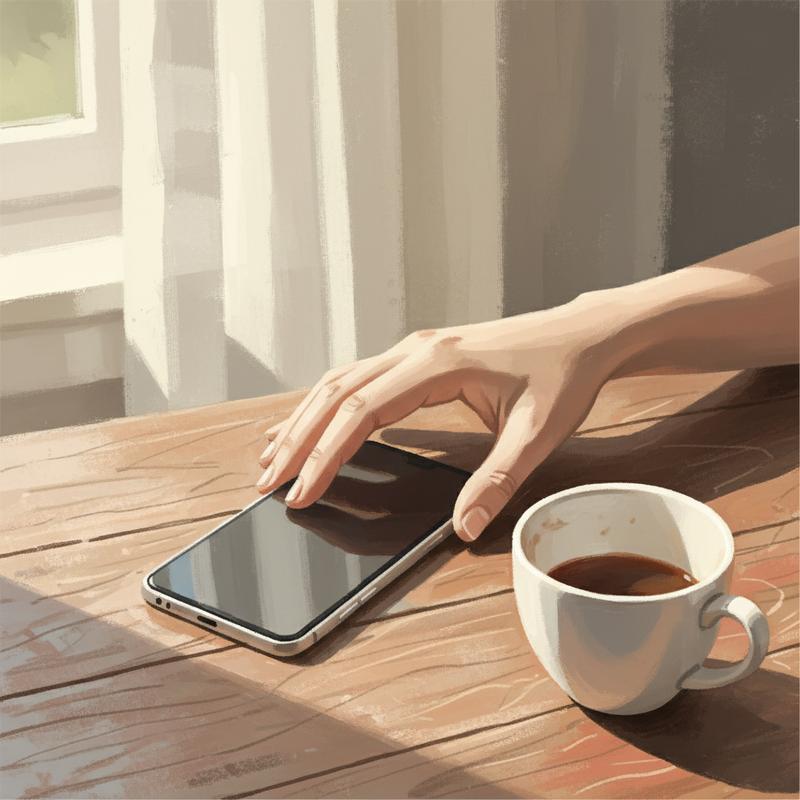
That's the muscle that's atrophied. And no app deletes that.
What I'm trying to do about it
I'm not here to lecture you. I'm in this with you. So here's what I've been trying, and it's harder than it sounds.
Ask one extra question. When someone tells me something... how their week went, what their kid did, why they're frustrated... I make myself ask one more question instead of moving on or making it about me. One. "What was that like?" or "Why do you think they did that?" It costs nothing. It changes everything.
Wait three seconds. When someone stops talking, I count to three before I open my mouth. Most of the time, they aren't done. They were breathing. The pause is where the real thing comes out, and we usually trample it.
Watch the face, not the screen. I have a habit of glancing at my phone when there's a lull. I'm trying to stop. The lull is the part where connection happens. The phone is the lullaby putting that part to sleep.
Pick up the phone... and call. Texting is cheap. A phone call is expensive. So when I want to reach my brother, I call. He picks up half the time. The other half, he calls back. Either way, we end up on the line, and something real happens that a thread of text never produces.
What this means for leaders
If you run a team, this matters double. Your people aren't just lonely at home. They're lonely at work too. Mercurio's research suggests only about 39% of people strongly agree that someone at work cares about them as a person. That's not an HR problem. That's a leadership problem.
You can't fix it with a wellbeing app. You can't fix it with another Slack channel. You can fix it by walking up to one person on your team this week, asking how they are, and waiting for the second answer... the real one, the one that comes after the polite "I'm fine."
That's it. That's the whole thing. And it's terrifying, because if you can't do it, you'll find out fast that your connection muscle is gone too.

The point
The phone is not making you lonely.
You stopped practicing how to be with another human, and the phone was just there to fill the silence you didn't know what to do with.
If you delete every app on your phone tomorrow, you will still be lonely. Not because phones don't matter... they do, they helped get us here... but because the muscle is still gone. You have to rebuild it. You have to do reps.
The reps are uncomfortable. They look like awkward small talk with the cashier. Long silences with your spouse. Sitting on the porch with your dad without filling the air. Listening to your teenager tell you about something you don't care about, because they care about it, and the caring is the whole point.
I'm trying. I'm 64 and I'm trying, and some days I still reach for my phone in the middle of a conversation like a smoker reaching for a cigarette. The habit is deep. The skill is rusty. The work is real.
But here's what I know: nobody on their deathbed says they wish they'd spent more time on their phone. They say they wish they'd spent more time with the people in the room.
So put the phone down. And then... and this is the part nobody tells you... figure out what to say next.
That's where life is.