The leader I tried to copy
Early in my career I had a picture in my head of the great leader. Calm under fire. Always sure. The one who walks into a room and everyone settles. I spent years trying to become him.
It never worked. Every time I forced myself into one fixed style, something broke. The style fit one moment and failed the next. I blamed myself. I told myself I was not strong enough, not sharp enough, not enough of whatever the great ones had.
I was wrong about the whole thing. There is no great leader sitting at the top of some mountain. There are people who read the moment in front of them and change. The best bosses I have known were not great in a fixed way. They were adaptive.
What the Army taught me about switching gears
I served in the US Army. The Army gets a reputation for one mode... bark orders, expect obedience. Some of it is fair. In a firefight you do not run a workshop. You give a clear order and people move, because hesitation gets people hurt.
Step out of the firefight and into the planning tent, and the same bark falls apart. Now you need the quiet sergeant who has done this twenty times to tell you what you are missing. Keep barking and he shuts up, and you lose the one thing keeping you alive... his judgment.
The lesson stuck with me for thirty years. The mode is not the leader. The mode is a tool. The leader is the one who knows which tool the moment needs.
The data says the boss is the whole game
Here is a number worth sitting with. Gallup studied millions of workers and found 70% of the variance in a team's engagement comes down to the manager. Not the perks. Not the mission statement on the wall. The manager.
I ran my own research for the book I wrote with Step It Up HR, and the number I found was harder to swallow. 99.5% of the people we surveyed said they had worked for one or more types of bad boss. Almost everyone. Sit with the size of it. The boss is not a footnote in someone's working life. The boss is the working life.
So if the manager decides most of it, the question is not "are you a great manager." The question is "are you the right manager for the person in front of you, today."
Why we cling to one style
If adapting works so well, why does almost no one do it? Because one style feels safe. You find a mode early on, it wins you a few points, and you wear it like a uniform. Direct people get praised for being decisive. Delegators get praised for trusting their teams. The praise locks the habit in.
Then the world hands you a person the habit does not fit, and pride keeps you in the rut. Switching styles feels like admitting the old one was wrong. It was not wrong. It was wrong for now. A surgeon does not use one instrument for every cut, and no one calls the surgeon inconsistent. We give leaders a pass on this we would give no one else.
There is a cost to the comfort. Every time you lead from habit instead of need, someone on your team pays for it in confusion, in fear, or in a slow drift toward the door.
Four people, four approaches
Decades ago Paul Hersey and Ken Blanchard put a name to this. They called it situational leadership. The idea is simple. There is no single best style. You match your style to where the person stands... how skilled they are, and how motivated.
They sketched four modes:
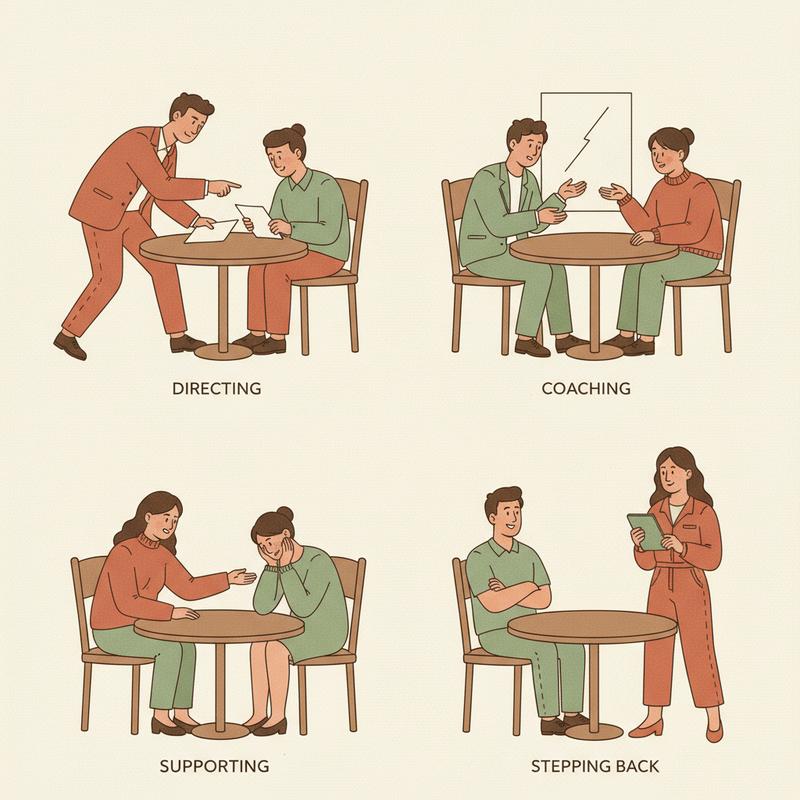
- Direct. New person, still learning. They need clear instructions, not a coaching question.
- Coach. Getting their feet under them, but wobbling. They need guidance and a reason to care.
- Support. Skilled, but flat or demotivated. They do not need you to teach. They need you to back them.
- Delegate. Skilled and driven. Get out of their way and let them run.
Read the list again and notice the trap. Most of us have one favorite mode. The natural director barks at the senior engineer who needed backing. The natural delegator throws the brand-new hire in the deep end and wonders why she drowns. The style was fine. The match was wrong.
My own worst habit
My default is delegate. I love handing someone a hard problem and watching them grow. With the right person it is the best feeling in the work.
With the wrong person, at the wrong time, it is abandonment dressed up as trust.
I once handed a big piece of work to someone new, told her I trusted her, and stepped back to give her room. I thought I was being a good boss. She read it as me not caring whether she sank. She spent three weeks afraid to ask for help, because I had made "figure it out" the whole job. When she finally told me, I felt sick. I had not given her freedom. I had given her a cliff.
She did not need my favorite mode. She needed direction, then coaching, then support, and only later the freedom I had thrown at her on day one. The failure was not hers. It was mine, for leading the way I like instead of the way she needed.
How to get less one-note
Becoming adaptive is not a personality transplant. It is a habit. A few things have helped me.
Name your default out loud. Mine is delegate. Once you know your favorite tool, you feel the pull toward it... and you start to notice when the moment calls for a different one.
Ask, do not assume. The fastest way to find the right mode is the question Lee Woollsey puts at the heart of a good one-on-one... "What aren't you getting from me?" The answer tells you whether to direct, coach, support, or back off.
Read skill and will separately. Before you pick a mode, look at two dials. How able is this person at this task, right now. How motivated. A skilled but flat person needs something different from a keen but green one.
Change as they change. The person who needed direction in March needs delegation by September. If your mode never moves, you are not leading them. You are leading a snapshot of who they used to be.
Drop the word "great"
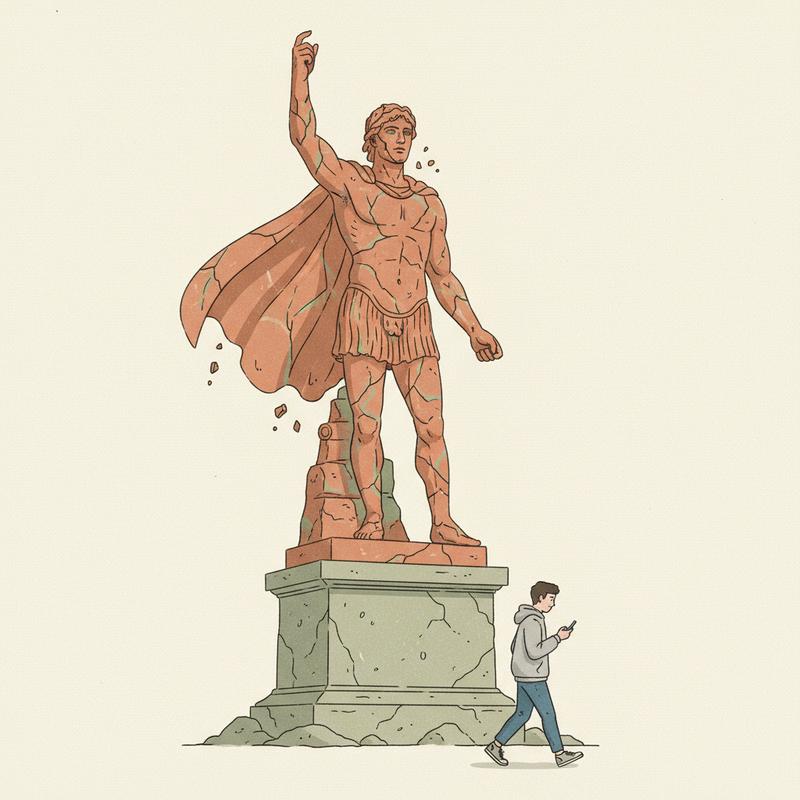
I have stopped chasing great. Great is a statue. Great is the marble hero on the pedestal, fixed in one heroic pose forever, useless the moment the situation shifts.
Adaptive is alive. Adaptive reads the room, the person, the week, and picks the tool the moment is asking for. It is humbler work. No one writes legends about the boss who quietly gave one person space and another person structure on the same Tuesday. The people on the receiving end remember, though. They remember being led the way they needed, not the way you preferred.
So here is the question I leave you with. What is your favorite tool... and who on your team is paying the price because you reach for it every single time?