A former Minister of Tourism in Bhutan once looked at Fredrik Haren and told him he had creativity backwards.
"You Westerners think creativity is about self-expression... Creativity is not outward. It's inward. Creativity is about understanding yourself on a deeper level."
Fredrik told the story on Zander Sprague's podcast, and he told a version of it when Debra and I had him on Corey-osity Unleashed earlier this year. Fredrik has spent 25 years interviewing creative people in 75 countries. He calls himself the Creativity Explorer. Of everything he said in our conversation, this one stuck to me like a burr.
Because the Westerner in the minister's story is me.
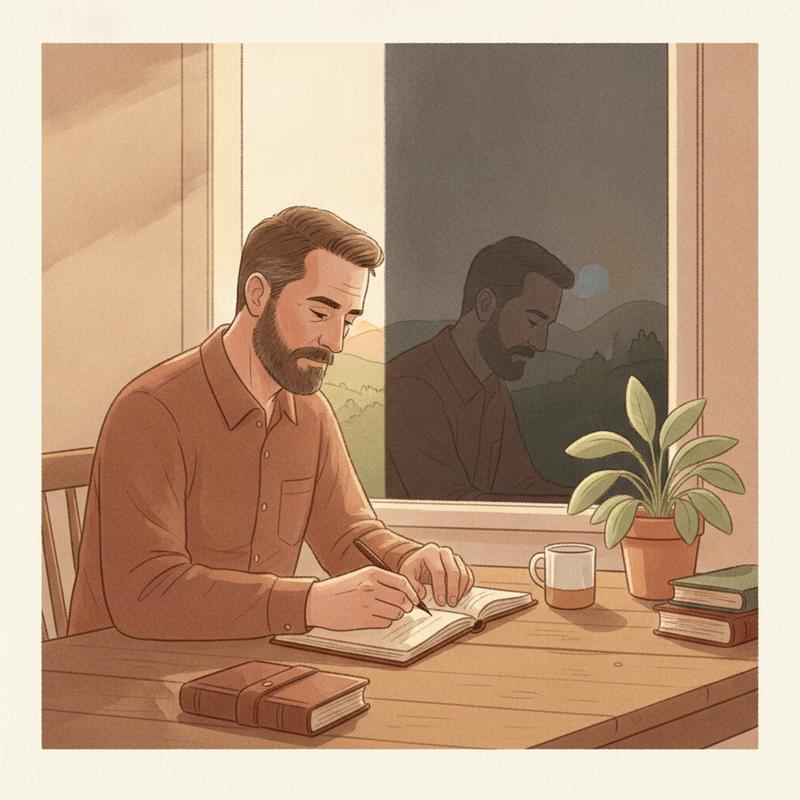
I Thought Creativity Was a Performance
For most of my life I measured creative work by what came out the other end. A blog post. An app. A talk. A slide deck people remembered. If nobody saw it, did it count?
I don't think I ever said it out loud, but I believed creativity lived in the reaction. The applause. The likes. The "oh, I never thought of it like this" from someone in the third row.
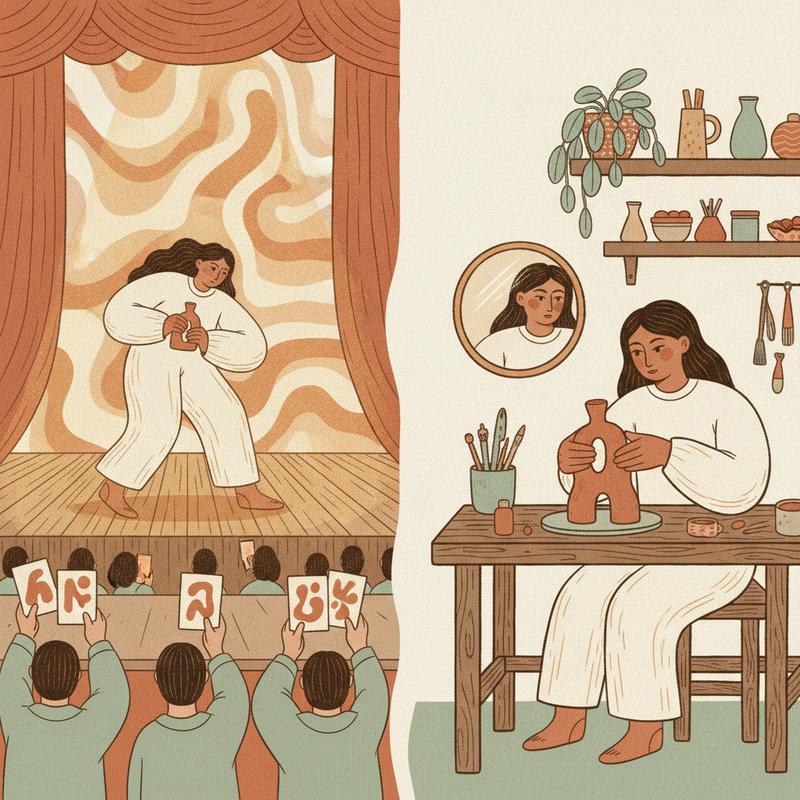
Look at how most of us talk about creativity at work. We "showcase" ideas. We "pitch" them. We run innovation days with judges and prizes. Every bit of it points outward, at an audience.
The minister flips the arrow. The audience doesn't matter. The question is what the work showed you about yourself.
Fredrik put it bluntly: "If you didn't learn anything about yourself when you created something, it wasn't much of a creative process."
Ouch. I've shipped plenty of things I learned nothing from.
The Audience Makes You Worse
Here's the part I didn't expect. The outward version doesn't only miss the point. It also makes the work worse.
Back in 1984, Teresa Amabile and her colleagues ran two experiments on undergraduate students. Some students expected experts to judge their work. Others expected no judging at all. One study used a verbal task. The other used an art task.
In both, the students expecting evaluation produced less creative work. The authors called the effect "consistently strong."
Think about what we do to people. We tell them to be creative, then we hand the result to a panel. We set up the conditions for weaker ideas and then wonder why the ideas look safe.
I wrote about a related problem in My Ego Has Killed More Ideas Than My Calendar Ever Did. Ego and the audience work as a team. One worries how you'll look. The other holds up the scorecard.
What My Paramotor Blog Taught Me
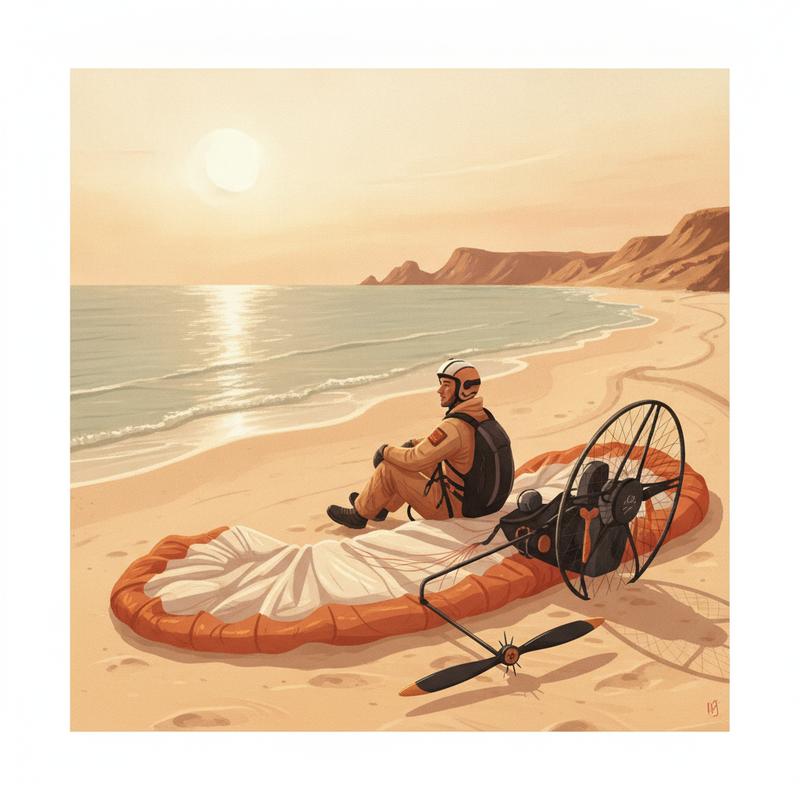
After the podcast I went back and read the posts I wrote in Malaga in October 2018, when I was learning to fly a paramotor. They sit on this site under Flying a Paramotor, Part II. Nobody would call them art. Typos, rushed photos, a lot of complaining about wind.
Reading them now, I don't see a travel diary. I see a record of me finding things out about myself.
On 24 October I had the motor on my back three times and never left the ground. At the last site of the day the wind kept shifting and too many pilots crowded the field. I wrote: "For someone going up for only the second time, I decided it was above my skill and pulled my own plug."
I didn't know I'd do it until I did it. I'd flown to Spain to fly. Every part of me wanted to go up. Writing it down made me notice I'd made a grown-up decision, and I've leaned on the memory of it since.
A post a few days later is less flattering. On my second flight attempt of the day I face-planted, tried again, watched the wing come up crooked, face-planted again and broke the tip of my prop. I wrote about how angry I got with so much adrenaline in my system. I got grounded for a while and took a long walk.
None of those posts expressed who I was. I didn't know who I was in those moments yet. I wrote my way into finding out. Patient on the ground. Short-fused after a fall. Both true.
Here's the minister's point. The writing didn't broadcast me. It showed me to myself.
This Isn't Only for Artists
You might think this sounds lovely for potters and poets and has nothing to do with a sprint backlog. I'd push back.
Try it with the next design doc you write. You sit down sure you understand the problem. Half a page in, you hit the bit you haven't thought through. The doc didn't express your thinking. It exposed it. The gap in the doc is a gap in you, and now you know where it sits.
Same with a code spike nobody will merge. Same with a whiteboard sketch you rub out before the meeting. The value isn't in the artefact. It's in what you found out about how you think, what you avoid, and where you rush.
People treat this kind of work as waste because nothing ships. I'd argue it's the most honest creative work most of us do all week. No audience. No scorecard. Only you and the problem, and a chance to meet yourself halfway.
How to Point Your Creativity Inward
I'm not giving up on sharing work. I run a podcast and a blog, so the ship has sailed. But I'm changing the order of operations.
Make something nobody will see
Write a page, sketch, build a toy app, cook without a recipe. Then put it away. No post, no demo. Notice how differently you work when nobody holds a scorecard.
Ask one question when you finish
Before you share anything, ask: what did I learn about myself while making this? If the answer is "nothing," Fredrik would say you didn't do much creating. You did production.
Keep the record
My 2018 posts became useful years later, and I never planned it. Keep a notebook, a private doc, a folder of drafts. Future you will read it and spot patterns current you misses.
Sit still for five minutes
When Debra and I asked Fredrik for one challenge to leave with listeners, he picked meditation. Five minutes. He didn't frame it as a wellness thing. He framed it as a way to hear yourself think, and to notice where your ego jumps in.
Lead this way, too
If you run a team, stop treating every idea as a pitch. Give people space to try things with no judging attached. Ask them what they learned, not only what they built. The Amabile results suggest you'll get braver ideas out of it.
The Question I'm Left With
I spent years treating creativity as a way to show people who I am. The minister in Bhutan would say I had the arrow pointing the wrong way.
So here's my question for you. Think of the last thing you made. A plan, a post, a bit of code, a meal. What did it teach you about yourself?
If nothing comes to mind, make something this week for an audience of one. Then pay attention to who shows up.